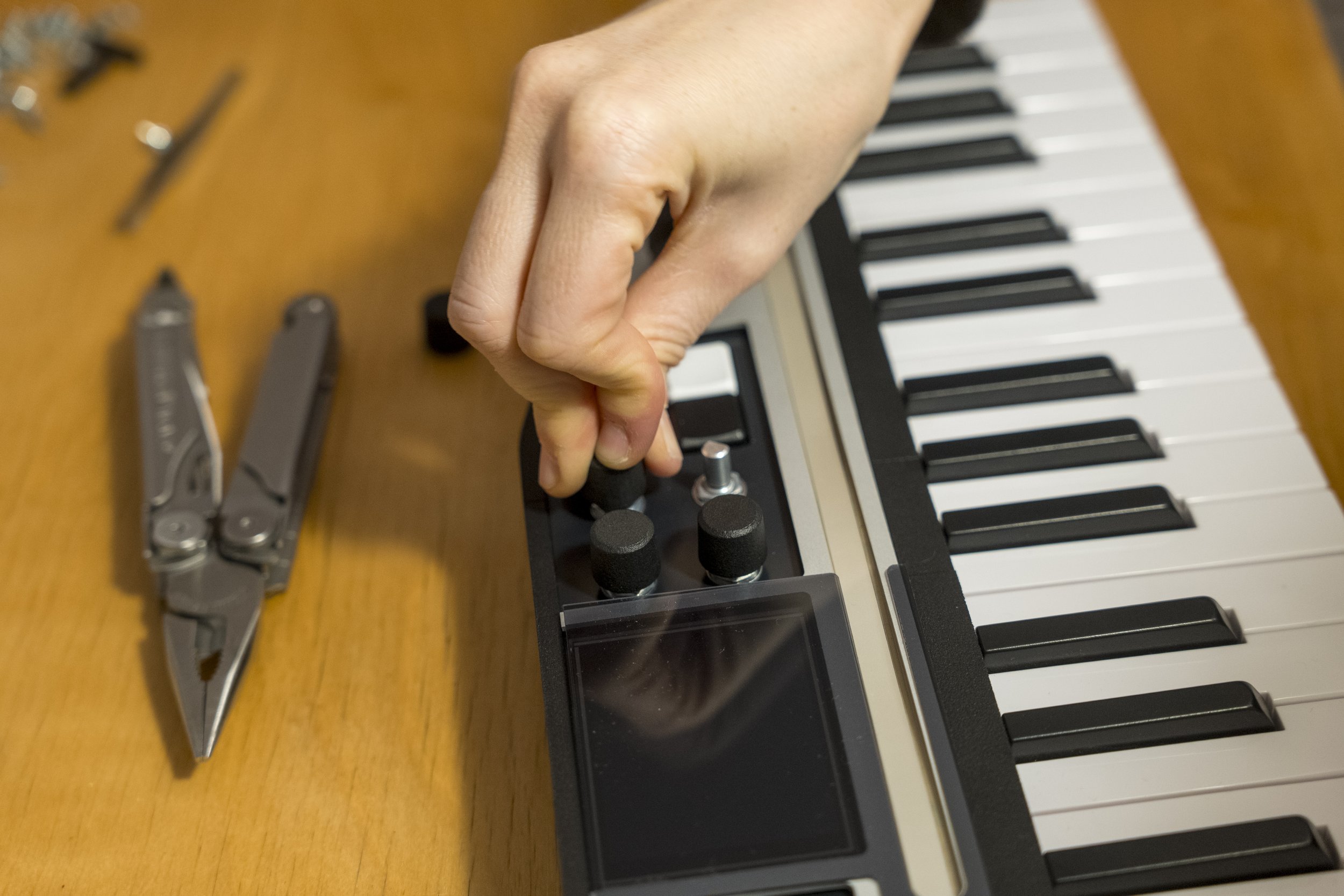
Courting Synth
Custom keyboard pair with a touch strip and gesture recording
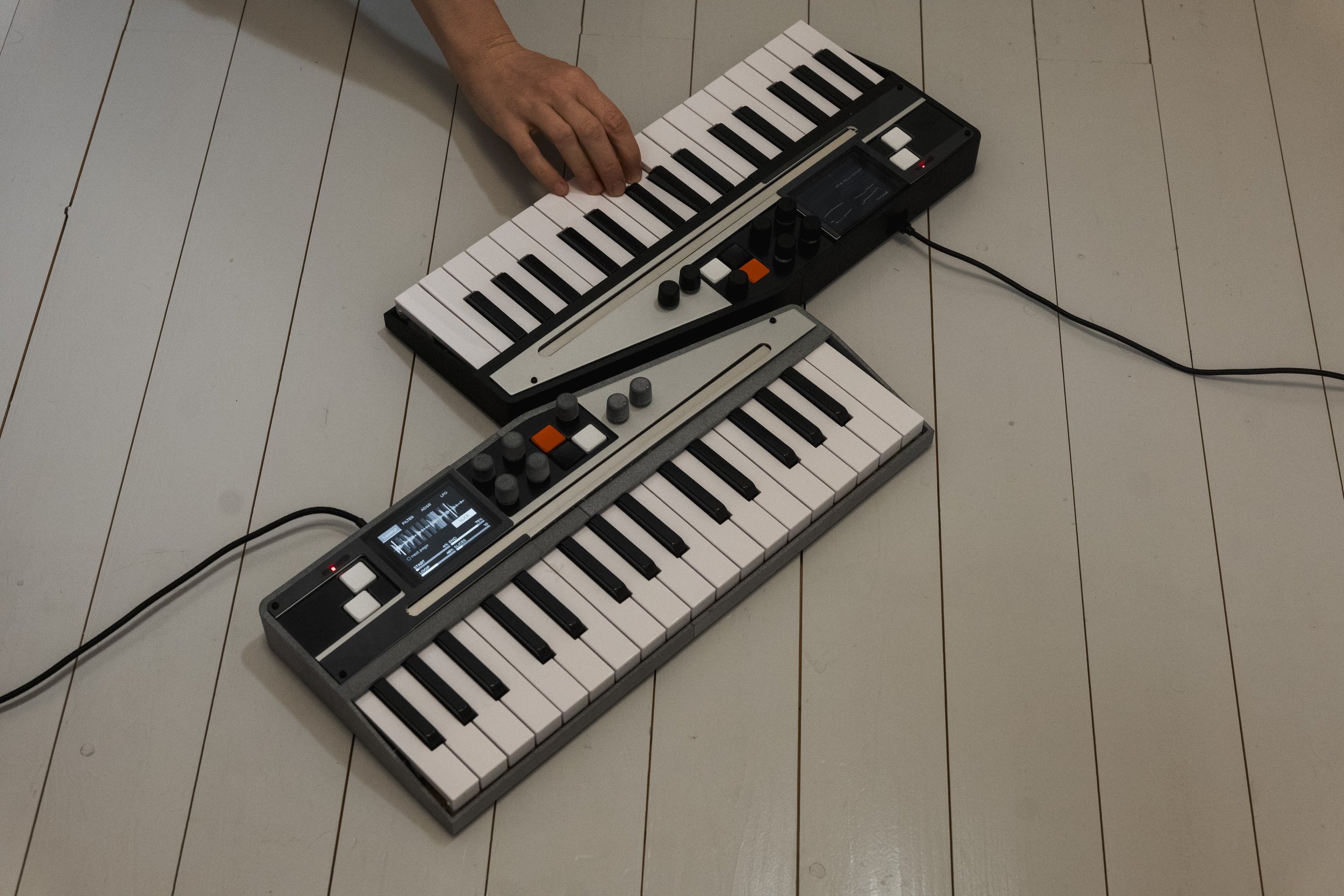
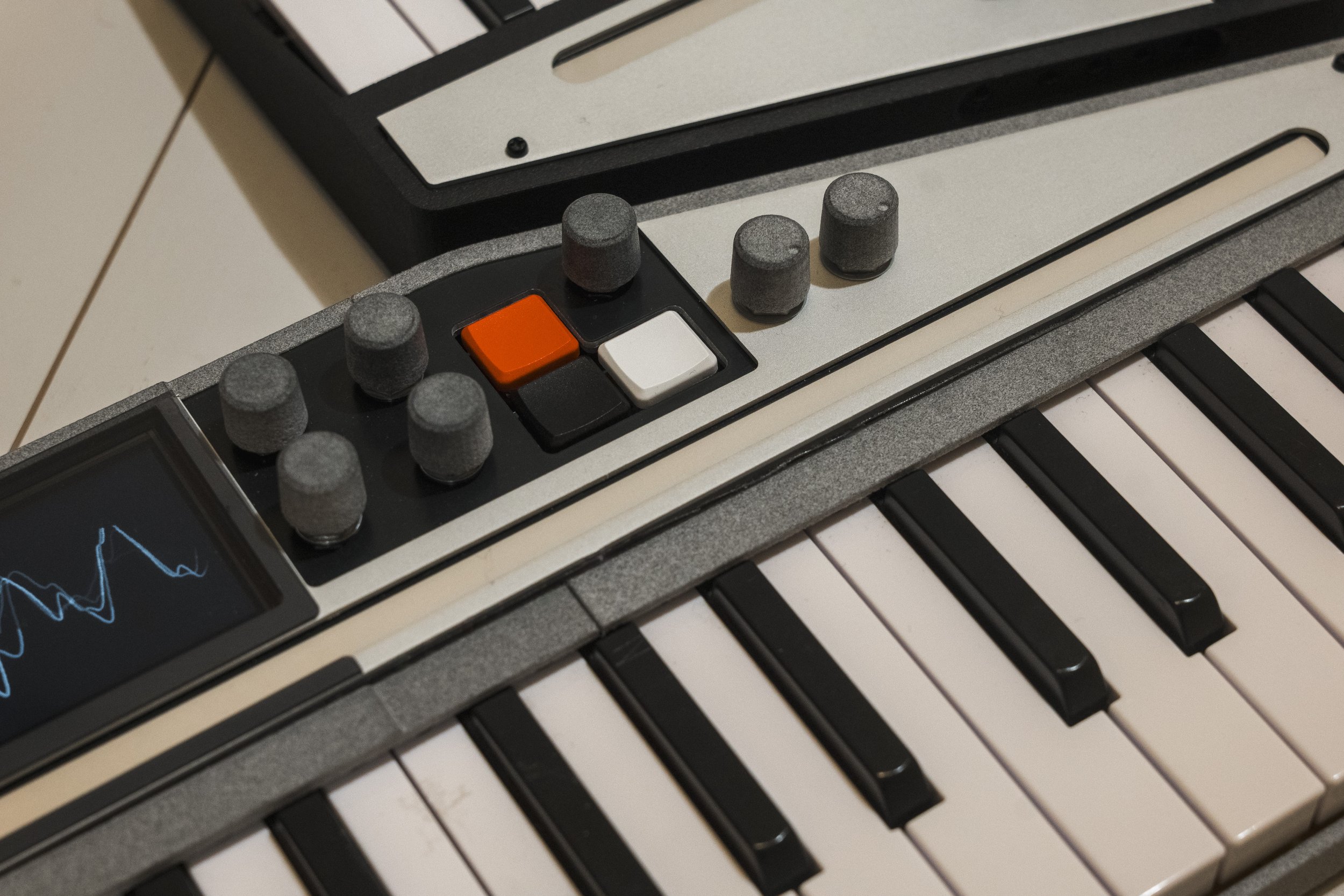
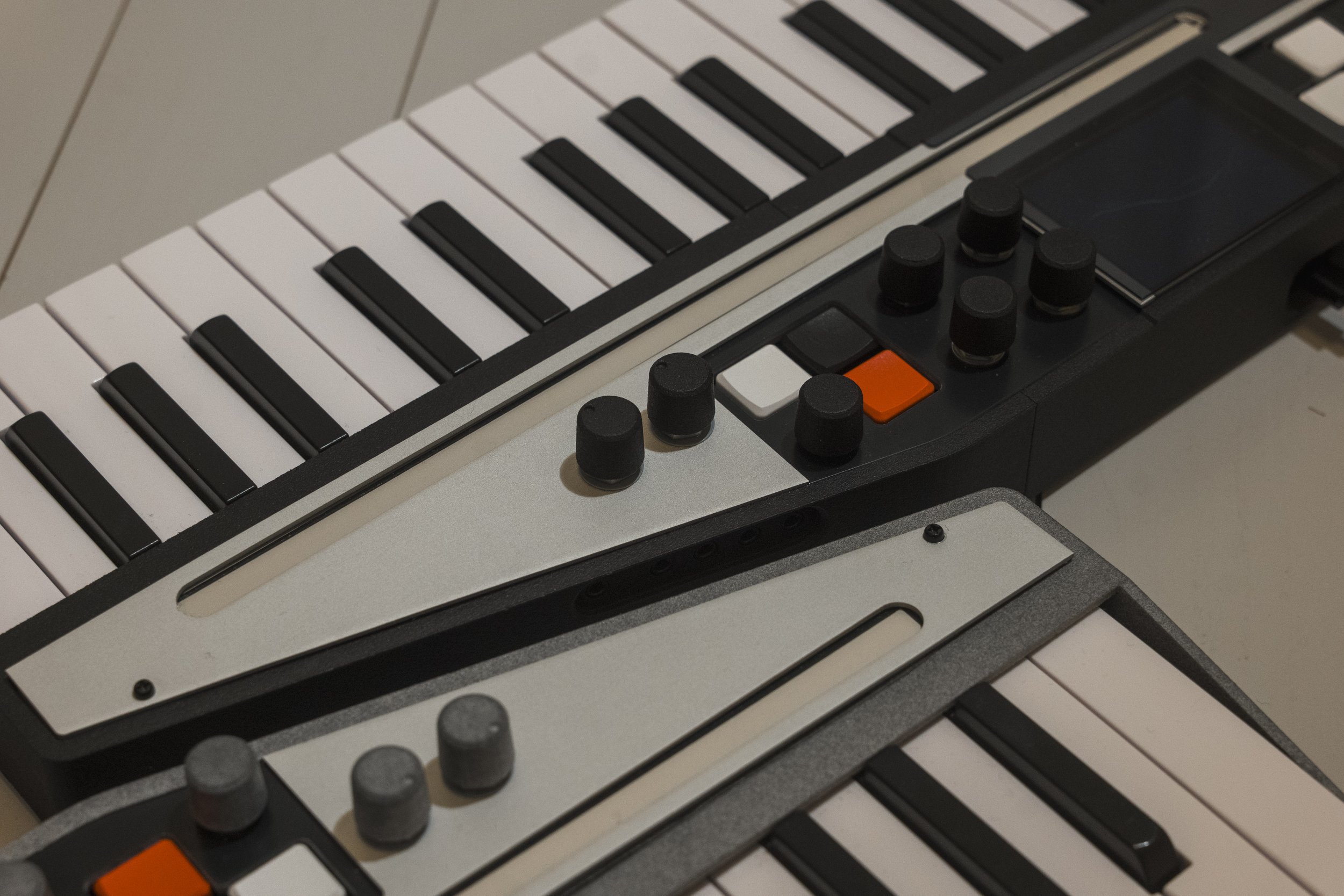
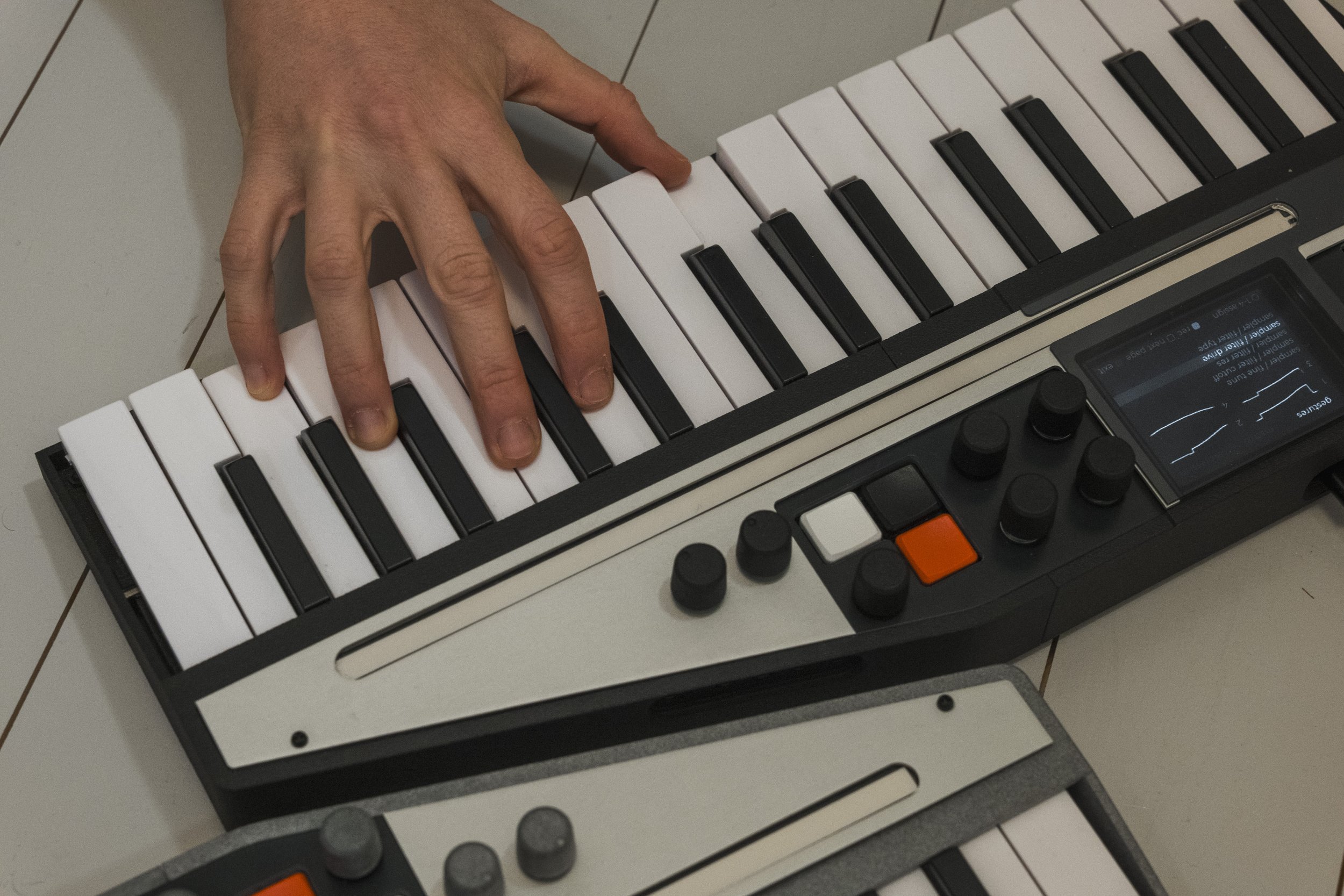
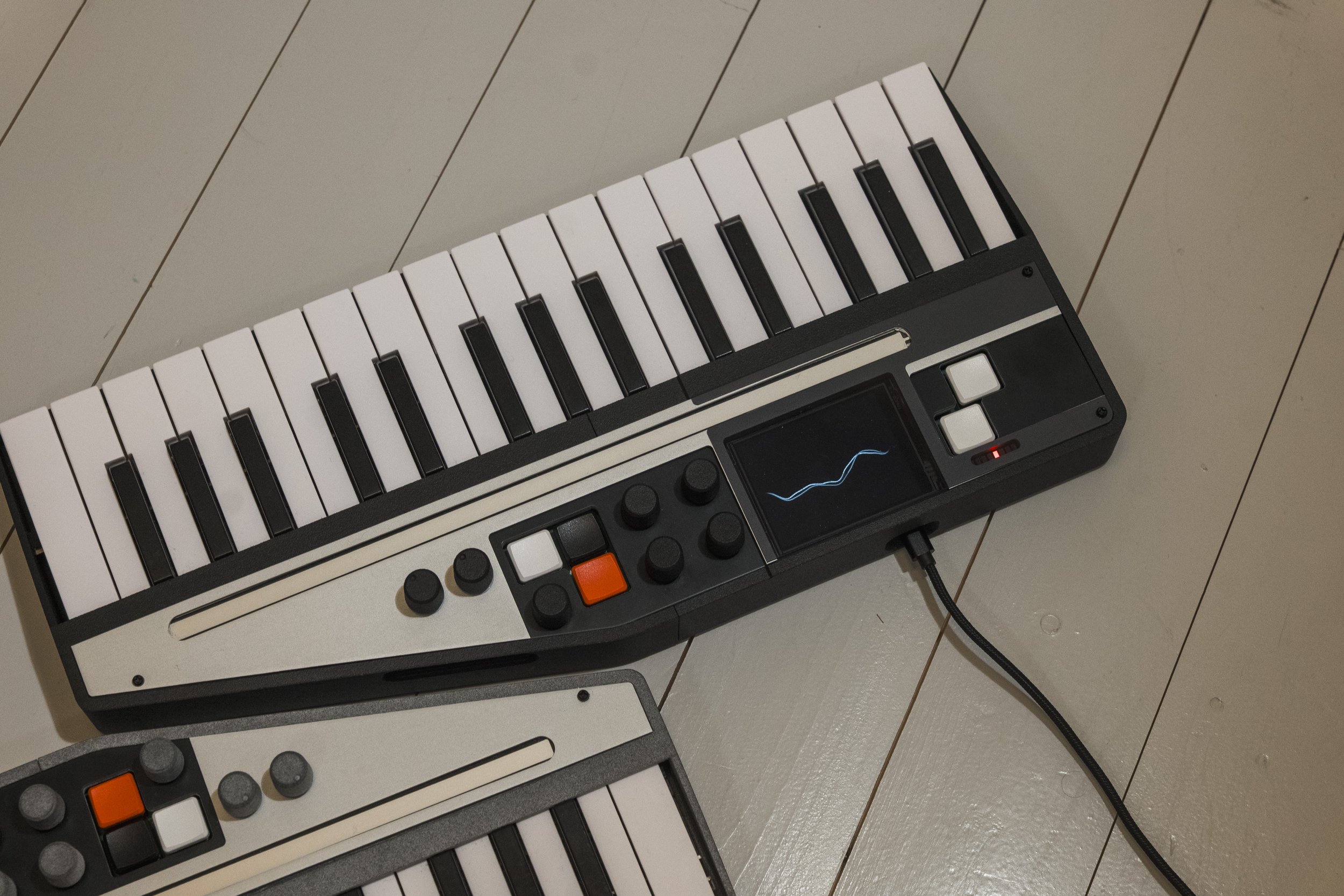
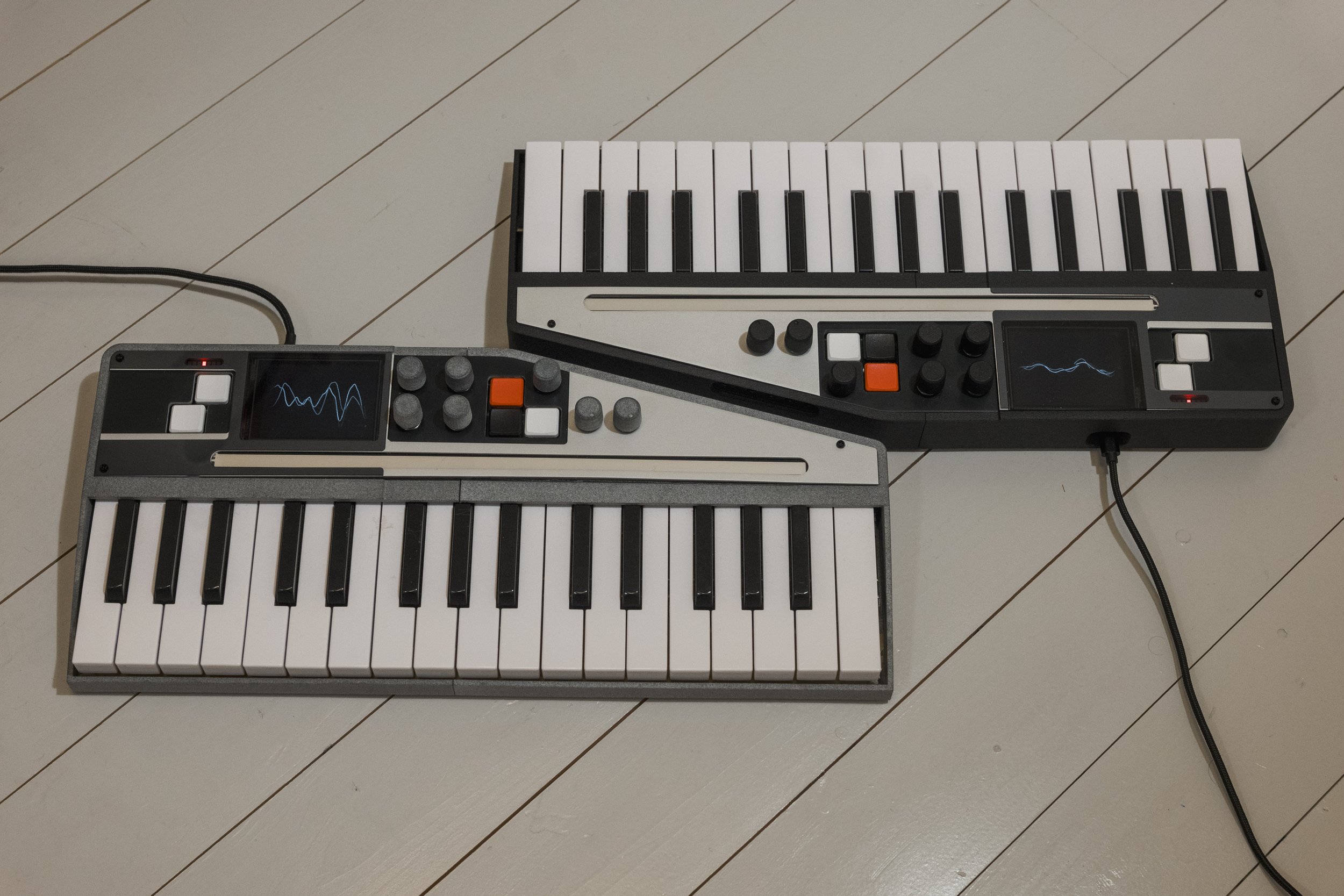
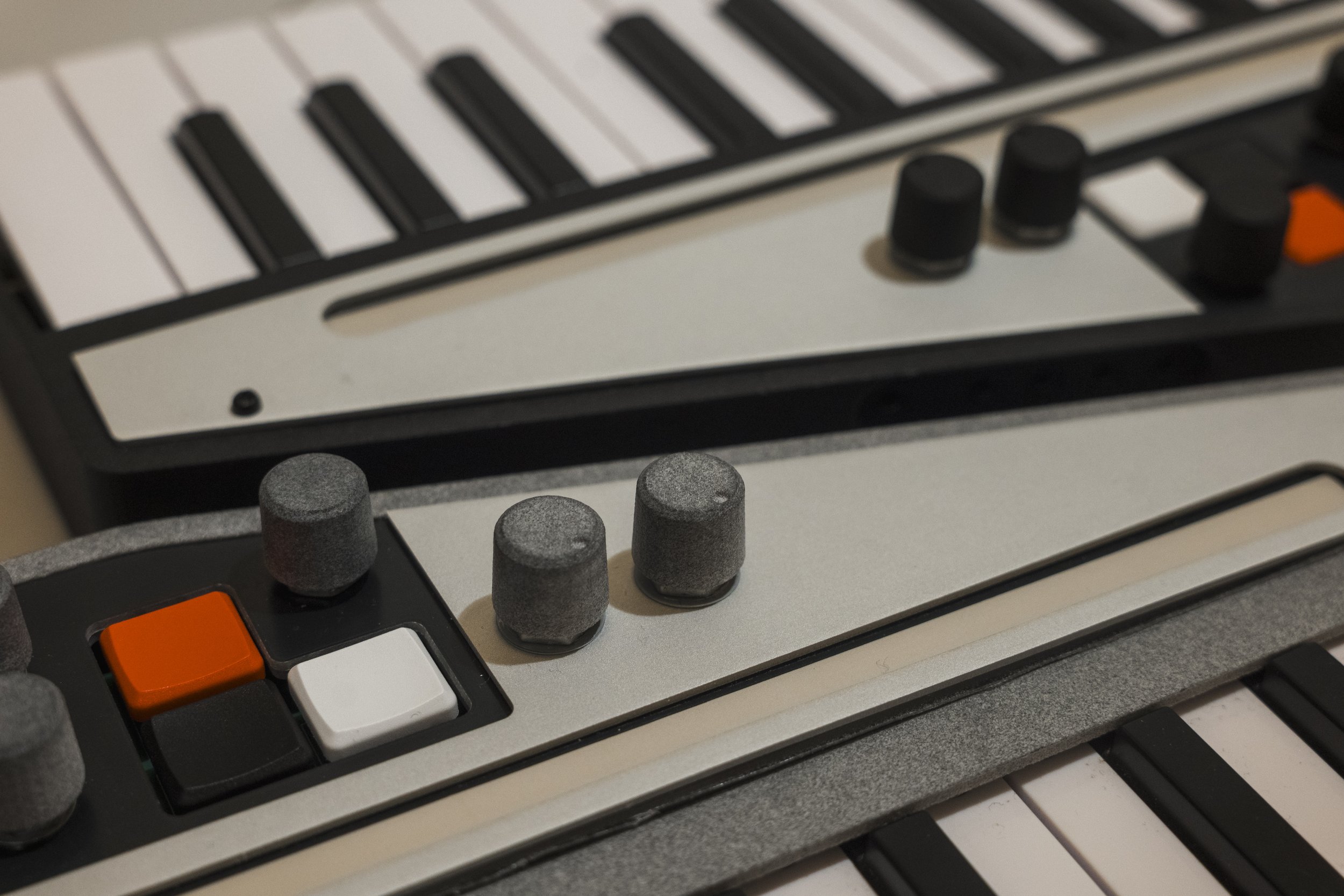
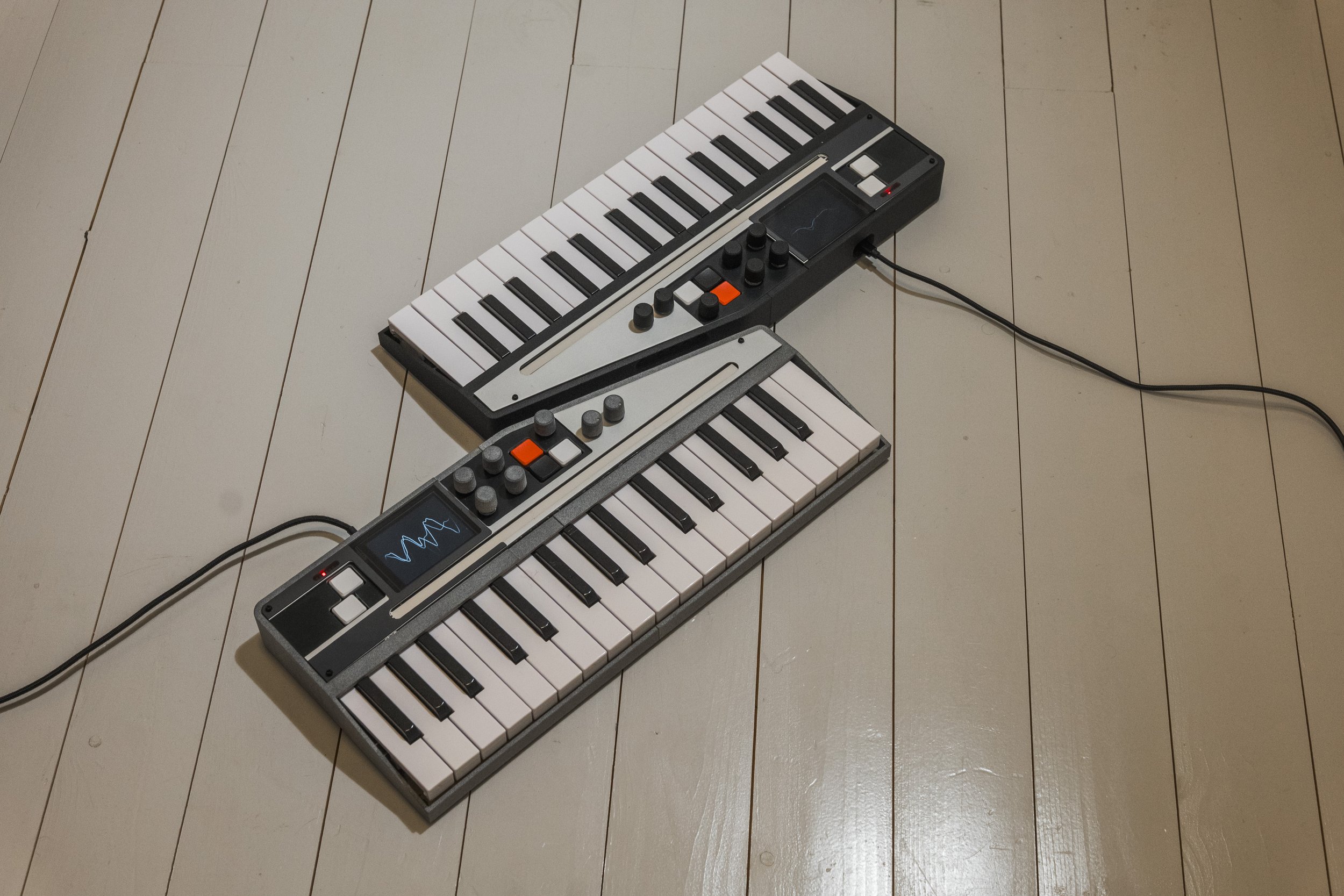
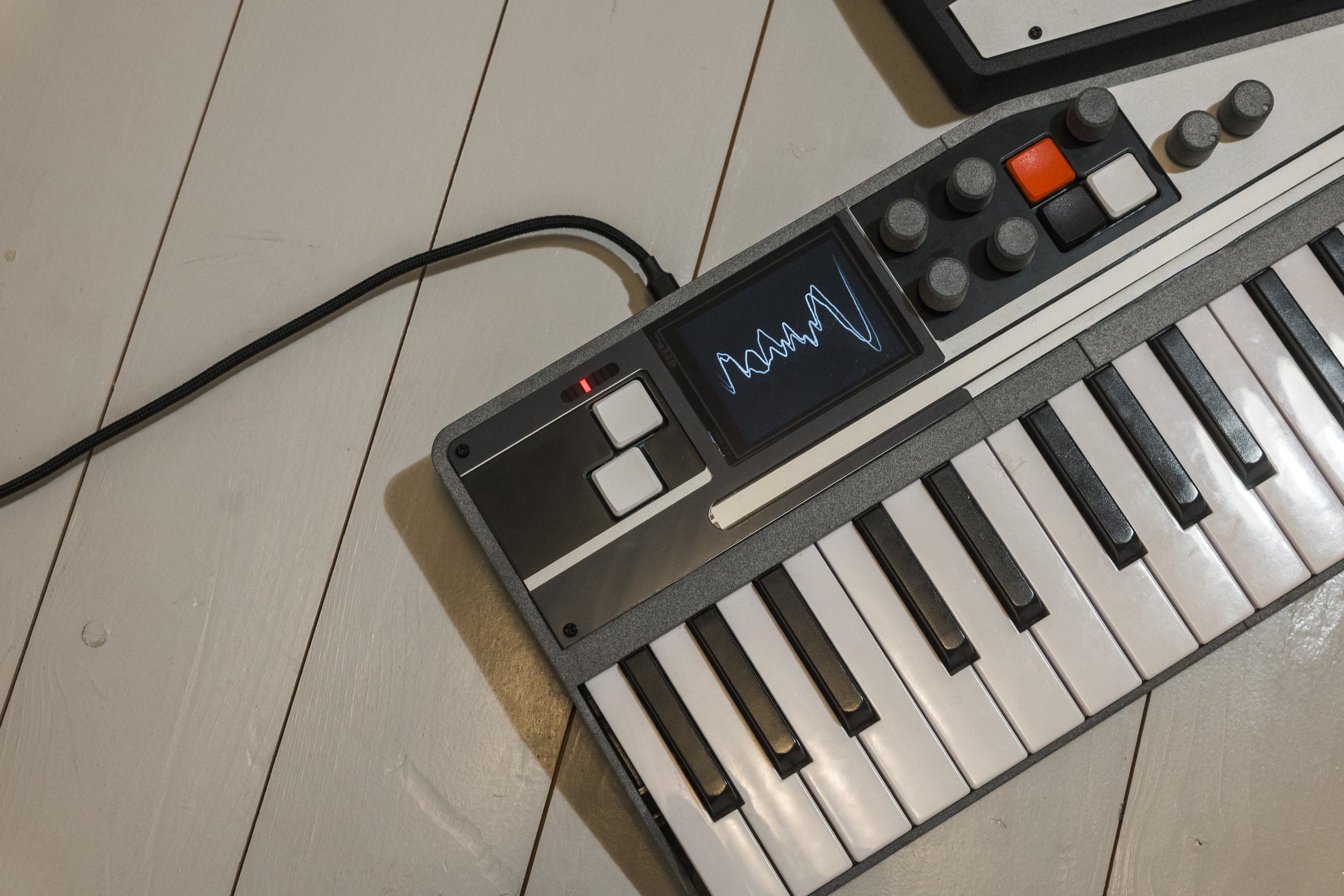
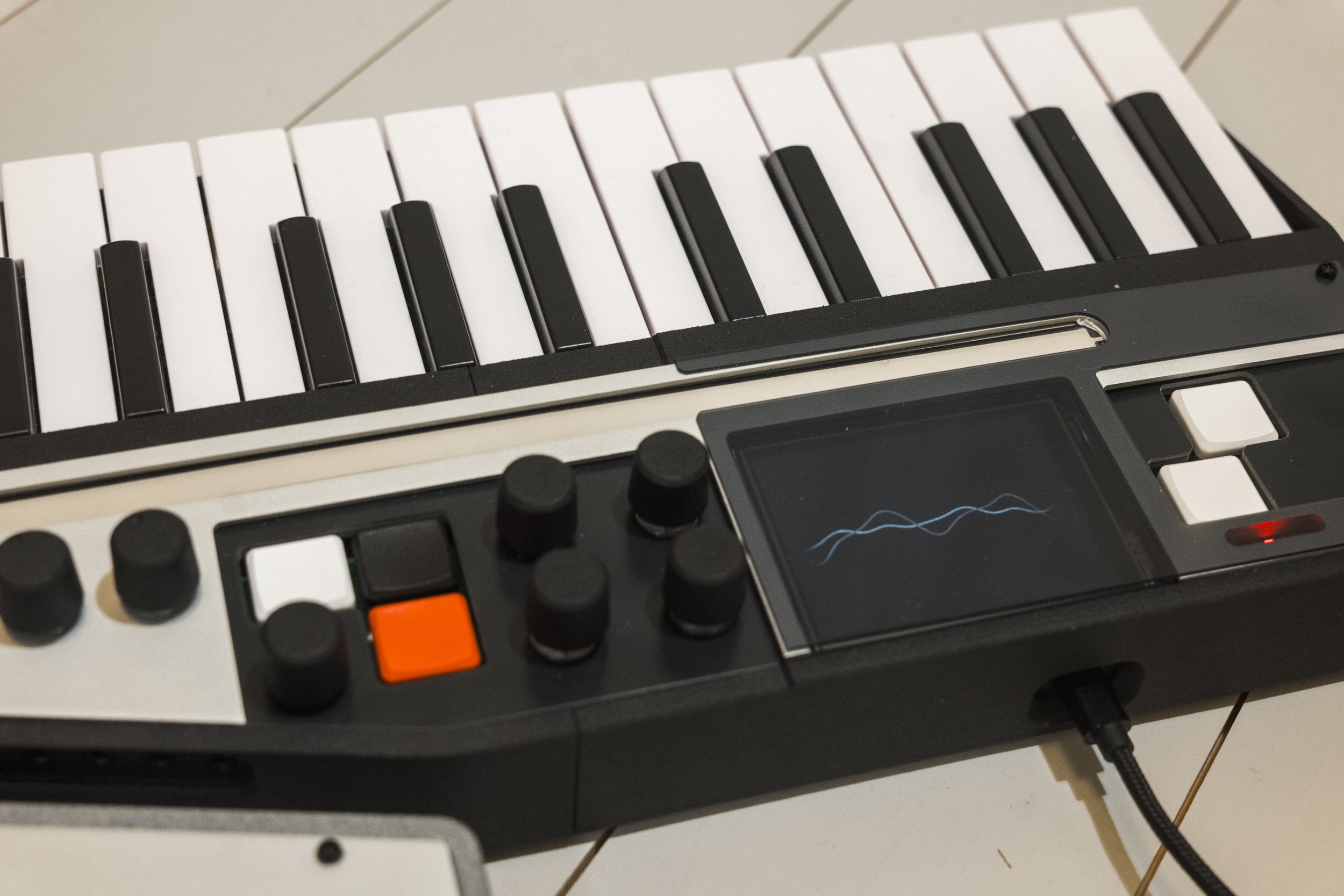
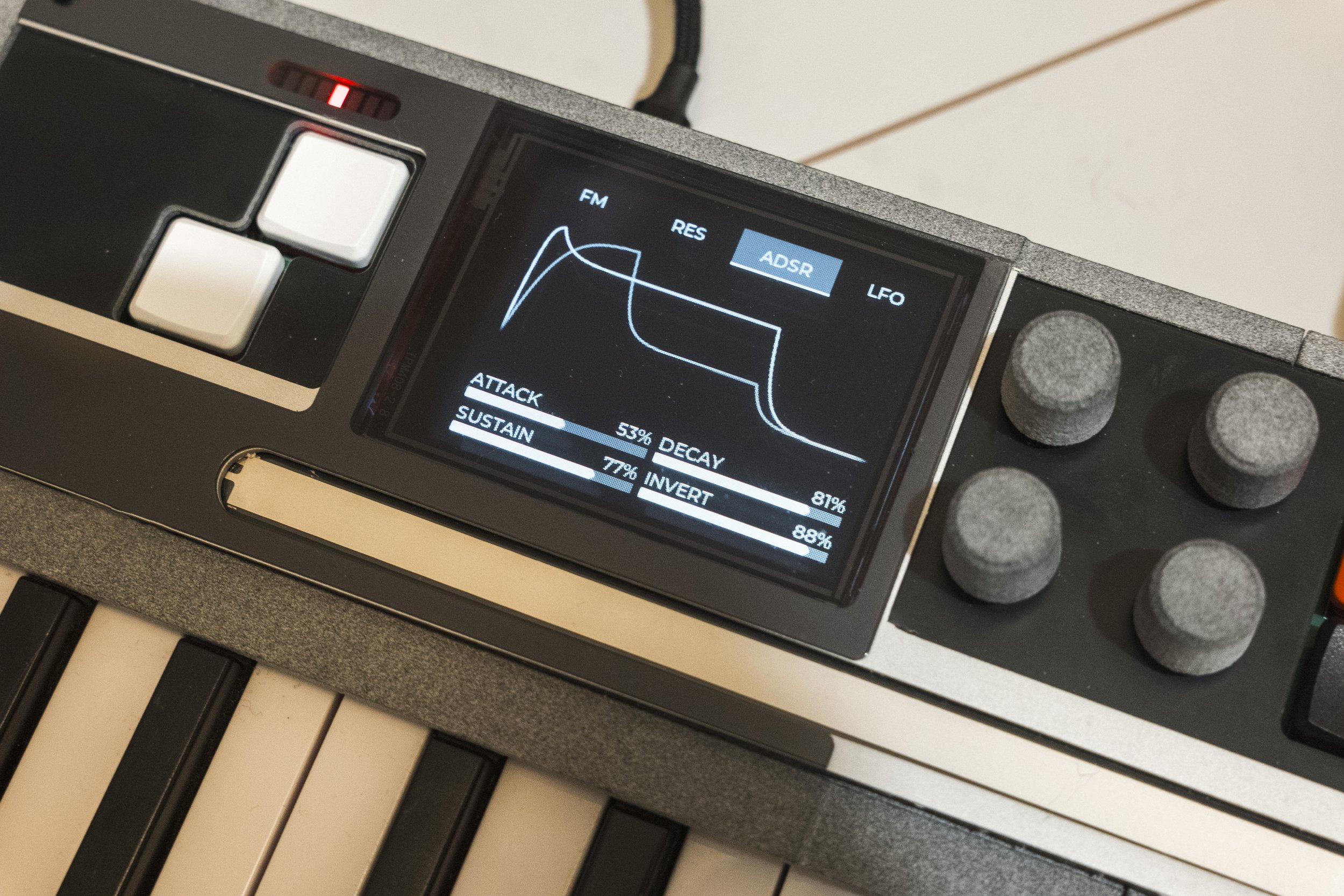
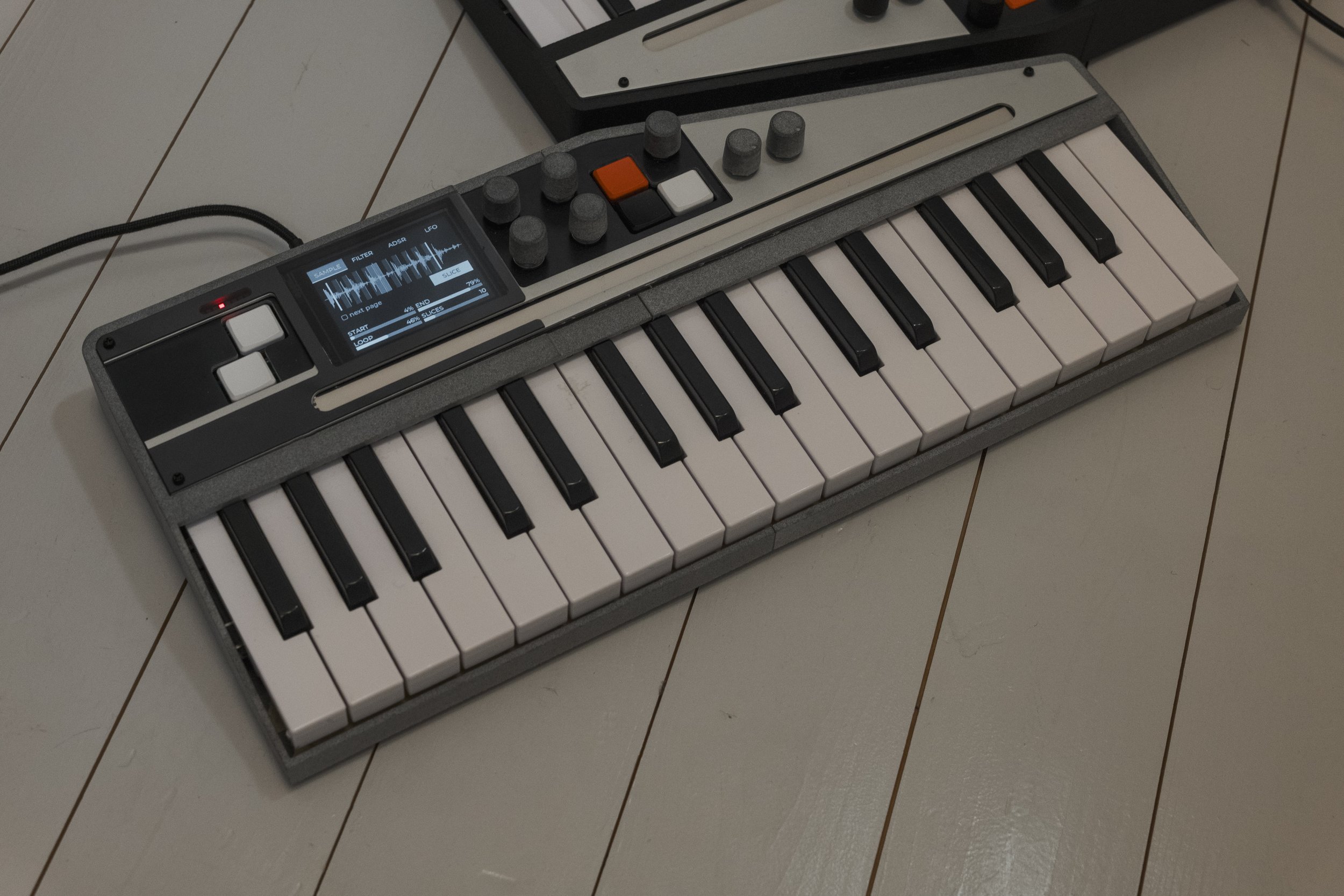
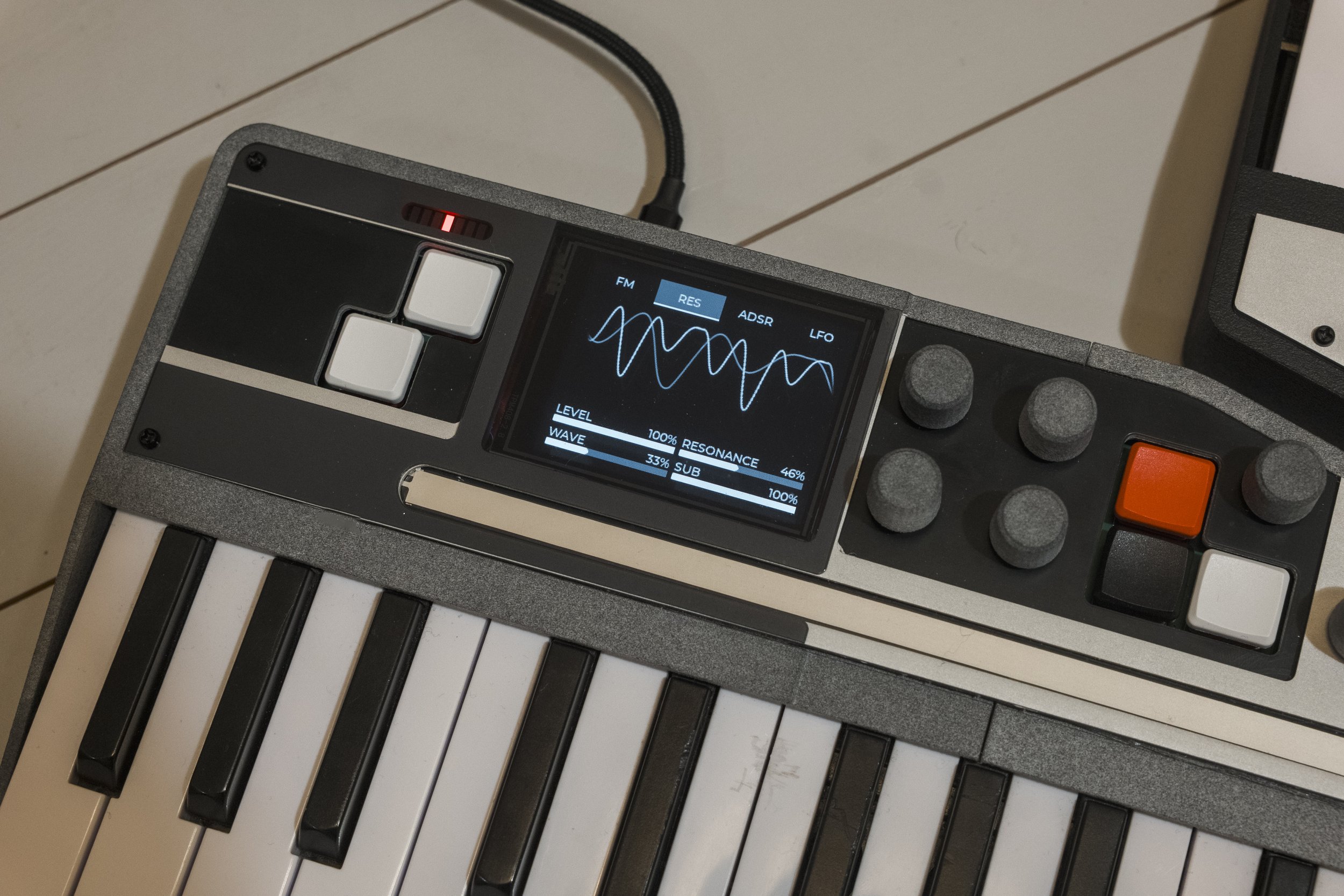
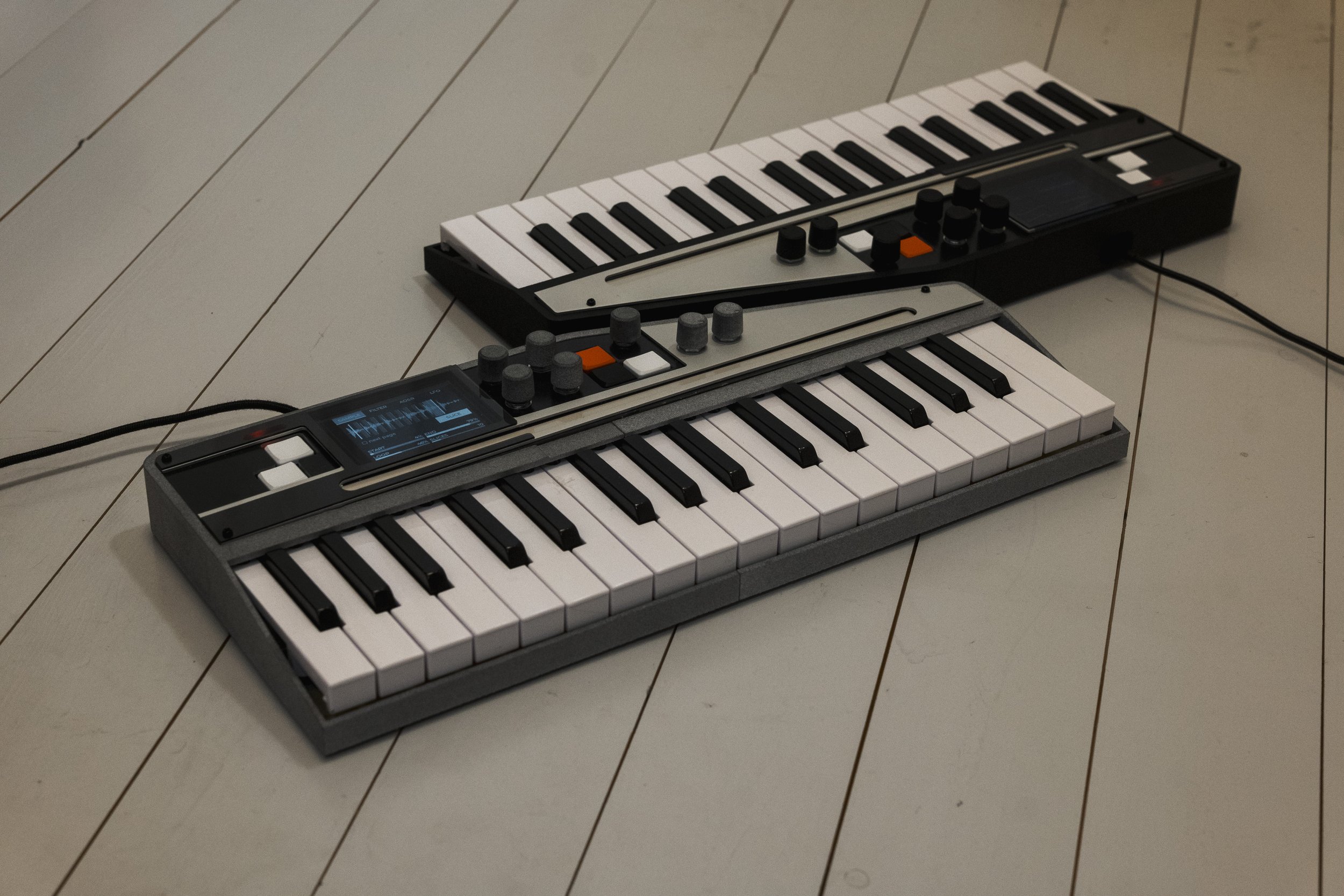
Over the years of creating instruments and interfaces, one thing has stayed relatively constant: sharing instruments between one another as a starting point for music making. You can see this in our instruments from Vis-à-Vis, the Chromaplane, and just about everything else.
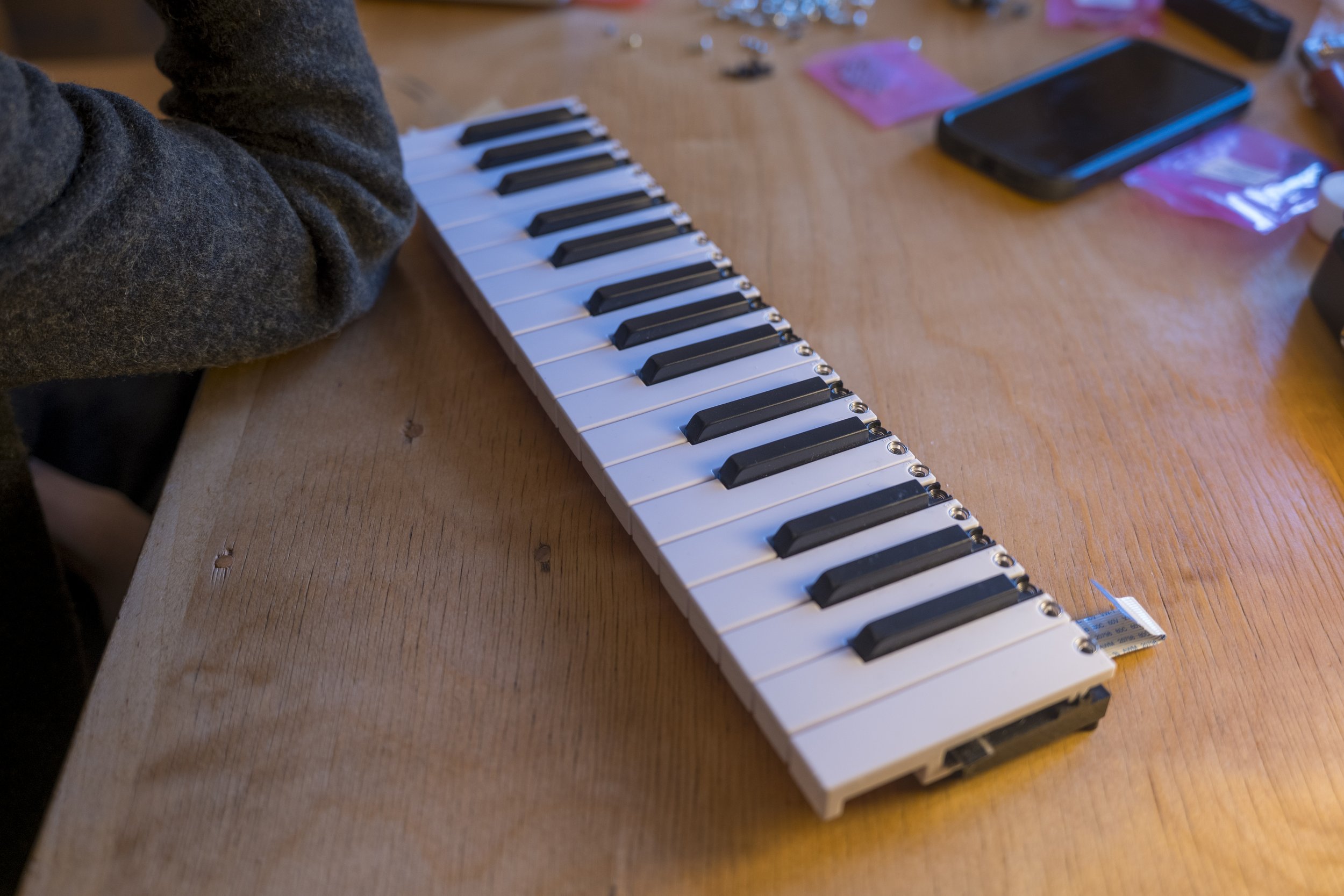
Another thing has stayed constant too: using an external mass manufactured MIDI controller in our live set. It’s a bit of a contradiction - despite years of making our own unique custom interfaces, there was always an Arturia Keystep in the background. Part of the reason for this is a deep comfort with the keyboard as an interface, which leads to an inability to leave this near-perfect music making tool (especially when one has a background as a pianist). Another reason is just how daunting and difficult it is to make a keyboard of ones own.
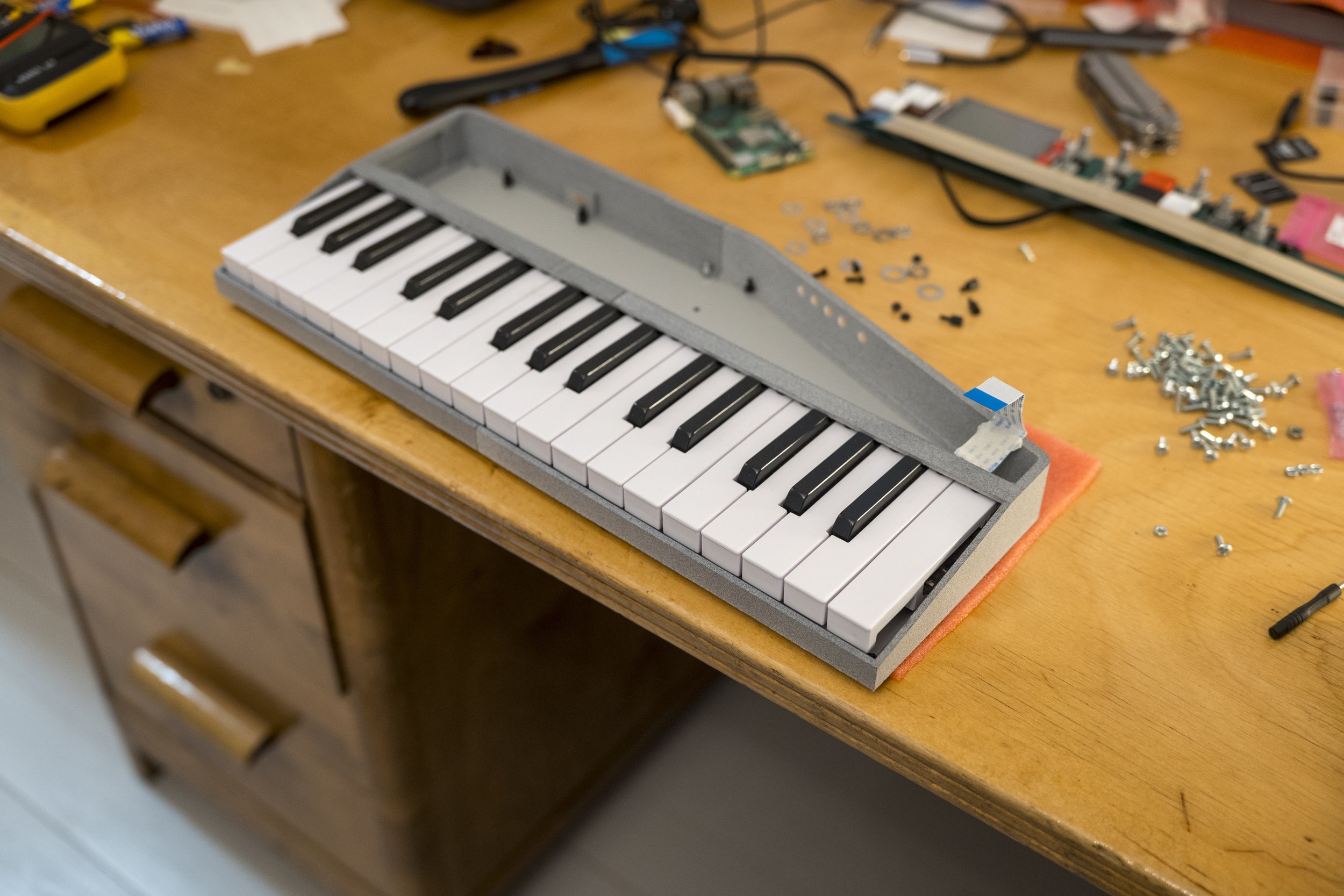
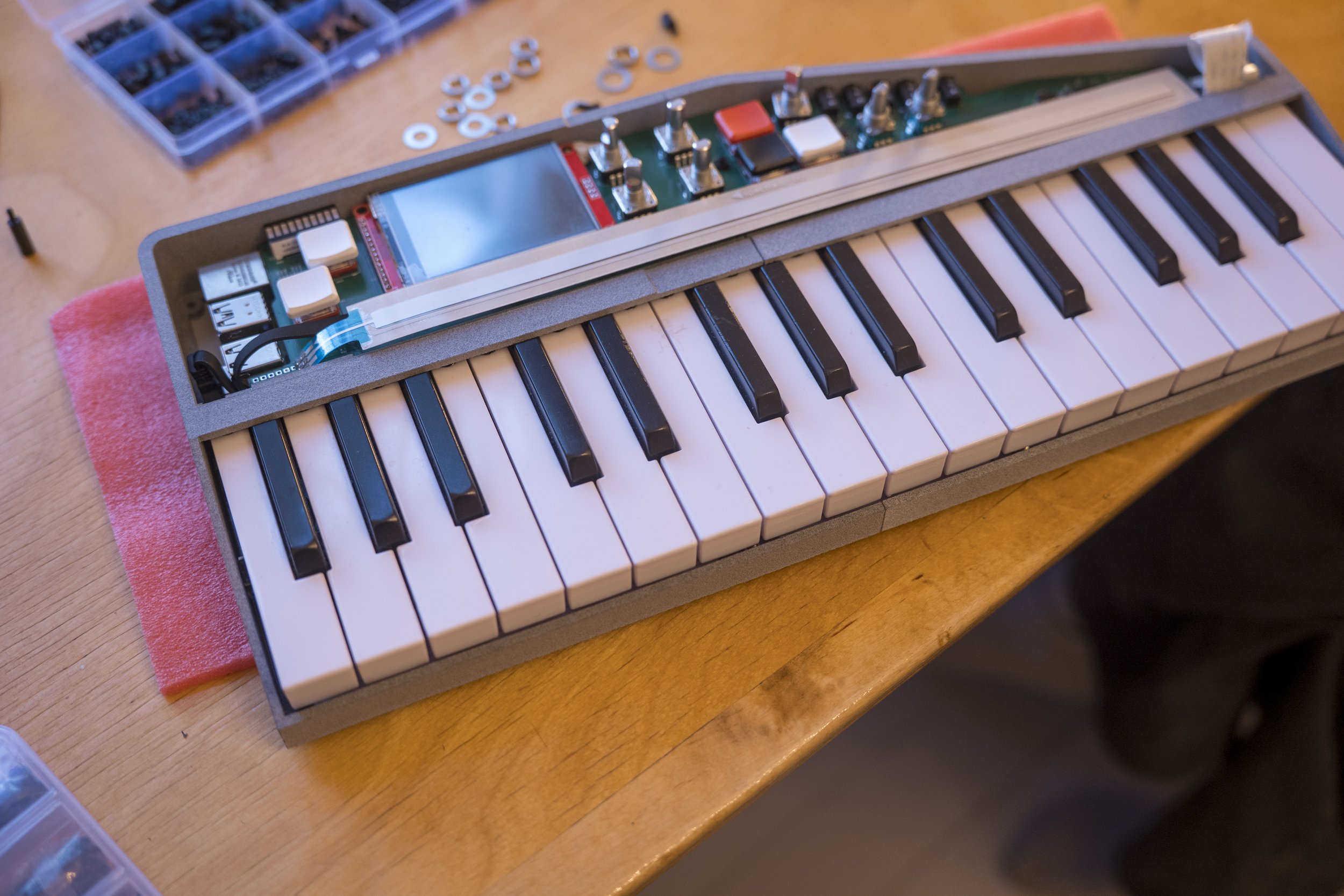
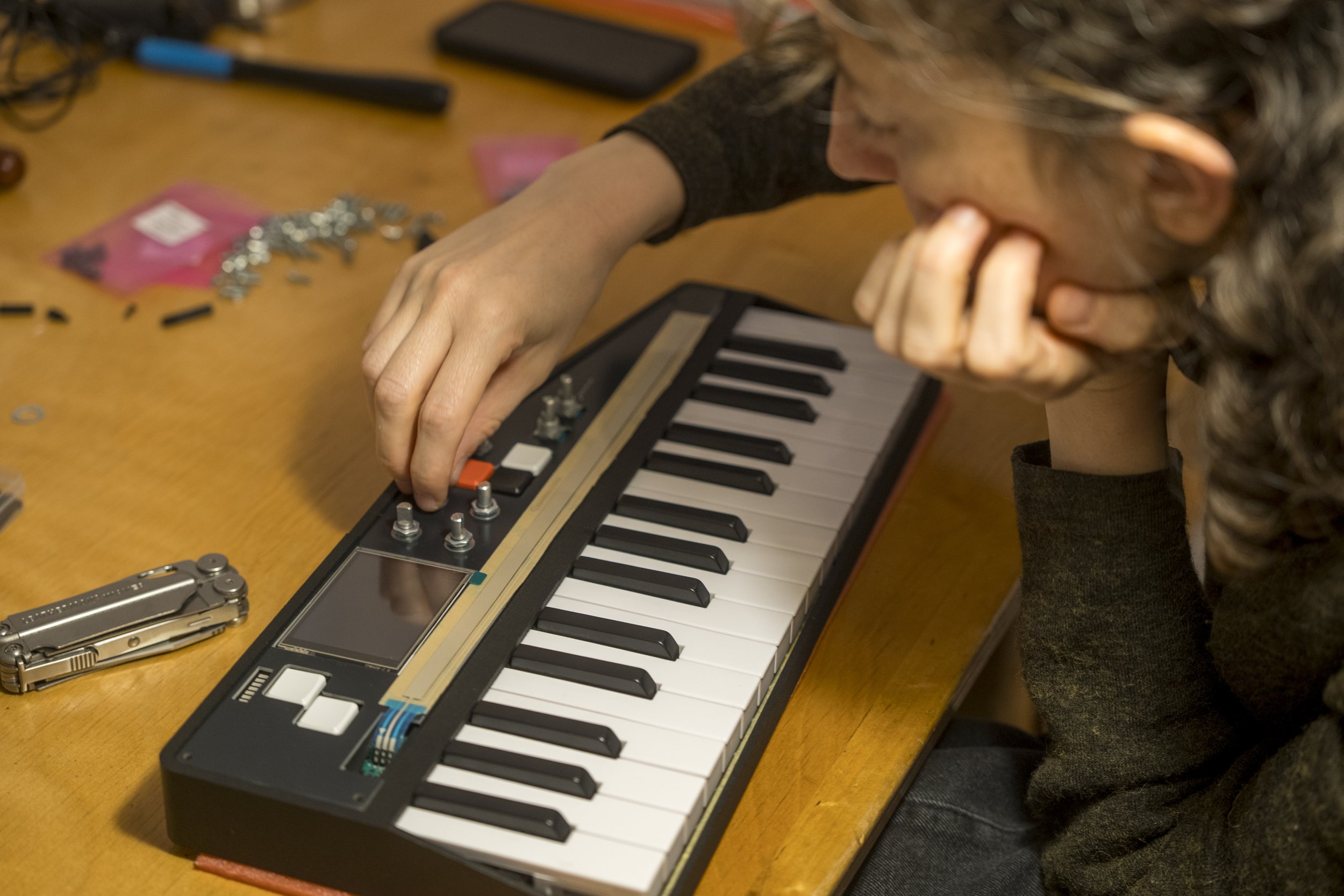
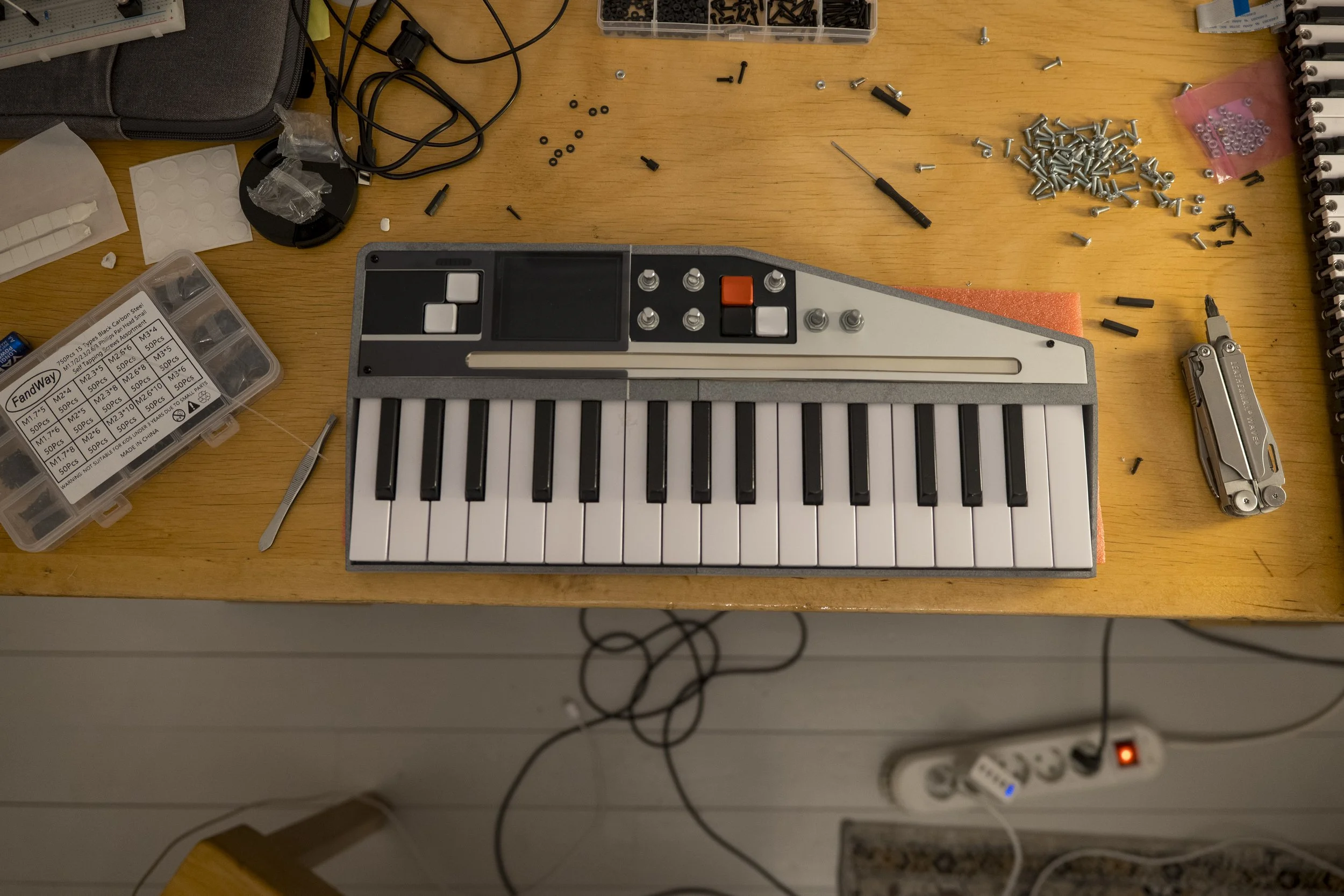
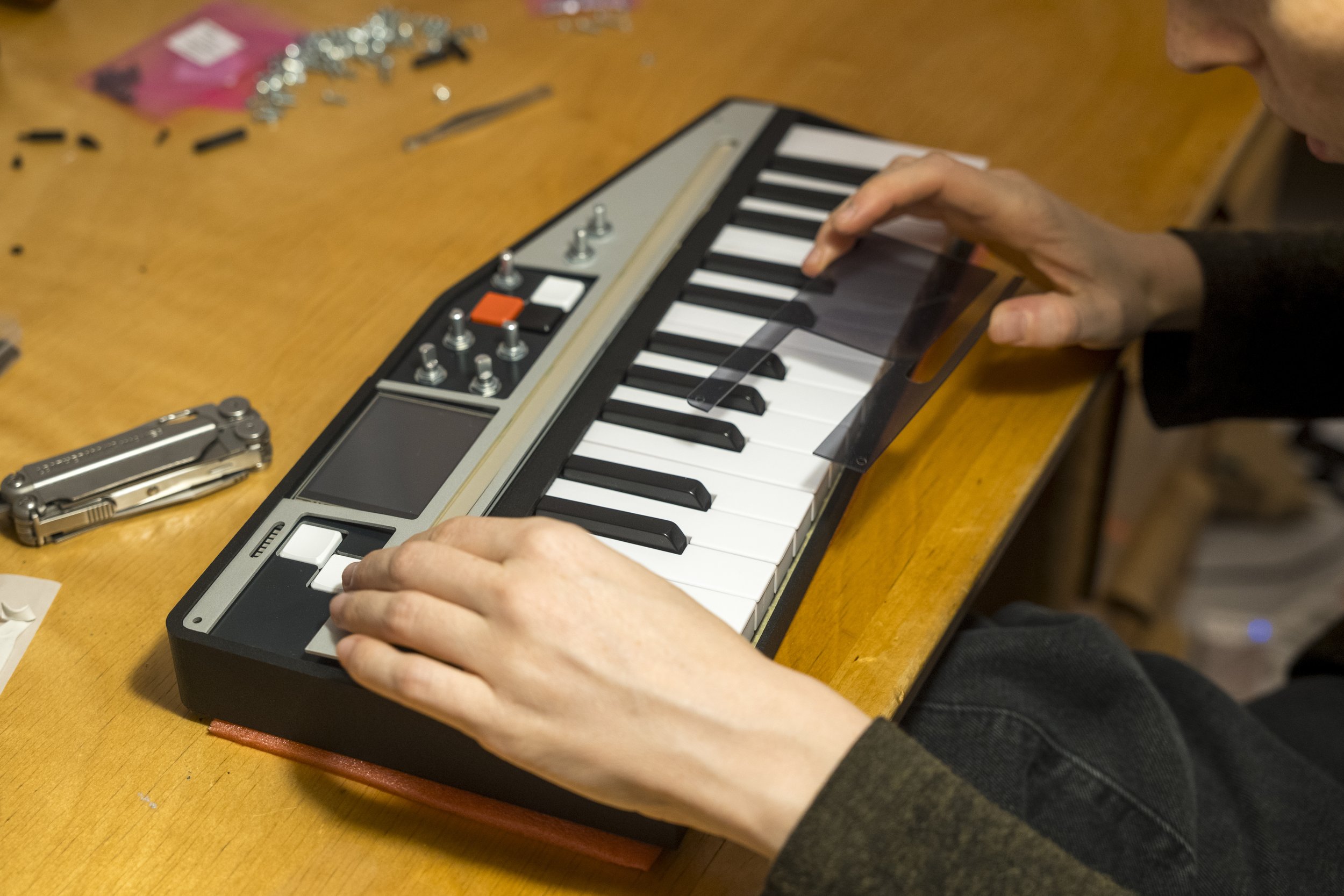
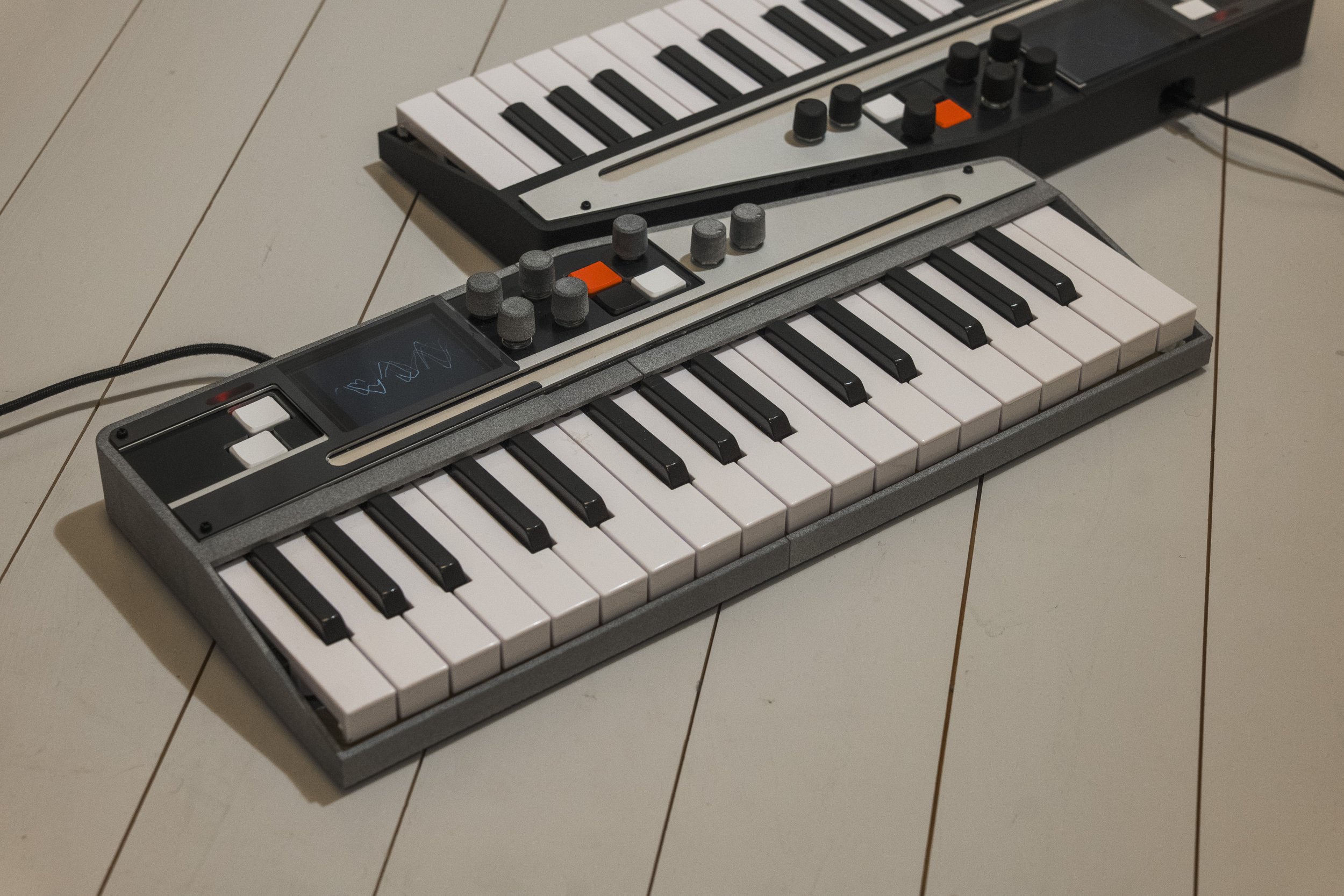
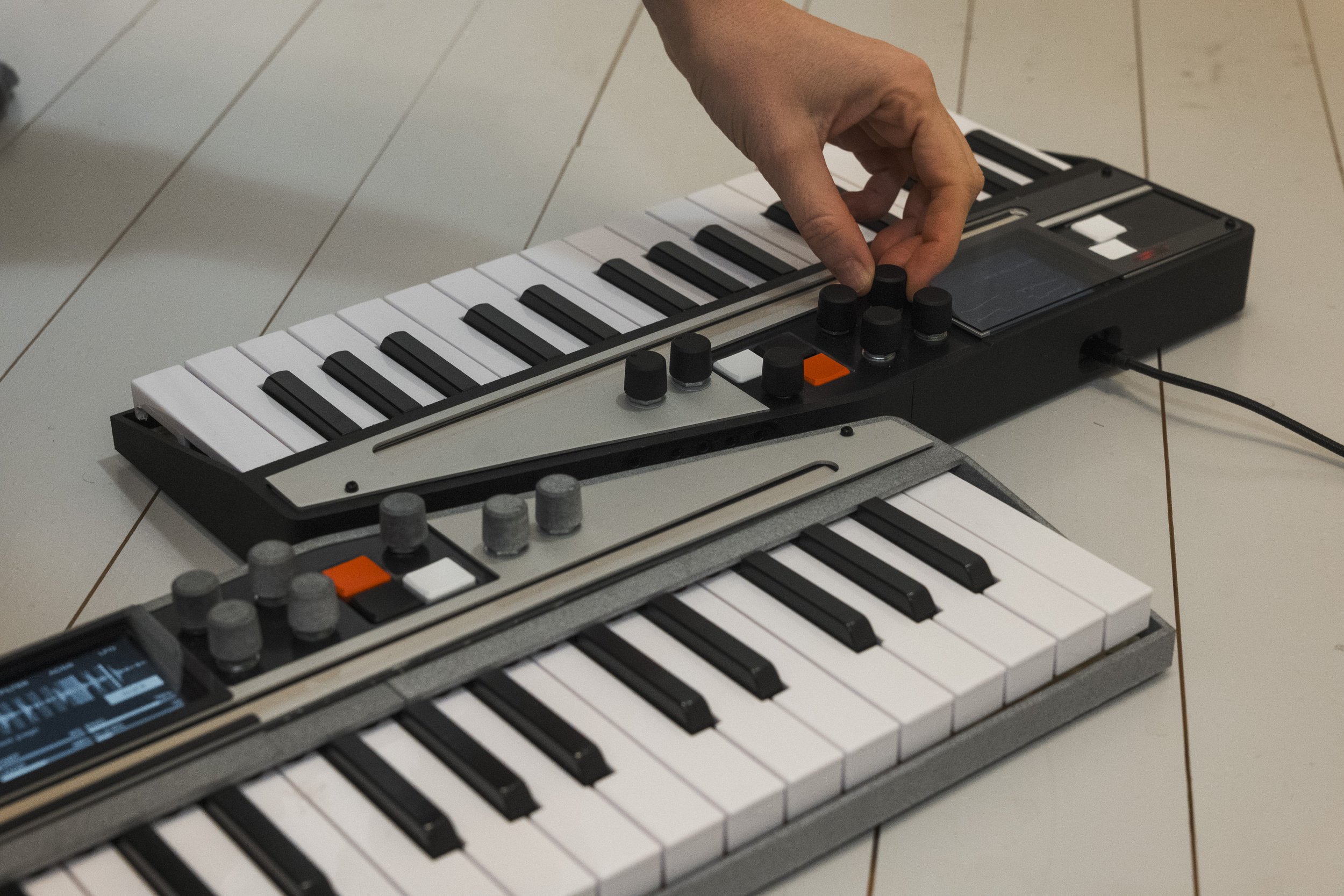
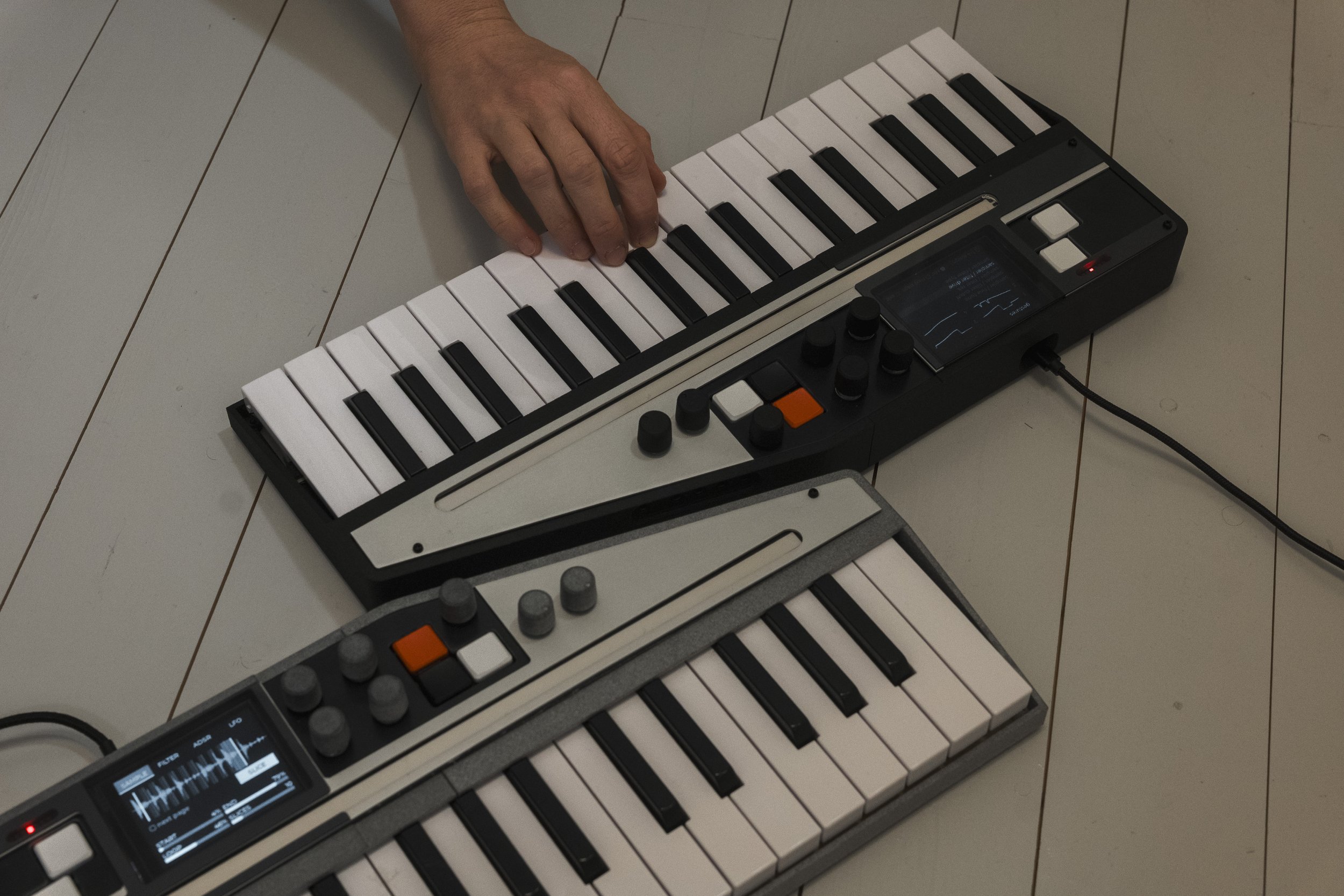
The Courting Synth, which is how we refer to this pair of keyboards together, is our attempt at remedying this hole in our live set up. We took the name from the so called Courting Dulcimer, which is an Appalachian dulcimer meant for sharing face to face, a lot like the way we play most our instruments.
Playing “From Tokyo” on the Courting Synth
By no means are we interested in reinventing the keyboard - we don’t think there’s any need for that. But we are interested in collecting the concepts and ideas which reoccur in our work with keyboards, and placing them into a micro-world we can explore - especially away from the computer.
The Courting Synth is a completely self-contained world, that features everything we could hope for in a keyboard. It’s highly portable, but can create a complete piece of music from start to finish.
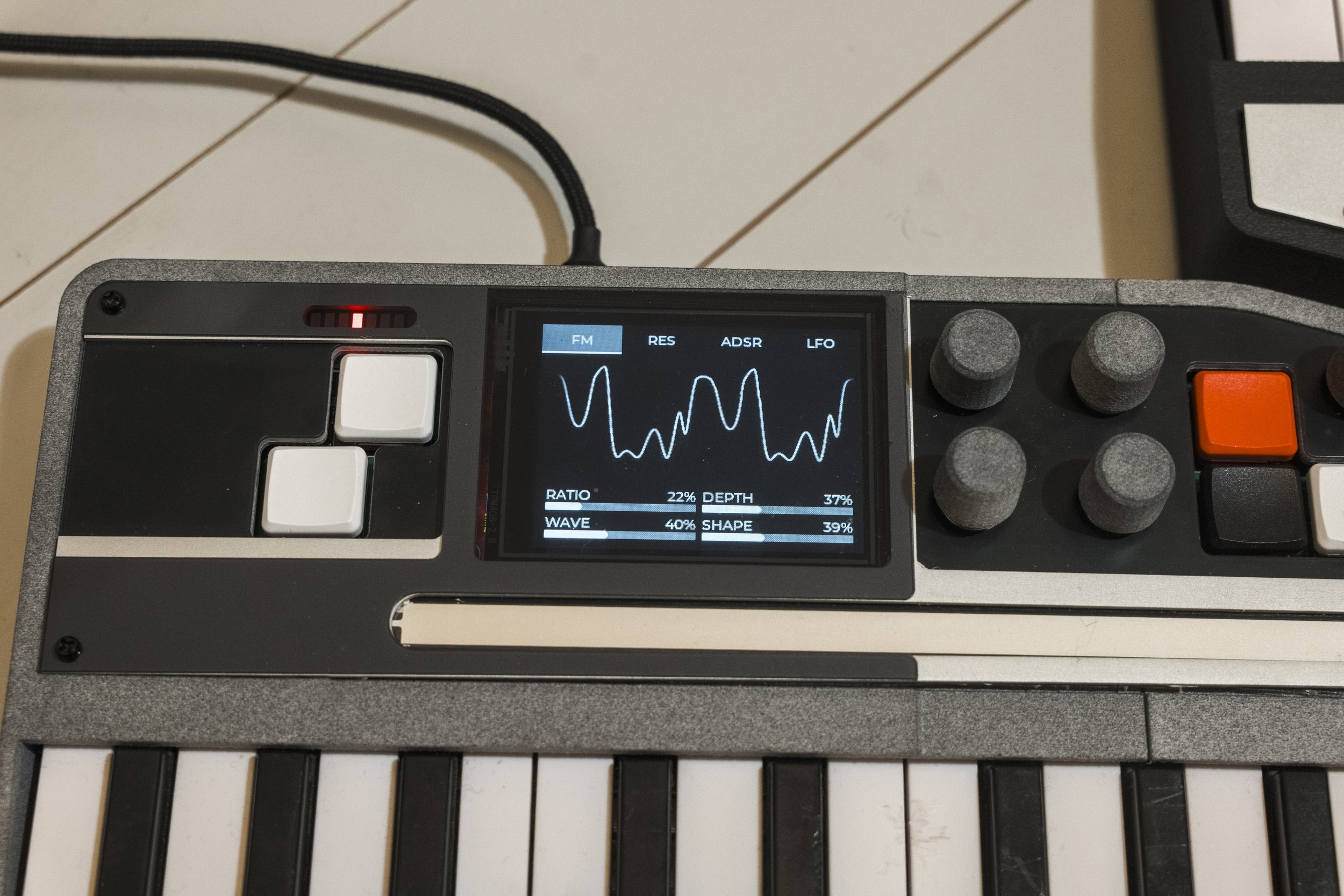
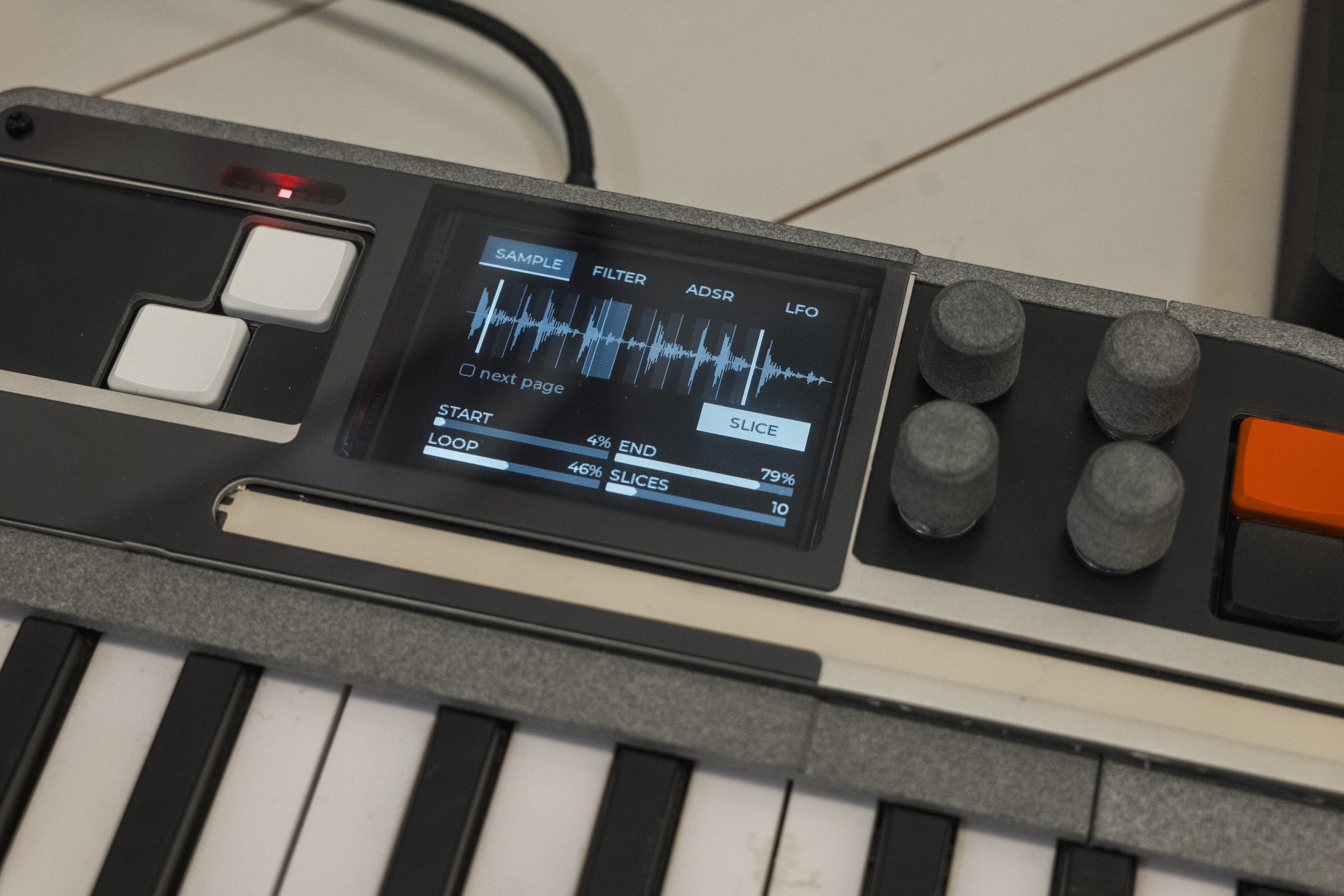
Sonically, it focuses on two sound engines: phase distortion synthesis, and sampling. We chose phase distortion as we feel it is the underdog of synthesis - it’s something we can’t find easily elsewhere. It’s largely inspired by the Casio CZ series. The sampling engine instead is quite simple by nature, but still highlights a few things that are important to us including sample slicing and a fairly lo-fi approach toward interpolation and reproduction of the sound. Behind all of this is also an arpeggiator and sequencer that can help create rhythmic repetition and evolution while we play.
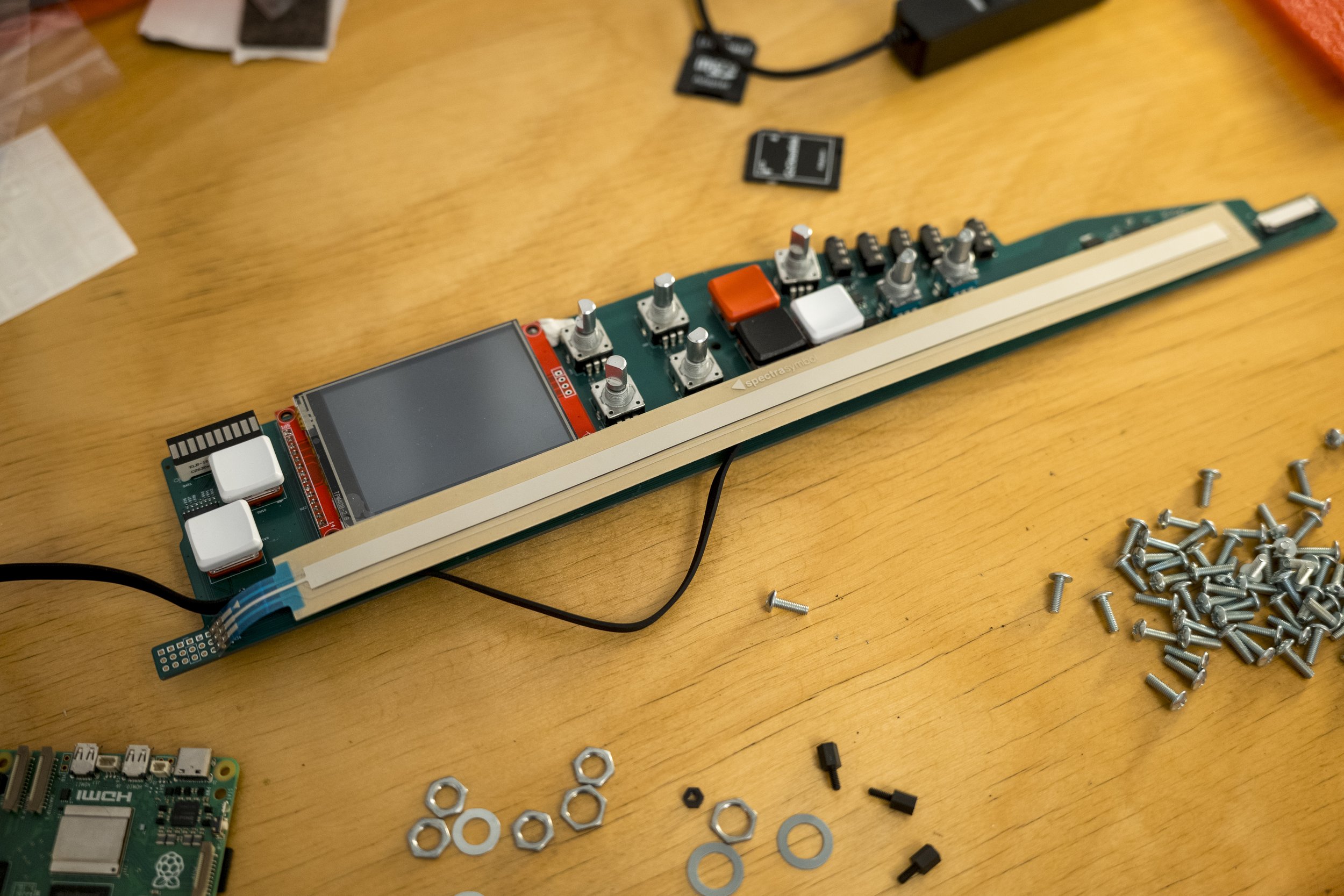
A touch strip adds an extra layer of expressivity too. The strip mirrors the key positions, so it’s easy to find the right note - both the keyboard and touch strip can be driven through a pitch modification layer that can quantize to scales and keys. Different engines can be assigned to either the keyboard or the touch strip.
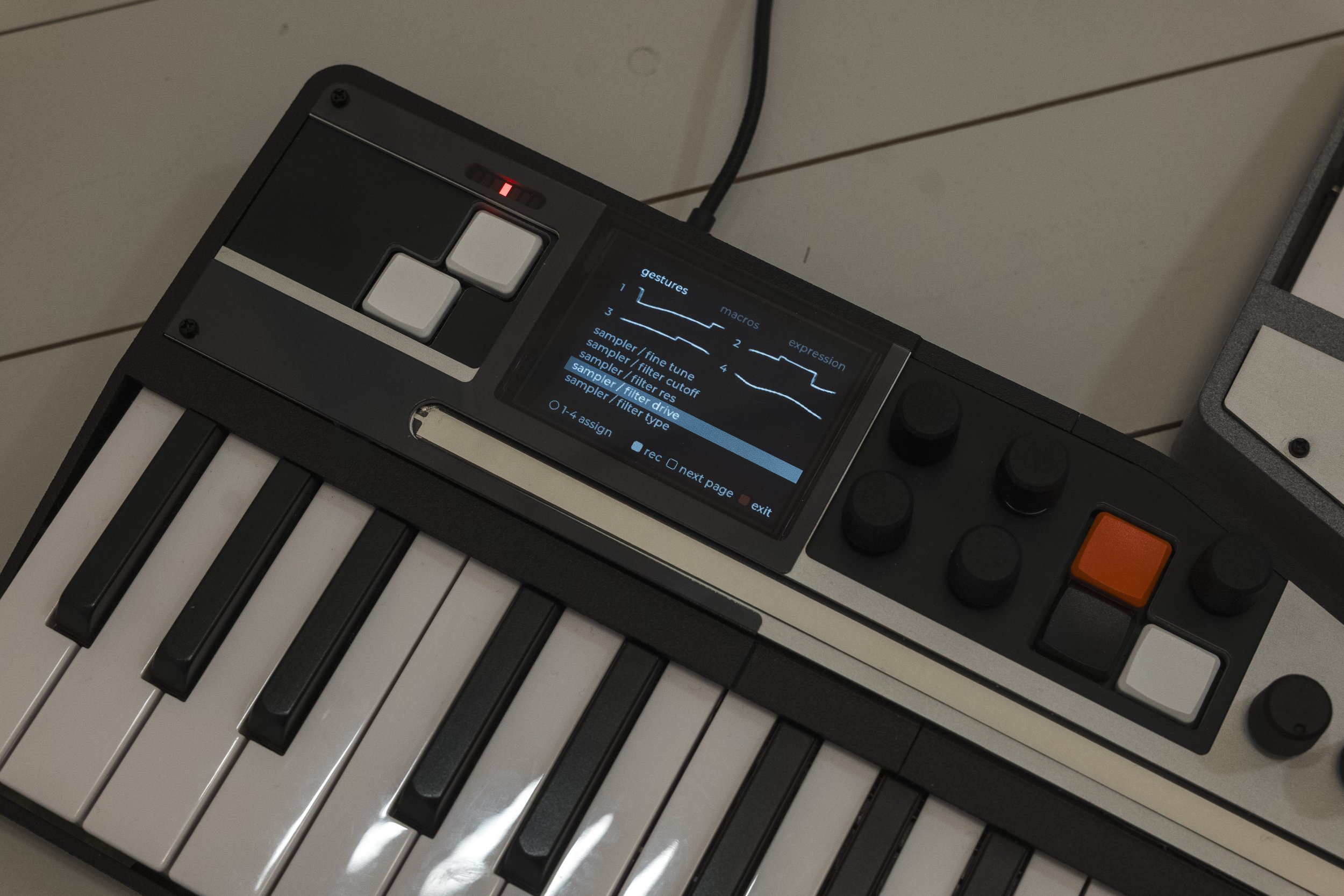
For modulation, besides a typical assignable LFO, we can also record gestures on the touch strip, and then assign them to any parameter of any part of the system.
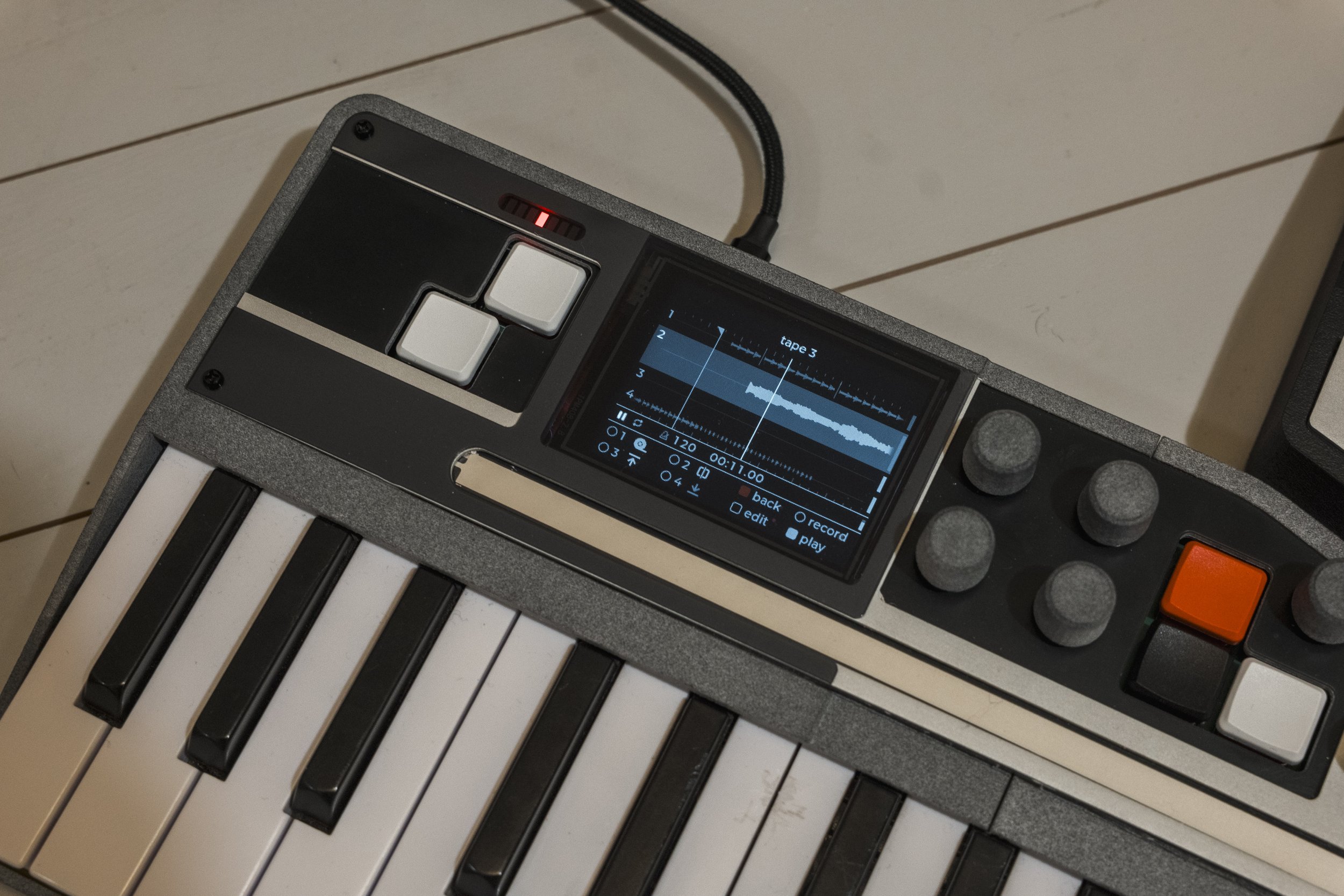
Finally, the entire system ends in a kind of four track sketch pad - while making entire tracks using it is possible, it’s most helpful to record down ideas without having to get distracted opening up the computer, or setting up other gear.
We can’t wait to start using this instrument in our live set and have already recorded a few tracks using it - it answers so many questions in our set up and process and we’re delighted with how it turned out!