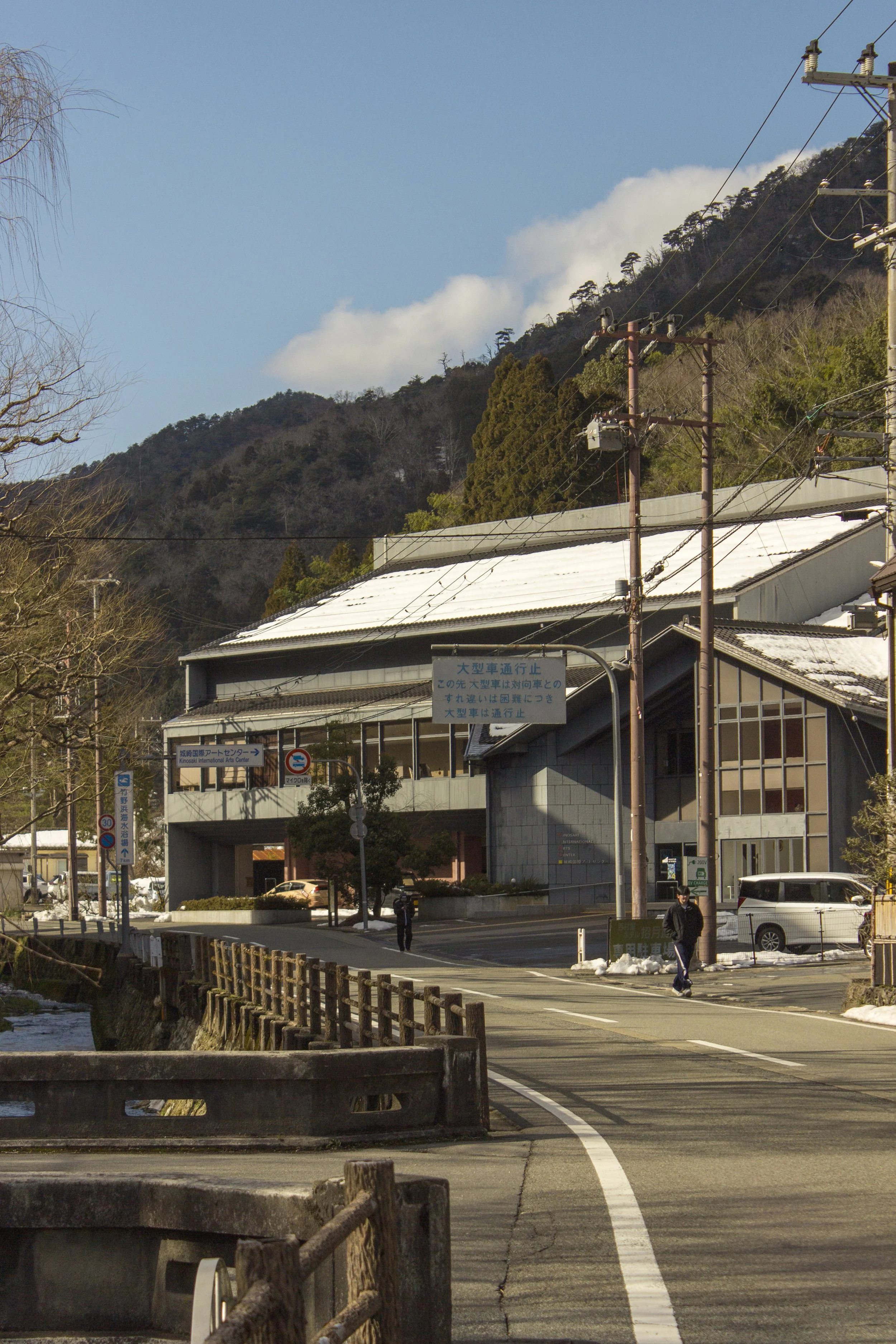
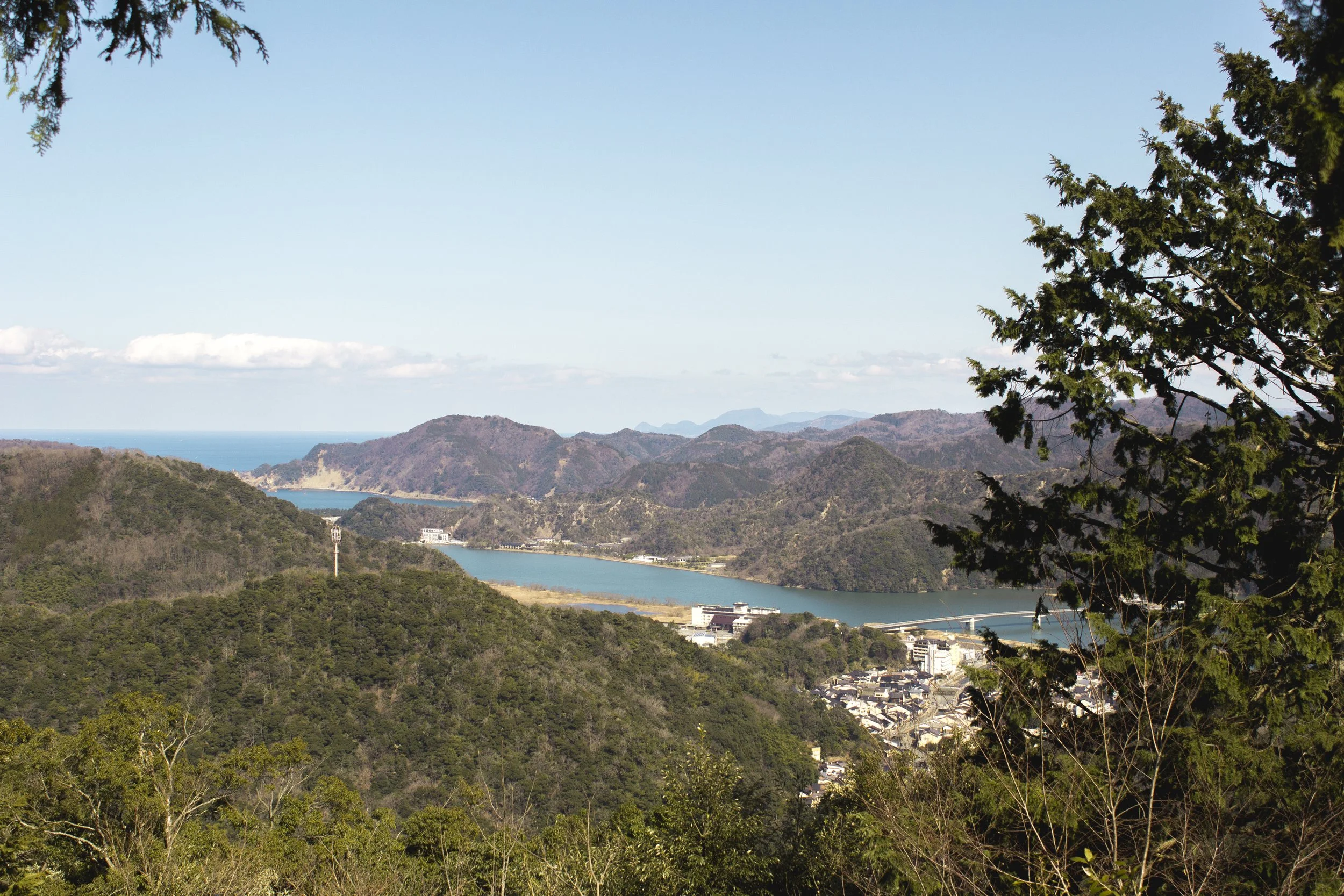
Kinosaki International Arts Center in the Distance
Kinosaki is of course very famous for its onsen, but when we arrived in Kinosaki by train, we didn’t know much about the town - we didn’t choose to apply to the residency because of its location specifically, even though it turned out to be a perfect fit for our second installment of collaboration with Inoyamaland.
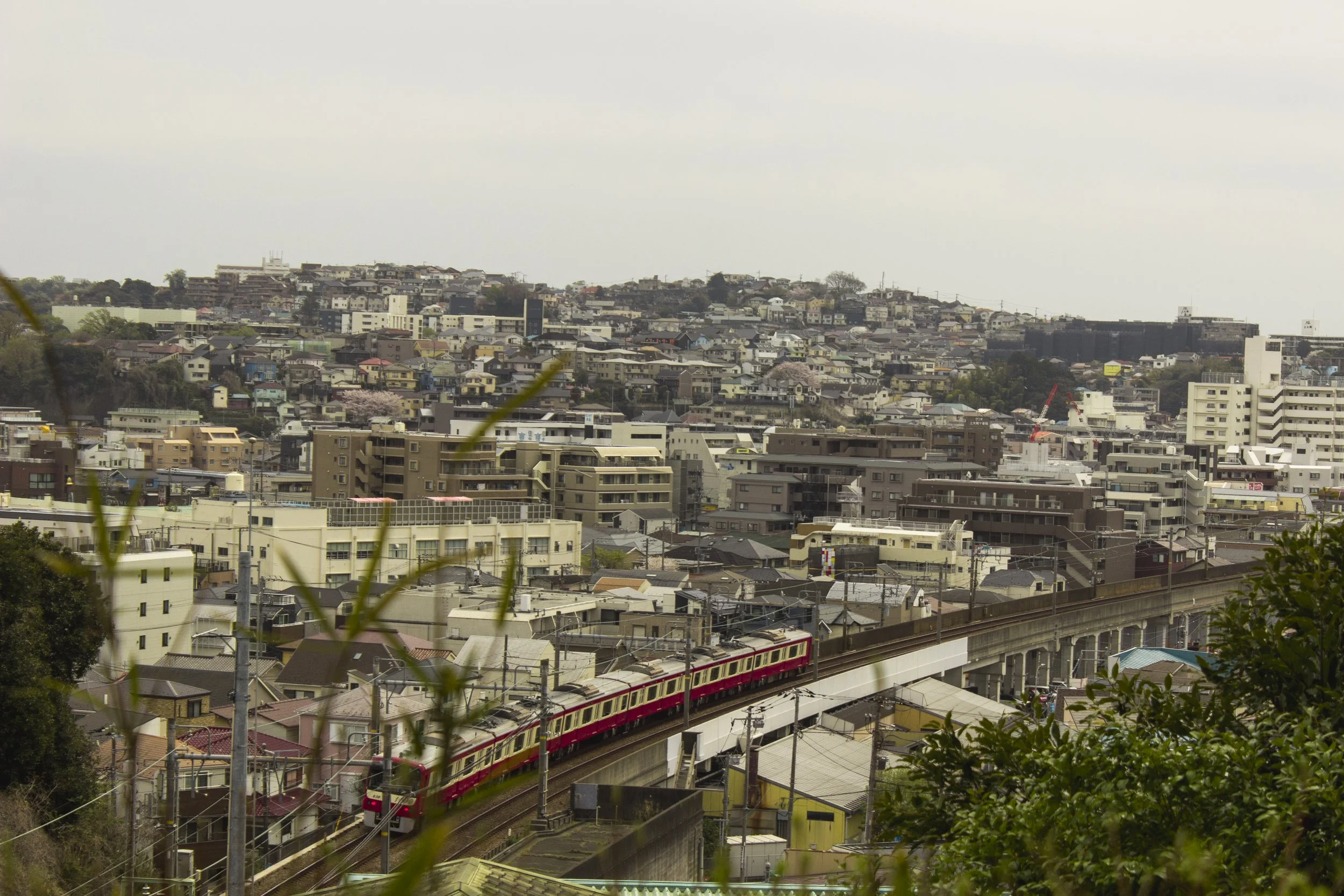
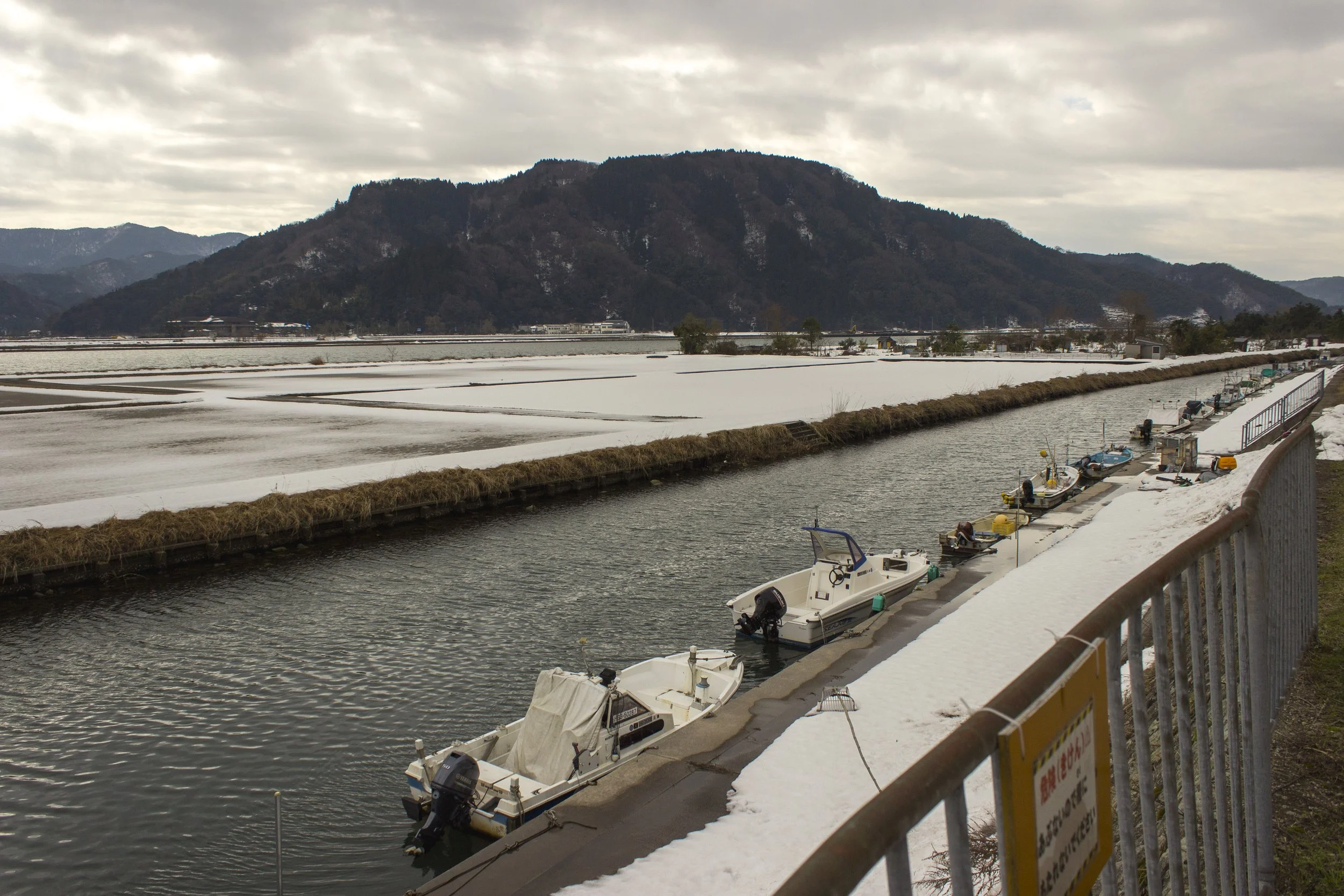
Maki, our coordinator, picked us up on a Tuesday, the day that the art center is closed, so even though the town was quite lively as we drove through it, we arrived to a building, the ex community hall, that was now very quiet, sitting at the edge of the village, on the bank of a river, covered in snow.
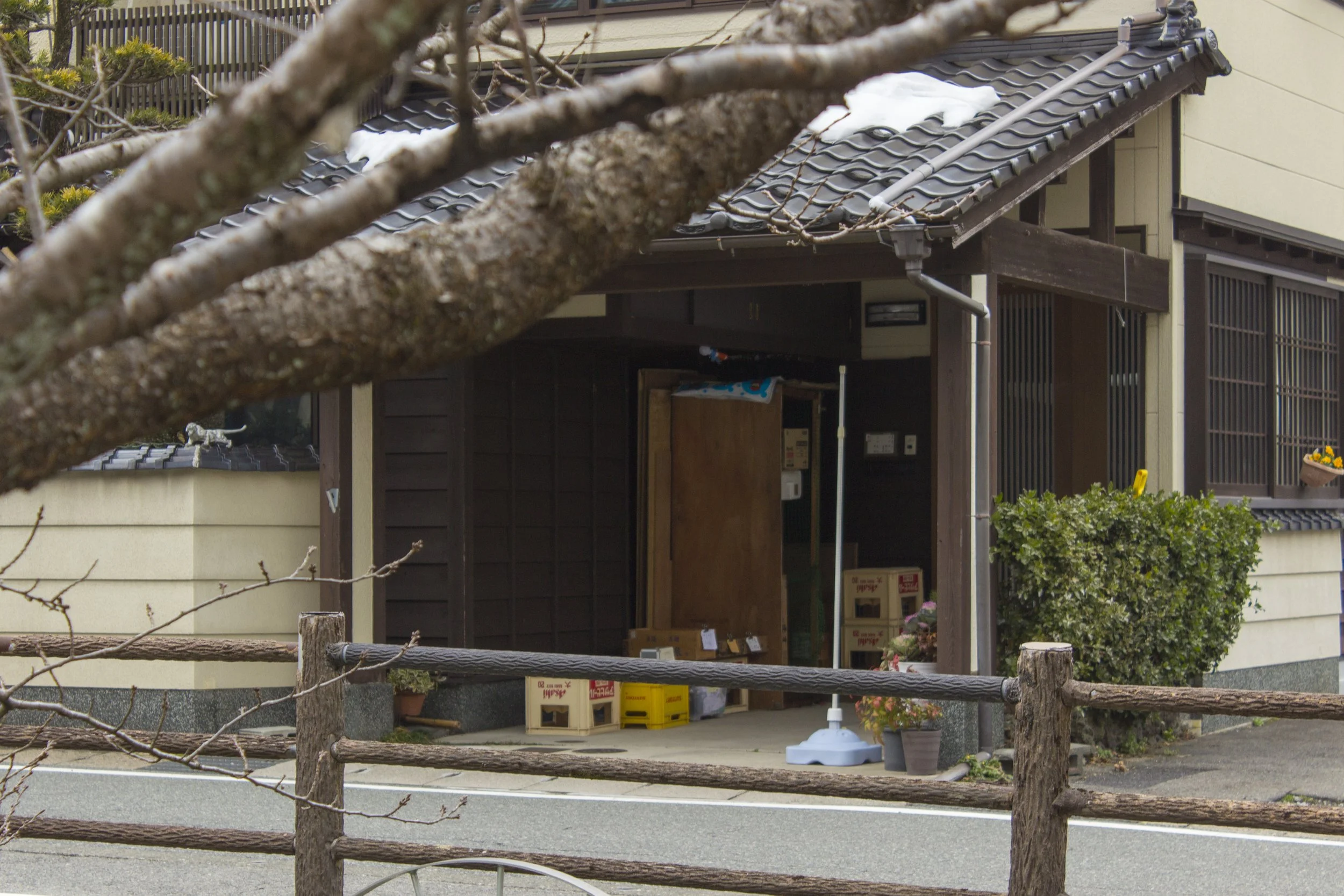
Our personal supplier of delicious greens: just a couple of minutes walking from KIAC, we could find daikon, yuzu miso and similar delicacies at the door. Just drop so coins, and take your bounty!
The art center itself was the reason why we applied to the residency, as it offers fully equipped fantastic studios to work 24/7, comfortable accommodation for large teams, and technical staff support.
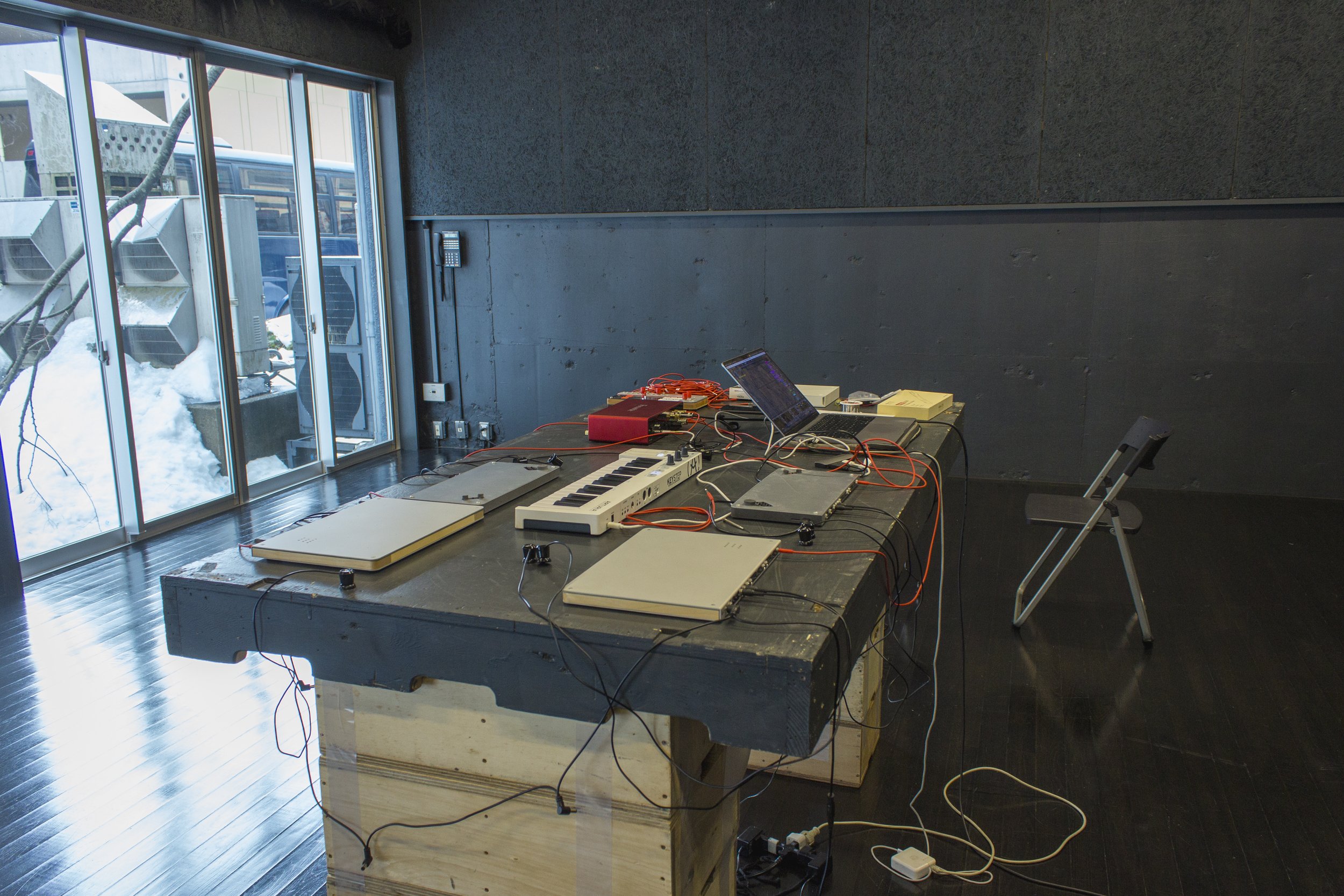
Being the only residents for most of our time there, we could structure our schedule around the use of two spaces: the smaller studio, that had plenty of natural light and offered us regular views of the passing train, and occasional views on the wildlife; and then the theatre hall: it’s a very large space, that was very cold and very dark, but very useful. It was our first time having such a space freely at our disposition.
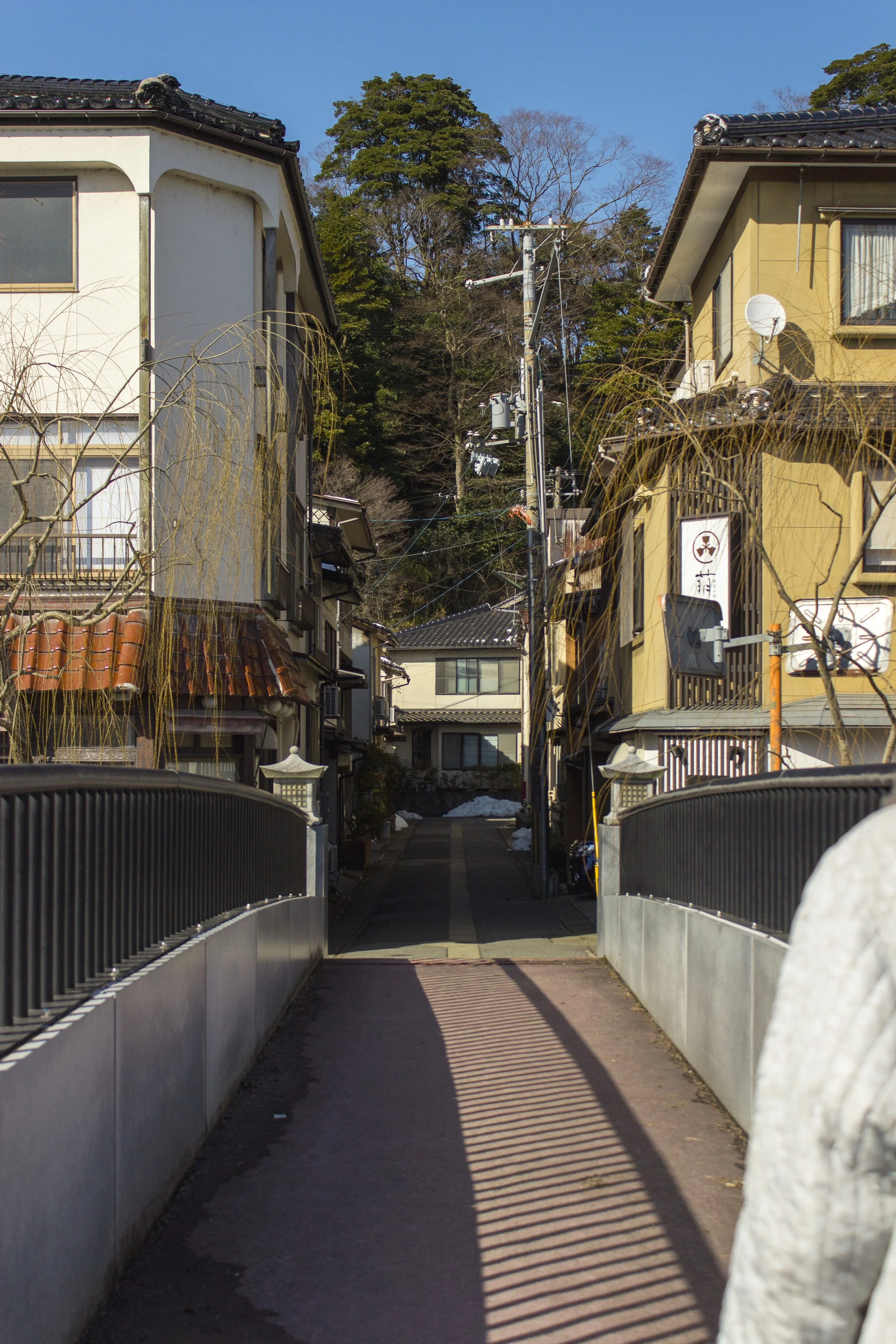
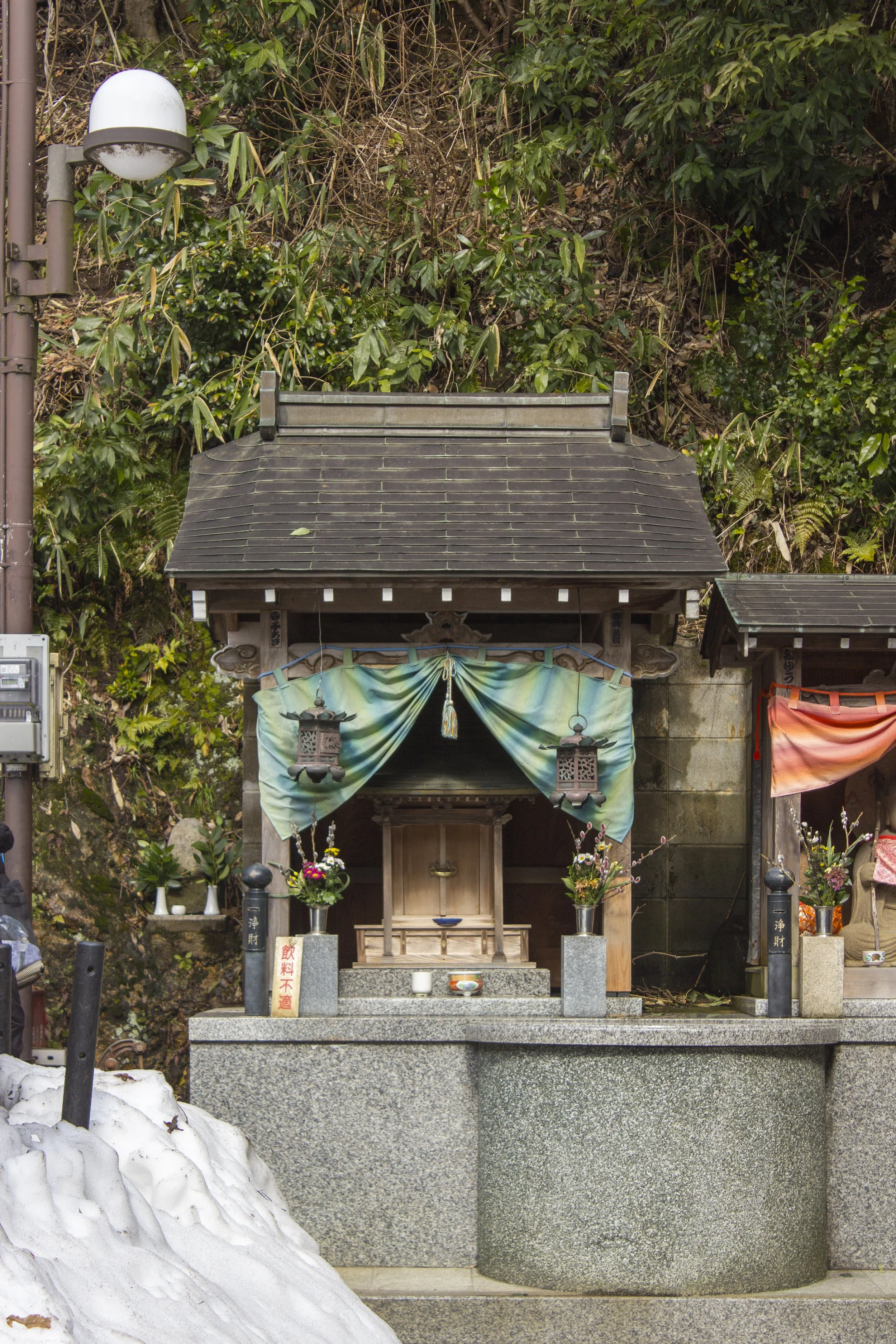
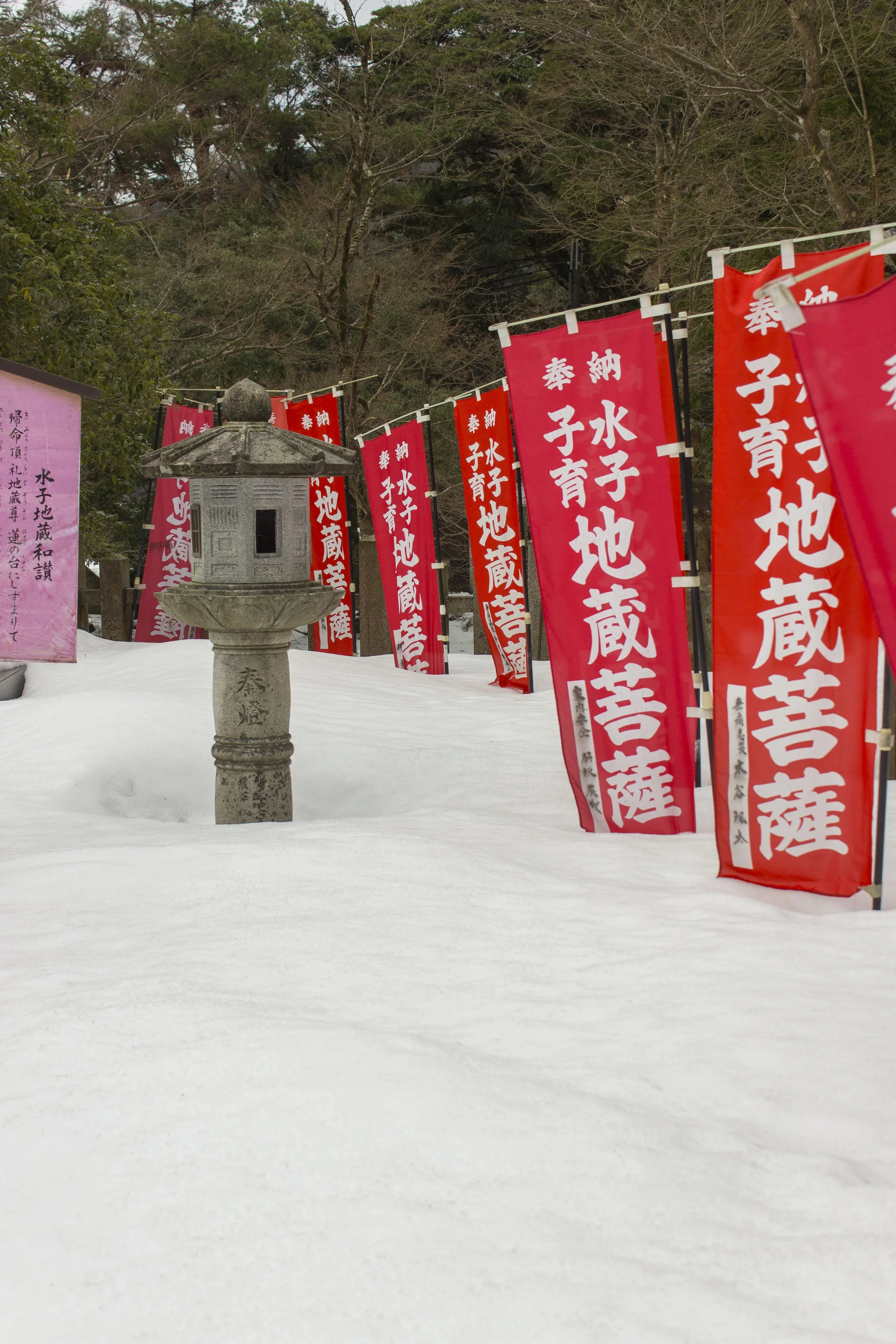
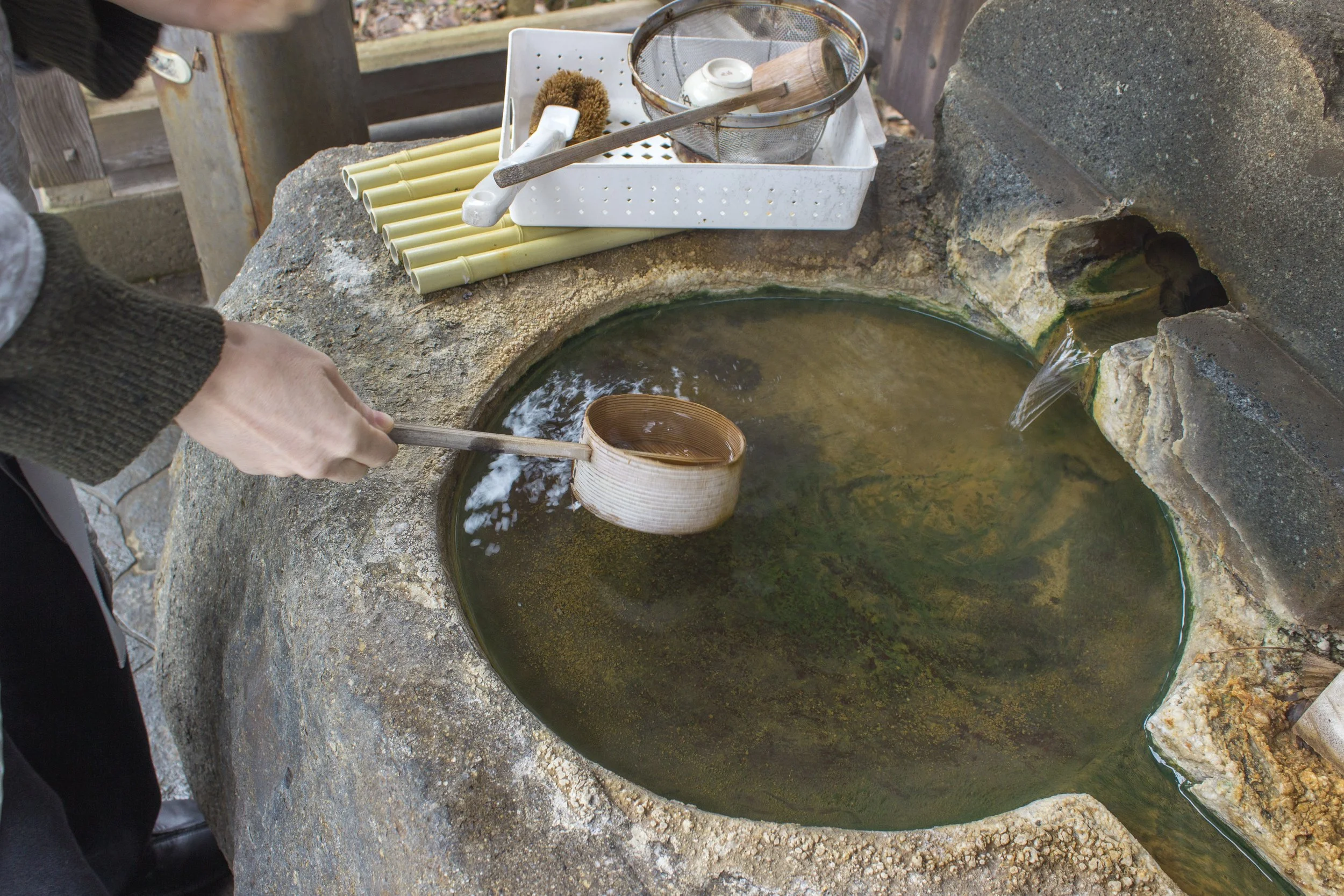
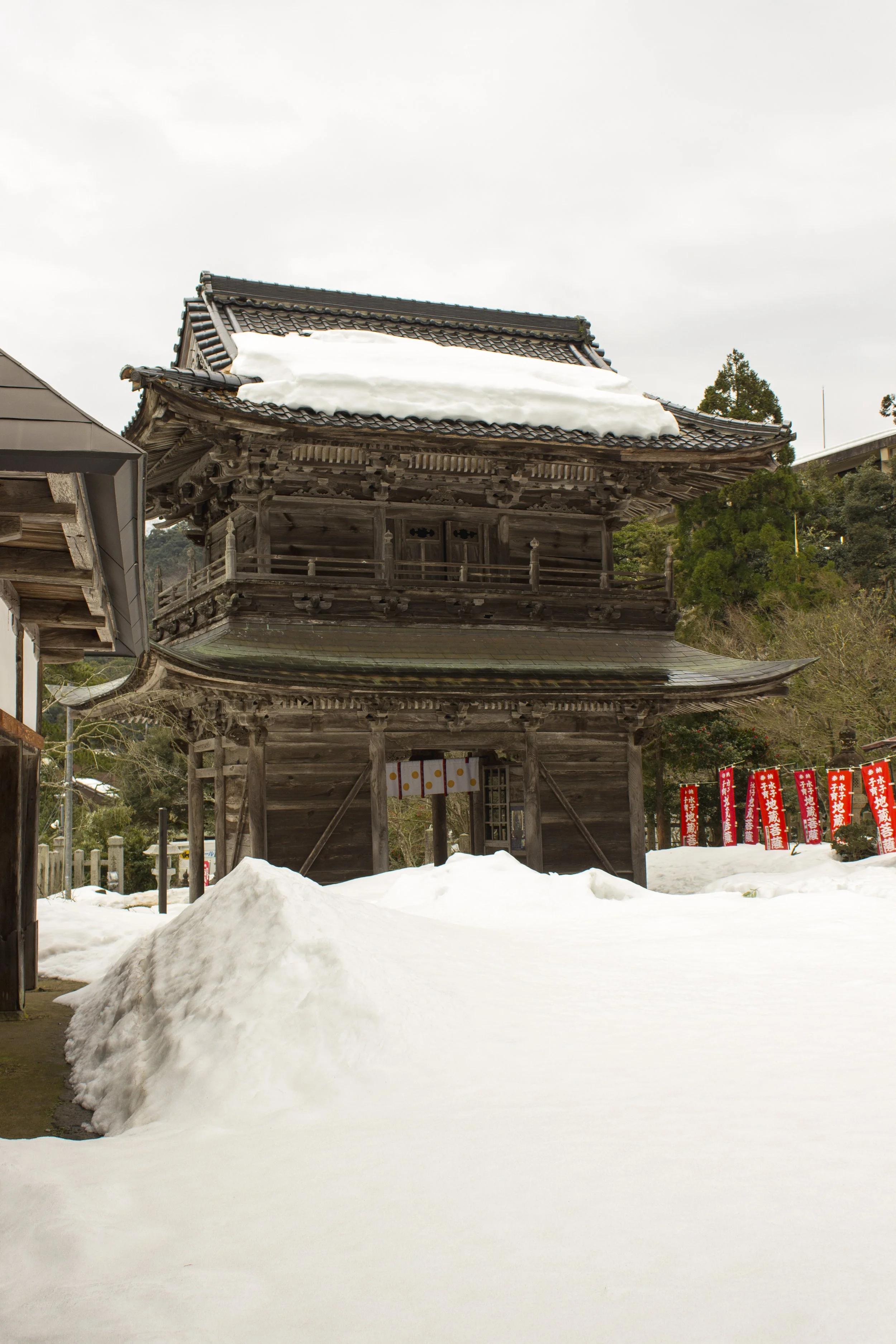
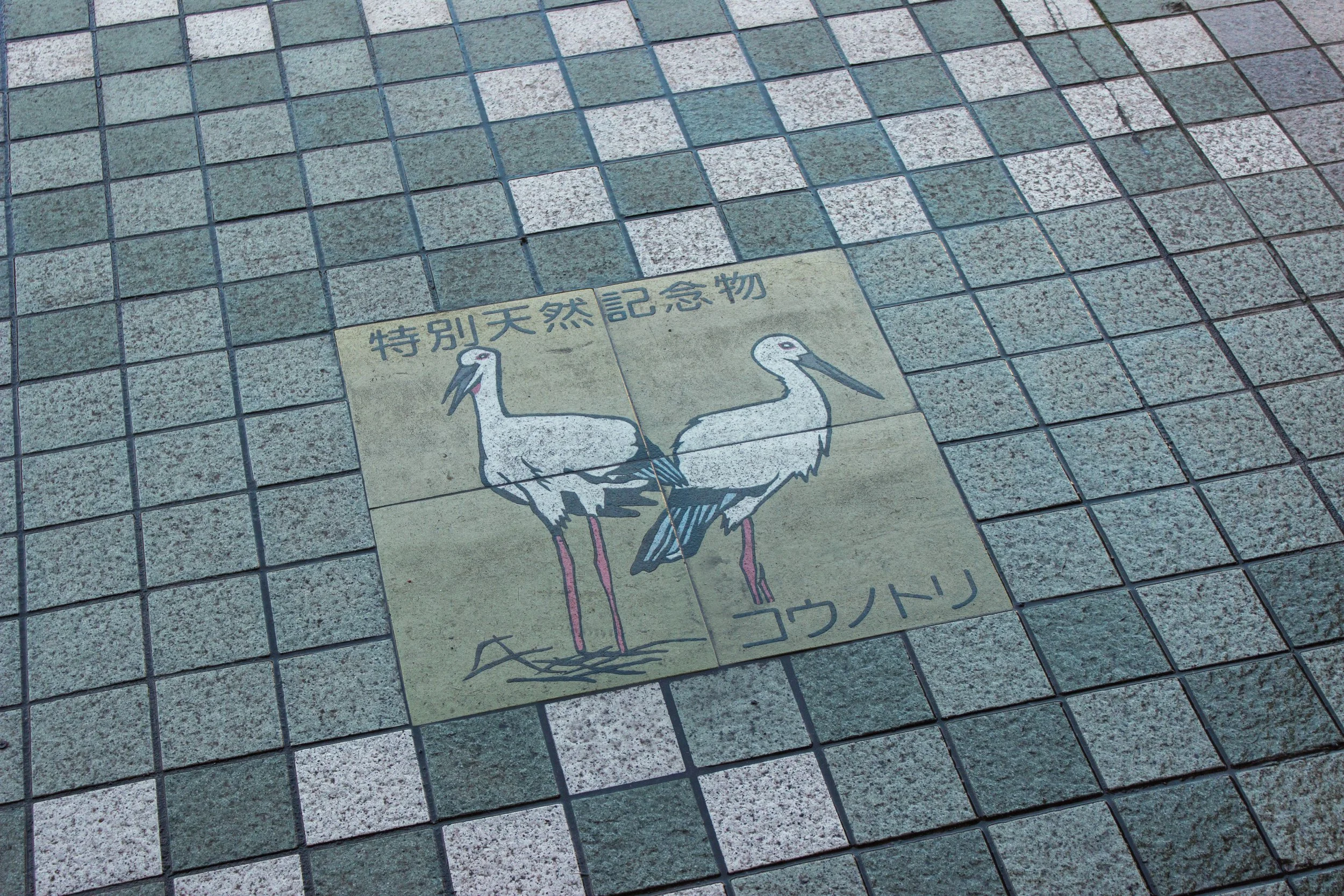
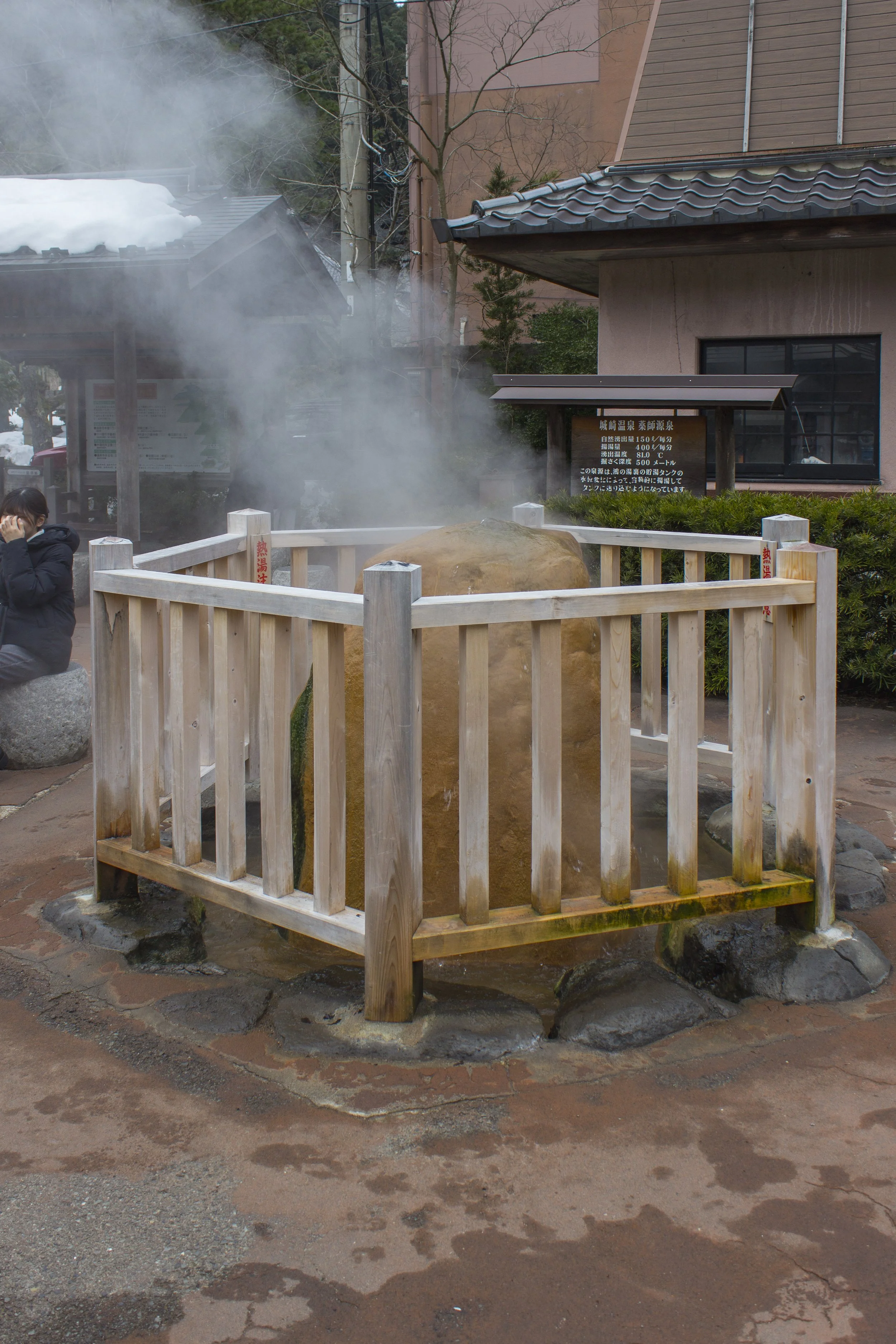
The most famous feature of Kinosaki, that has made the village famous since 720 AD, are the seven onsen that dot its main street - no, we did not manage to try them all during our stay, but we visited three of them (and some foot onsen too) and loved them, of course. By a complete coincidence in relation to our recent project with the Pfeilstorch, there is also a legend that connects the discovery of the onsen to the stork species present in the area, an animal reintroduced through conservation programs after it went completely extinct in the ‘70s. Moreover, farmers use a highly sustainable "stork-friendly" rice farming method to support the reintroduction of the endangered Oriental White Stork. By eliminating chemical fertilizers and pesticides, farmers maintain thriving ecosystems in flooded paddies, providing natural habitats and prey like frogs and loaches for the storks.
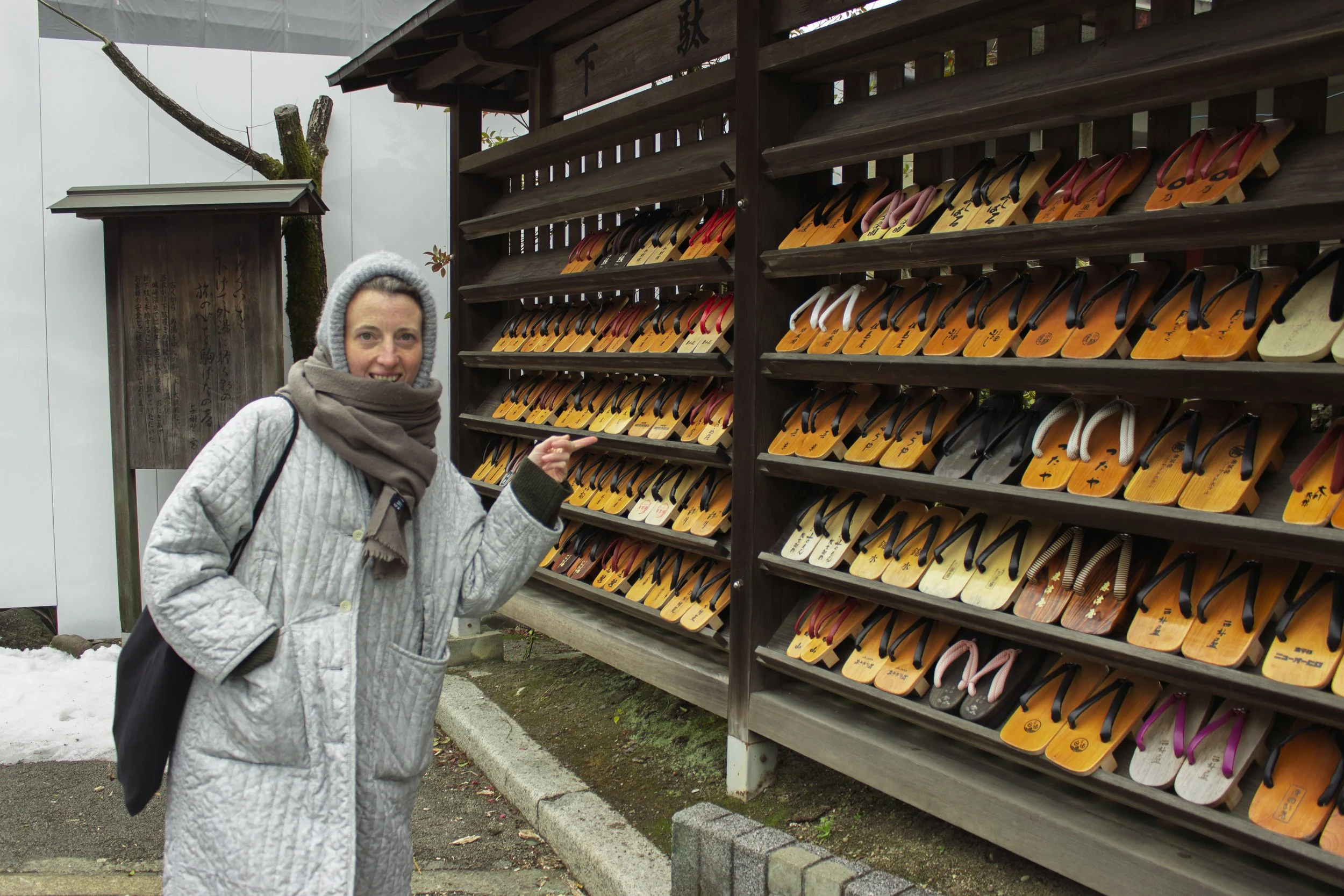
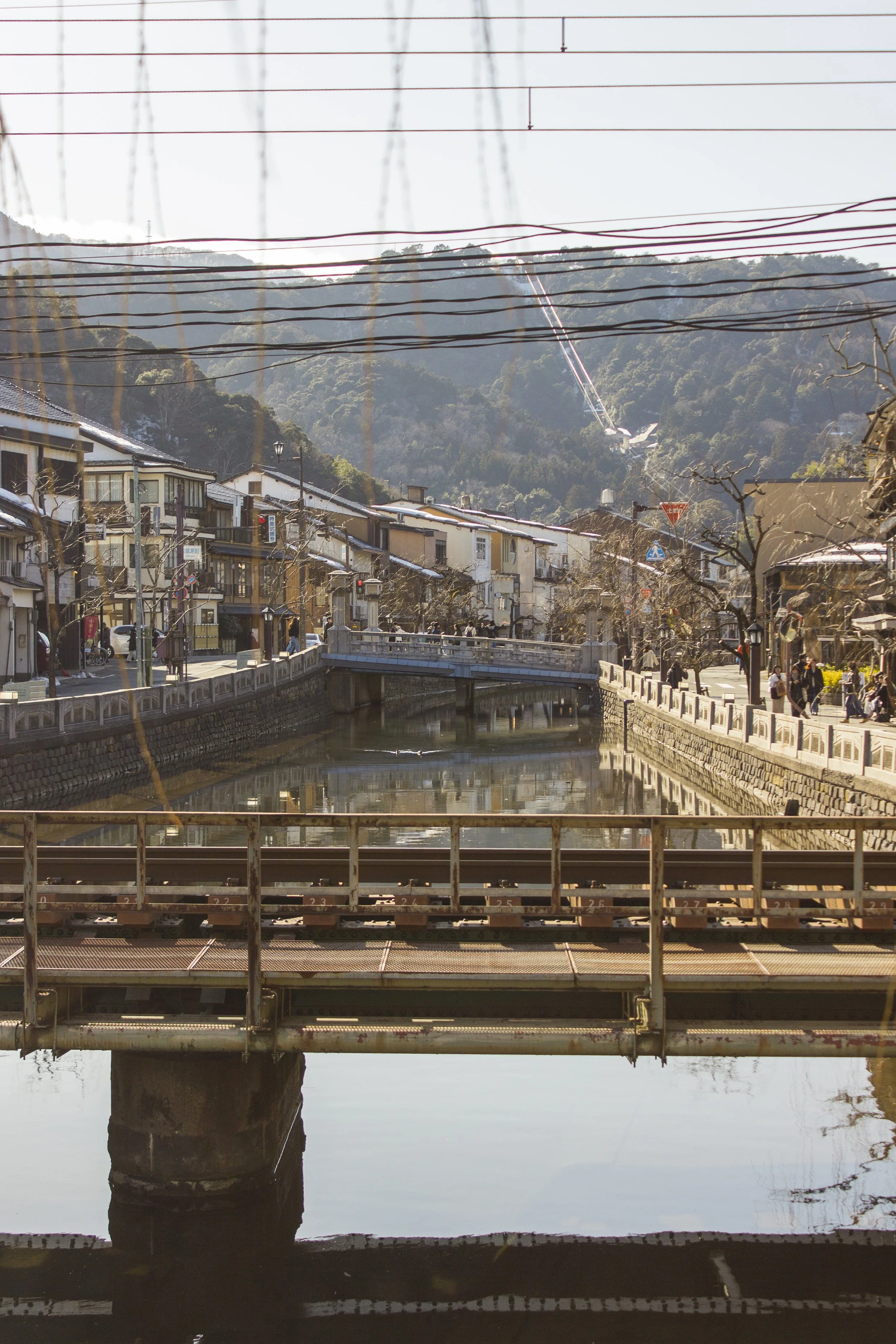
Because the town is built around the business of the onsen, the most common activities that you could observe are: strolling in yukata and geta, buying omiyage, drinking beer (delicious and locally brewed), and having fun at the traditional game shops.
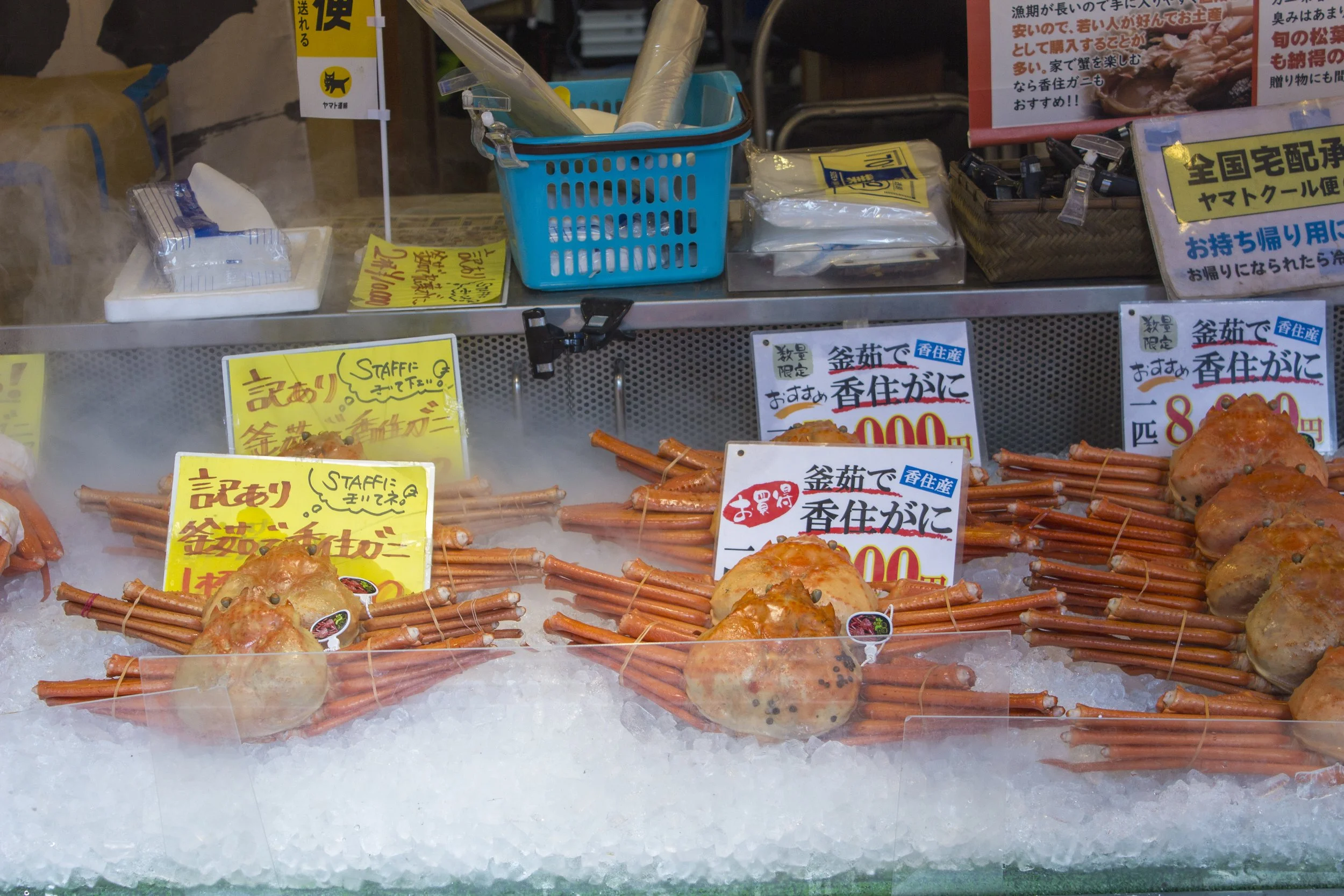
Actually, there is another activity that might be even more popular and hectic than the onsen bathing, and that is eating crab! We arrived right at the peak of this seasonal delicacy, which is caught in the nearby Tsuiyama or Kasumi ports. But our favorite seafood discovery has been actually these thin and pink shrimp that are very buttery and just delicious.
We learned that the town has a specific motto, that is "Kyozon Kyoei", a phrase that could translate to "Coexistence and Co-prosperity" and dictates much of the community's culture and business operations.
The "One Large Inn" Concept: The town operates under the ideology that Kinosaki is a single giant inn. The train station is the entrance, the streets are the hallways, the shops are souvenir areas, and the seven public bathhouses are the hot spring amenities.
Community Spirit: Local business owners (such as ryokan hosts, restaurant chefs, and shopkeepers) work together rather than competing against one another, ensuring that the town's 1,300-year-old onsen-hopping tradition thrives as a cohesive community effort.
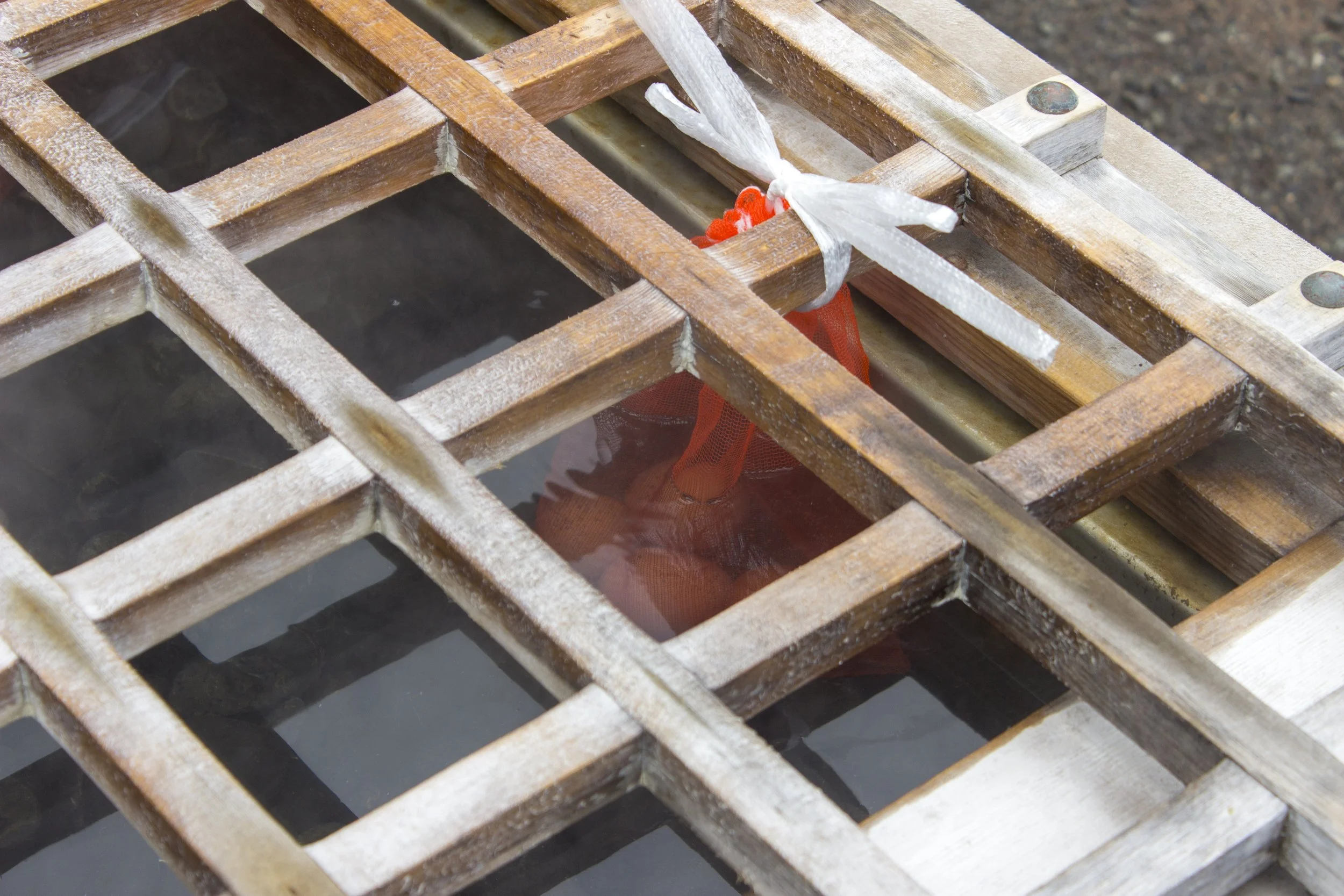
Onsen tamago, that is eggs you cook in the onsen water … it might take 9 minuts though!
At some point we had a chance to talk with Makoto (from Inoyamaland) and he was comparing Kinosaki and his hometown of Yugawara on this aspect: he mentioned that Yugawara used to be like that, but not anymore - so we felt even more lucky to get to experience this!
Kinosaki also has some nice coffee, but the best coffee we probably had when we got to visit musician Masayoshi Fujita in his studio in the snowy mountains. Masa’s history is inspiring, as he belongs to the wave of a younger generation that moved to the countryside and is reviving not only a mostly abandoned town, but a small community and art hub. So if you are ever around Kami-cho, look out for the pizzeria, the record shop and music events!
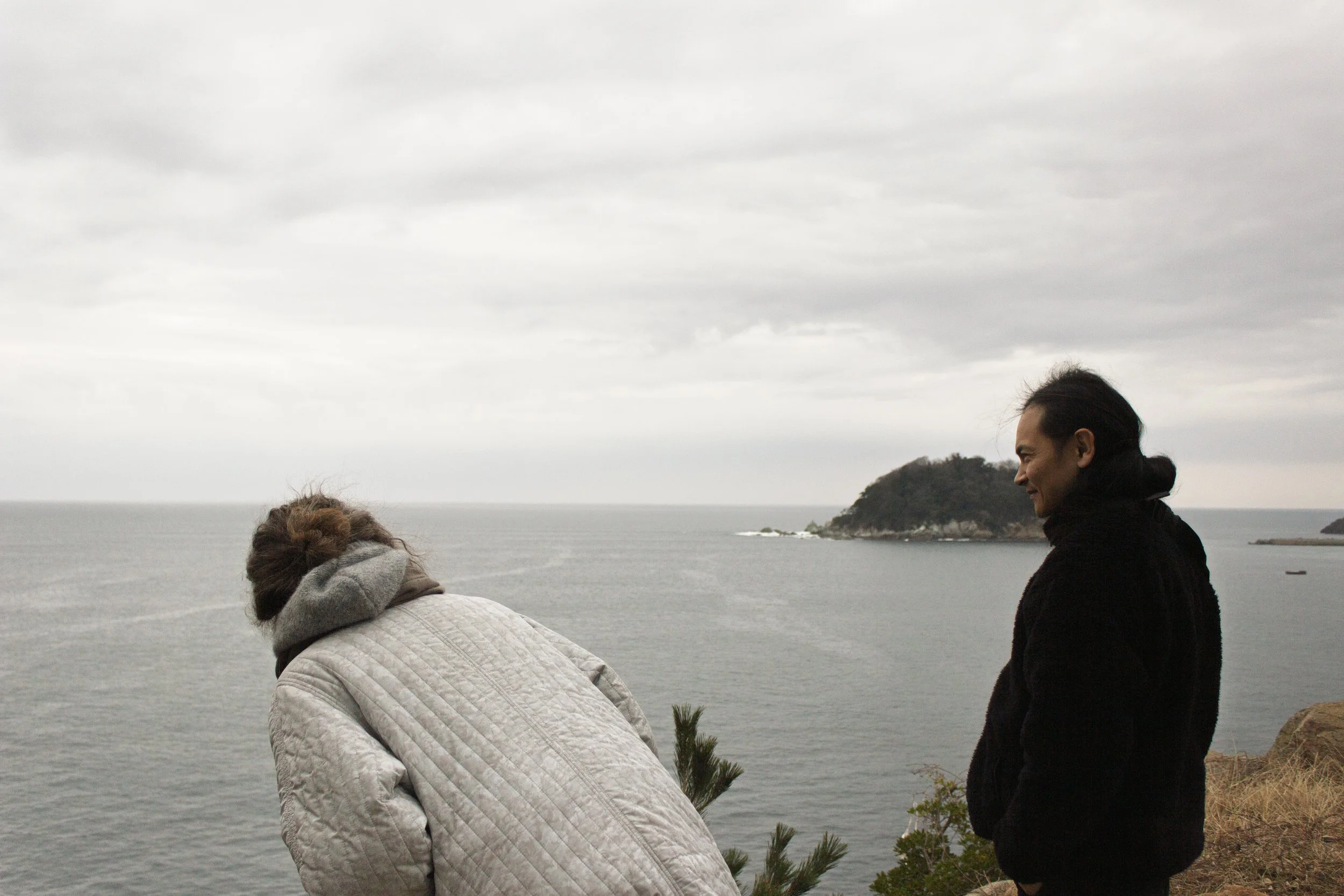
With Masayoshi Fujita
Another remarkable meeting brought us to the museum in Kasumi where we got to talk to a DIY bamboo instrument maker who is completely self taught. We also attempted to start some bamboo work, but the process of preparing the bamboo (cleaning, drying etc) takes quite some time and skill, so we didn’t deliver this time.
A major event during our residency was our soundwalk that we carried out through the town: it was maybe not your standard soundwalk, because it included the use of radios, and it was totally our first time working with the format. The content of the walk was quite multidimensional including field recordings, compositions, and text that we wrote in English and got translated into Japanese with the help of KIAC staff. A local theatre student helped us record the narration too.
The theatre world had quite an influence on us during this period, for a couple of reasons: first of all, the nearby Toyooka city is the home of the theatre company Seinendan, founded by acclaimed playwright and director Oriza Hirata, whose idea is rooted in “contemporary colloquial theatre theory”; secondly, we were largely inspired by the company Port B and their project McDonald's Radio University. There is also an early theatre and performance festival taking place in Toyooka, which we will make sure to apply to!
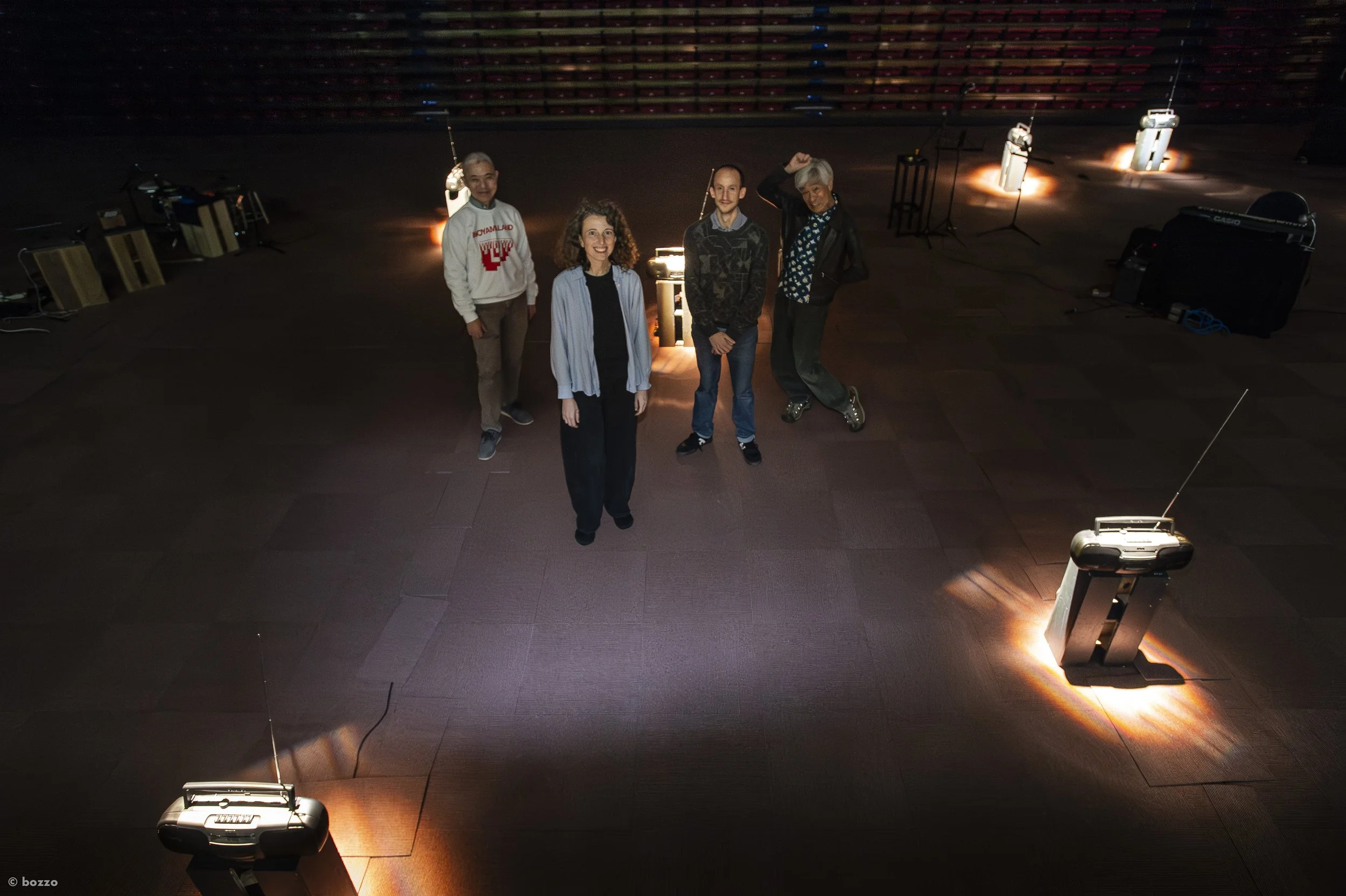
With the radio installation in the hall
Overall we are so grateful and surprised by the positive and proactive participation of the community to our activities; for example, we also received many submissions to our ‘call for radios’, which made it possible for us to populate the big performance space with a variety of radio devices ‘on loan’ from local residents.
After a few tests and many incremental improvements, we carried out the soundwalk on a rainy Saturday and a less gloomy Sunday (here is a behind the scenes). It was extremely interesting to see which part of the walk resonated the most with the audience, and in fact at the end of each session we had some feedback time that allowed us to communicate with the participants. The forest segment of the walk is really impressed in our memory, because there we listened to electromagnetic howling which somehow perfectly matched the bleating of invisible deer. It was magical!
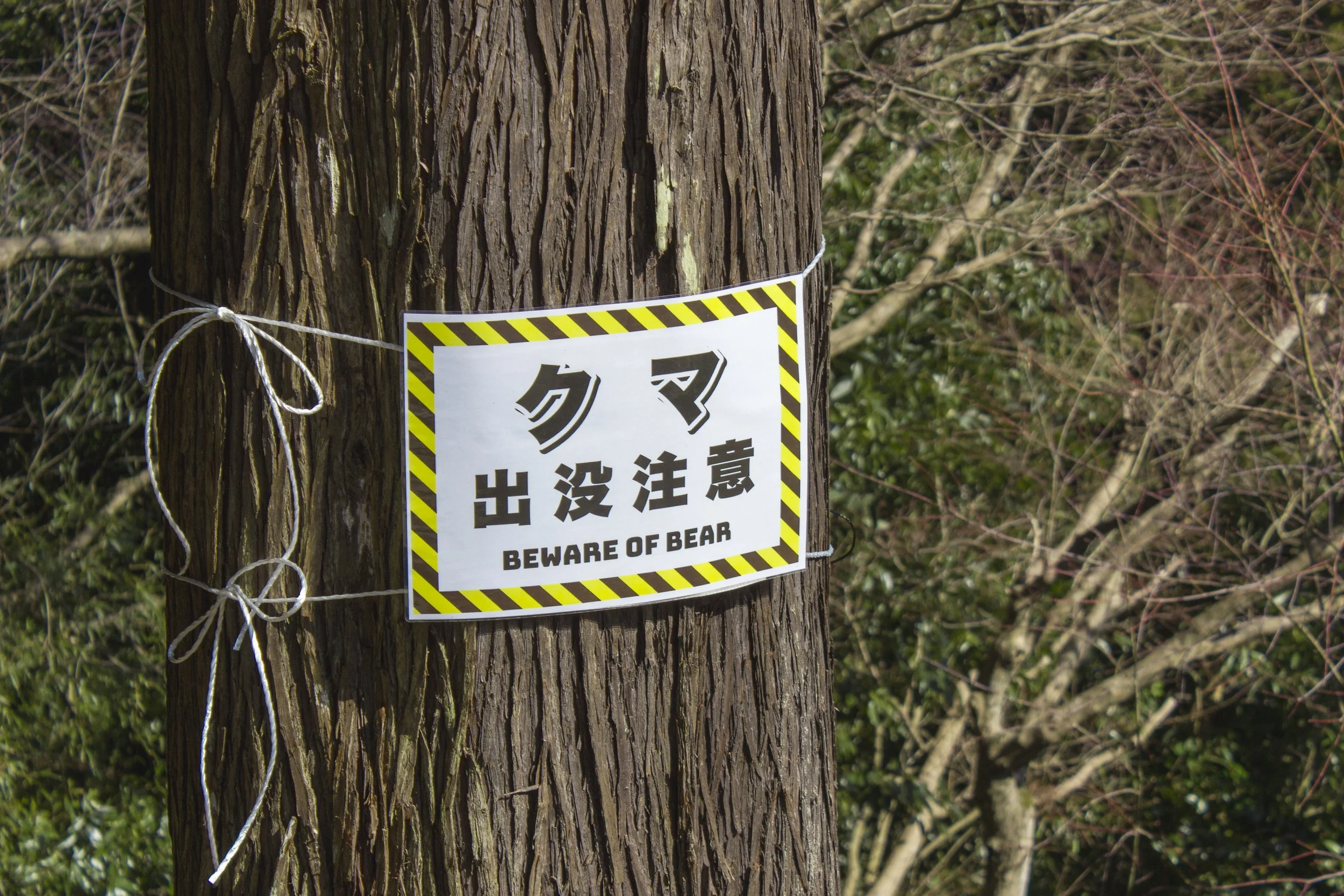
These are mountains where some bears roam as well, and bears are a bigger and bigger issue in Japan. We were carrying a bear bell one day when we decided to take the path up the hill where the cable car goes. We didn’t encounter any, but one of the roads was in fact closed for sights of bear had been recorded.
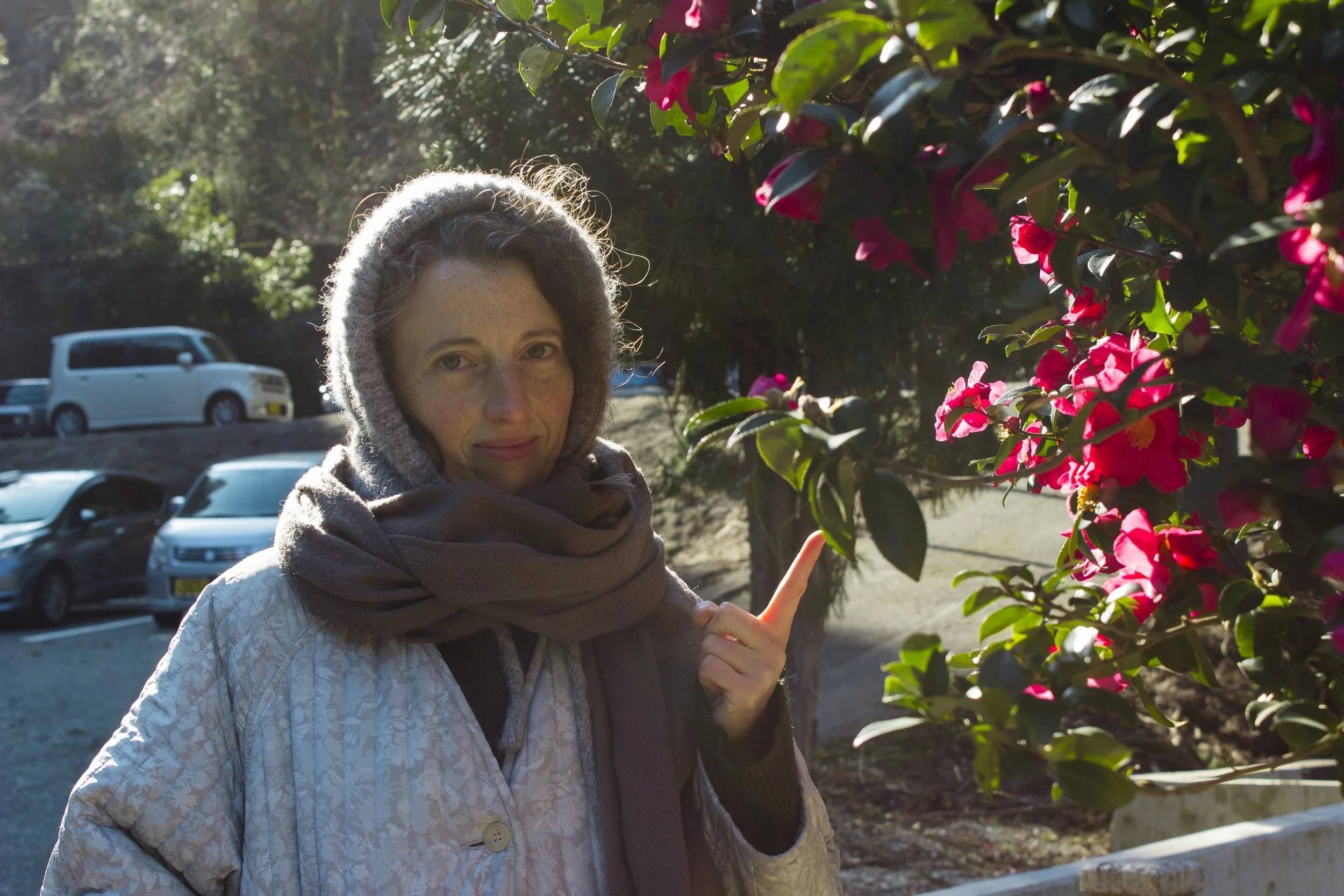
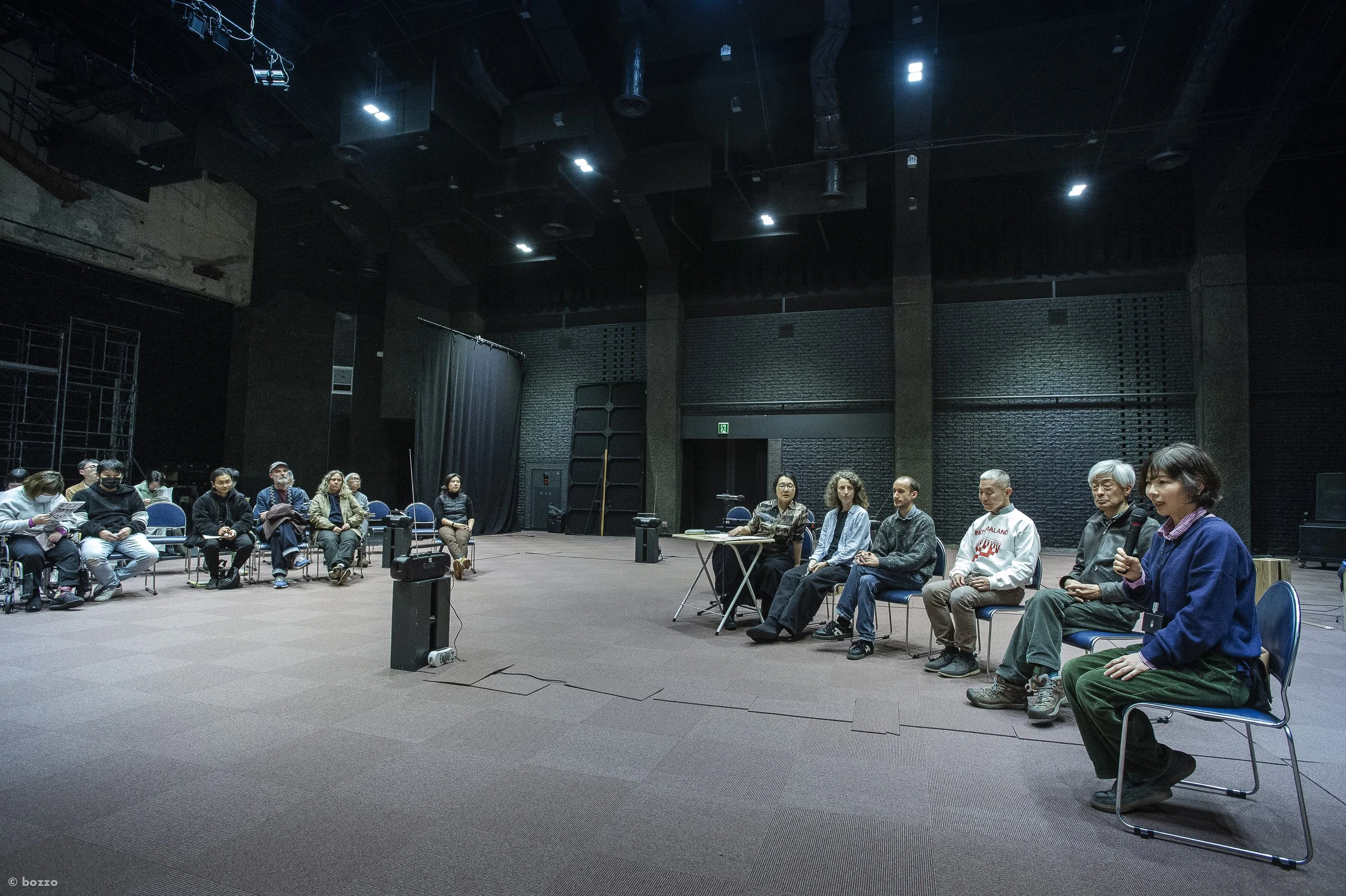
The after-show conversation
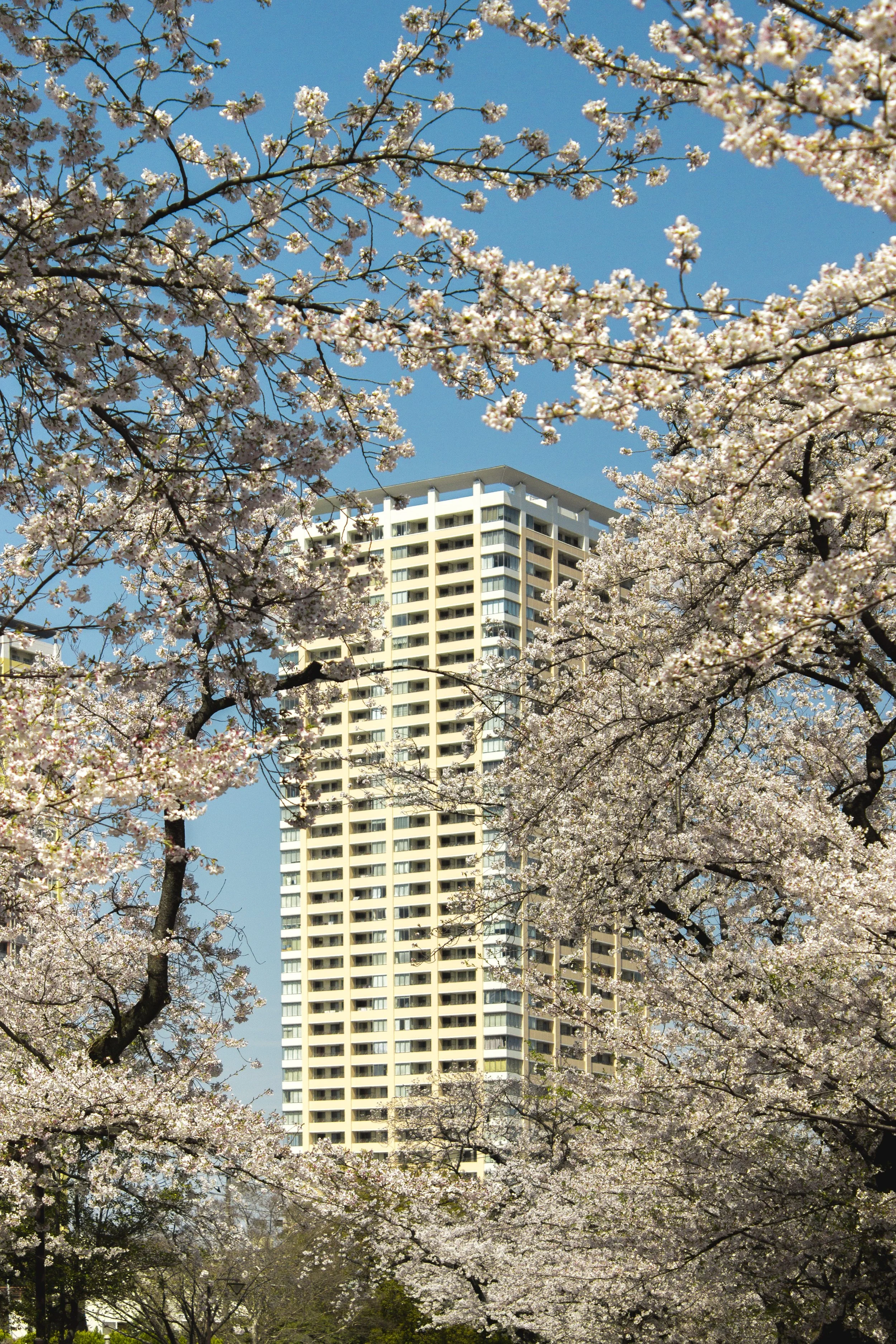
Inoyamaland finally joined us in residency, and it was great fun to celebrate together Nico’s birthday, but also a lot of work to finalize the performance and get some material recorded. The show came and went, followed also by a public conversation with the help of a local translator, and a group dinner with Chinese takeway … and it was already time to jump on the bus to Tokyo. And guess what!? We didn’t even get to witness the sakura blooming along the river, missing it by just one or two days. We were quite disappointed…
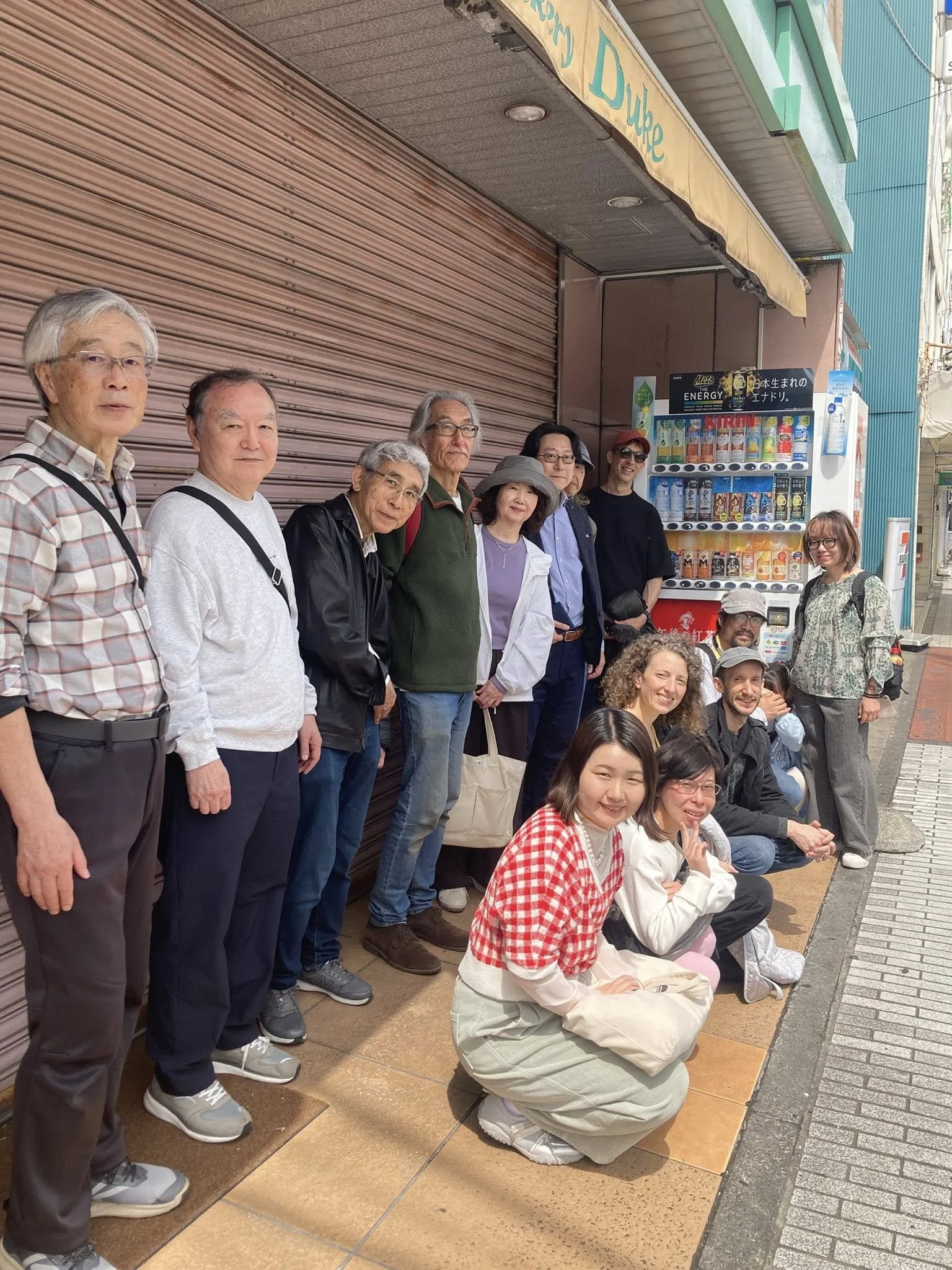
Yokohama soundwalk participants
Tokyo
And all of a sudden we found ourselves in the middle of Shinjuku, where the top floors of the WPÜ hotel were ready to host us for a short residency, a workshop and a little show.
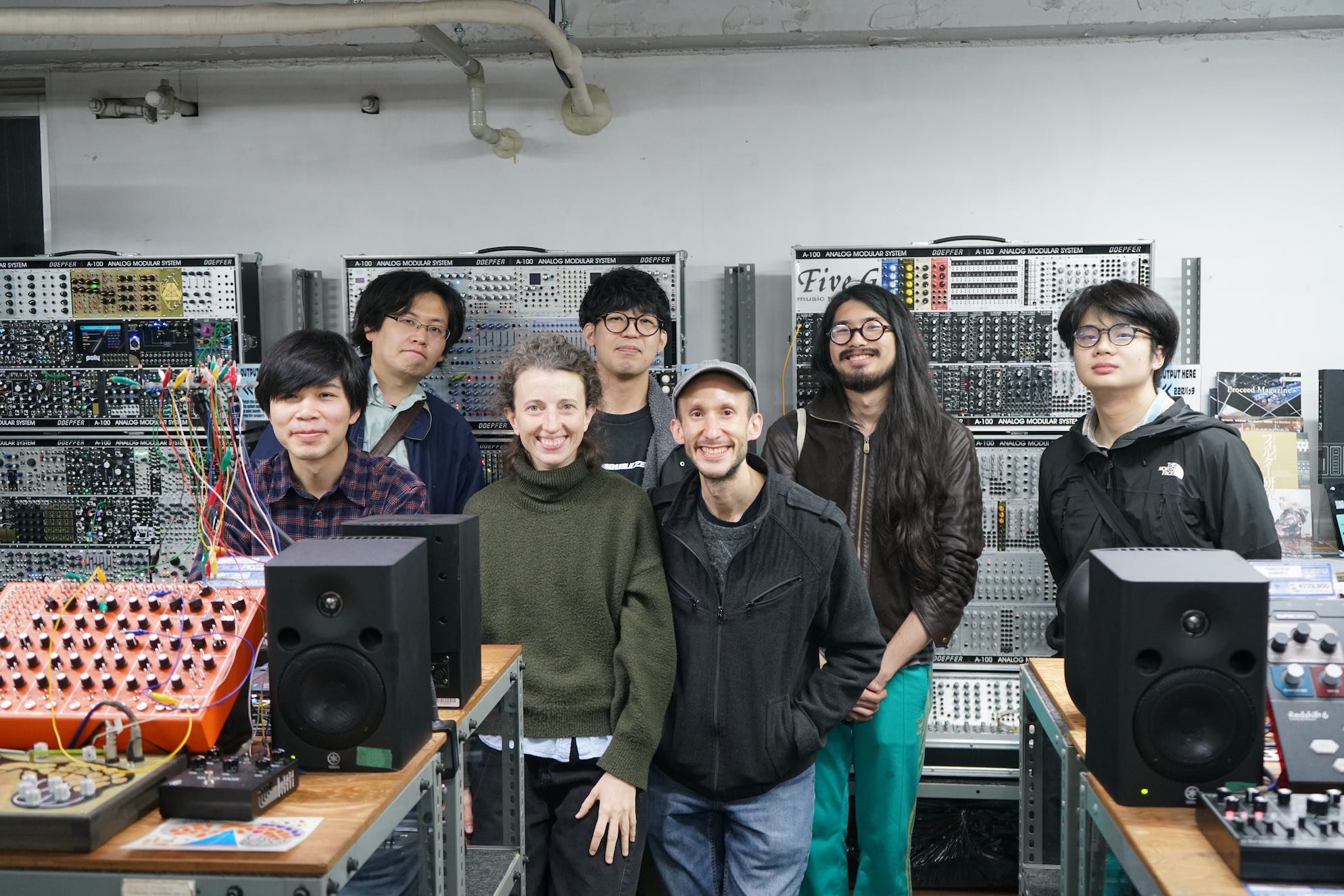
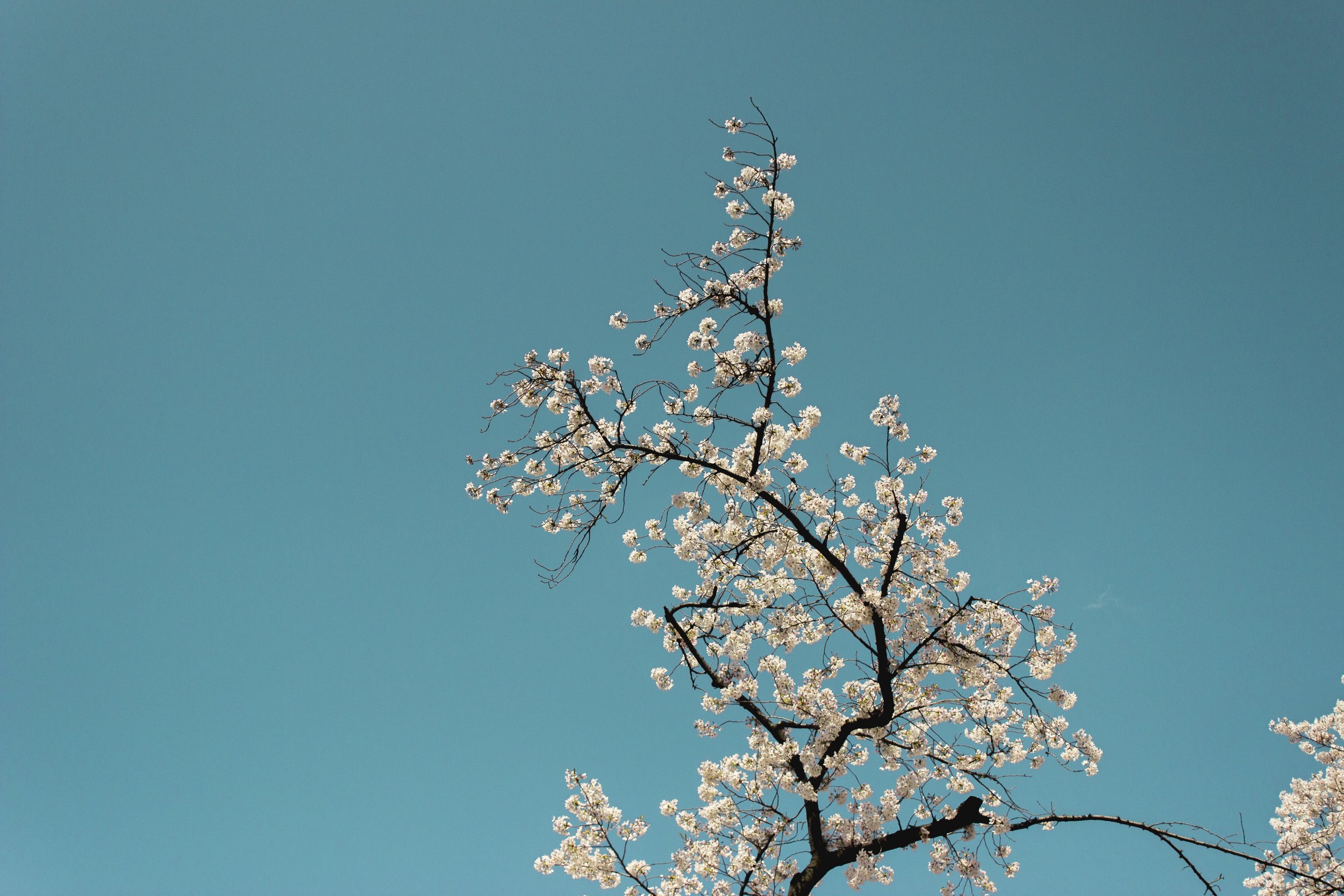
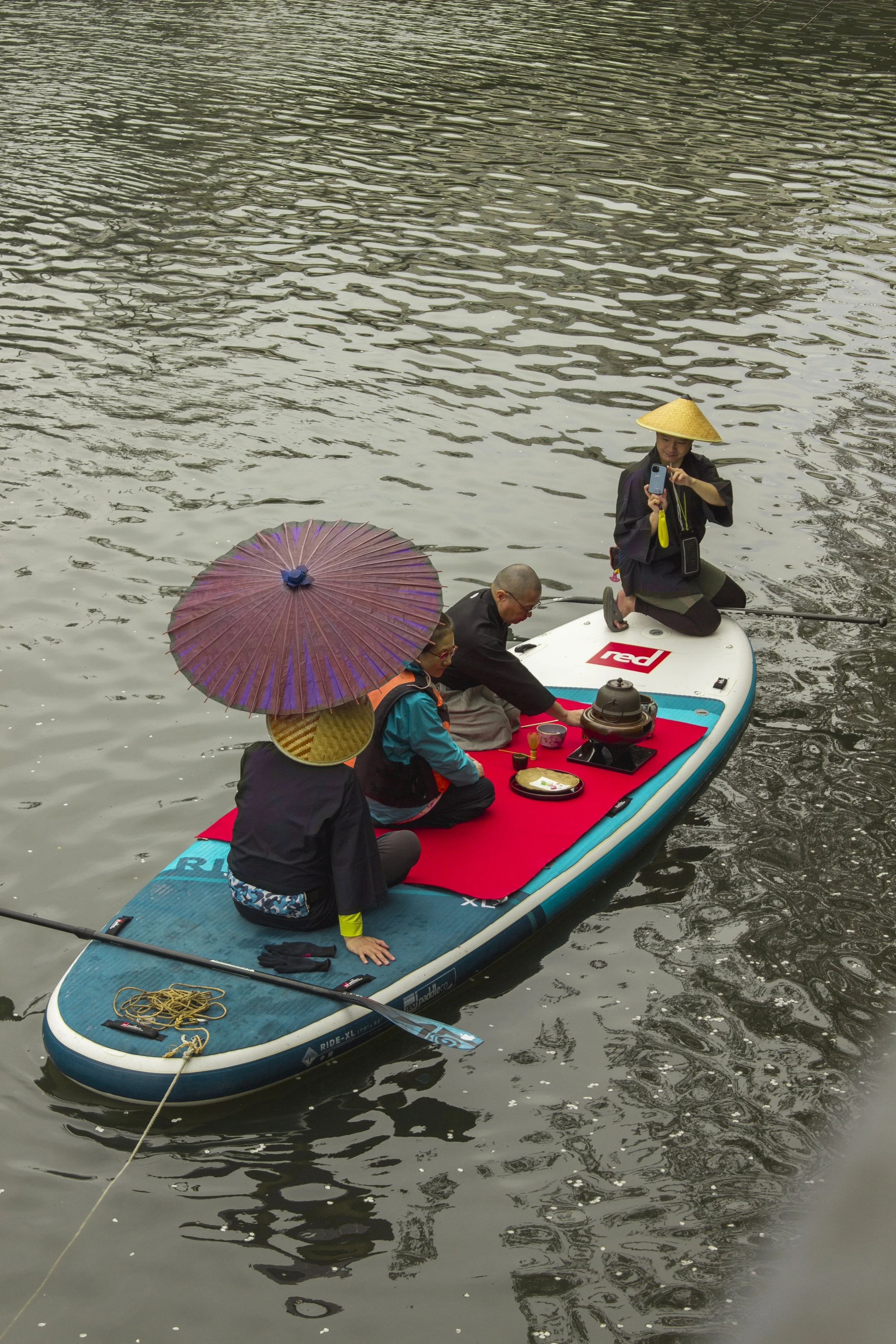
We also had time for some proper sakura walks (our favorite being not far from SCAI bath house), meet with some friends (Takumi at Shinjuku Park), have an incredible synth session at our favorite synth shop in the world (FiveG!), meet new synth friends (Neutone), and visit Yokohama for yet another soundwalk organized by Nick Luscombe, Marcos Fernandes and Sawa Iwasaki on the day of a local celebration Hanamatsuri in the beautiful neighborhood of Gumyoji.
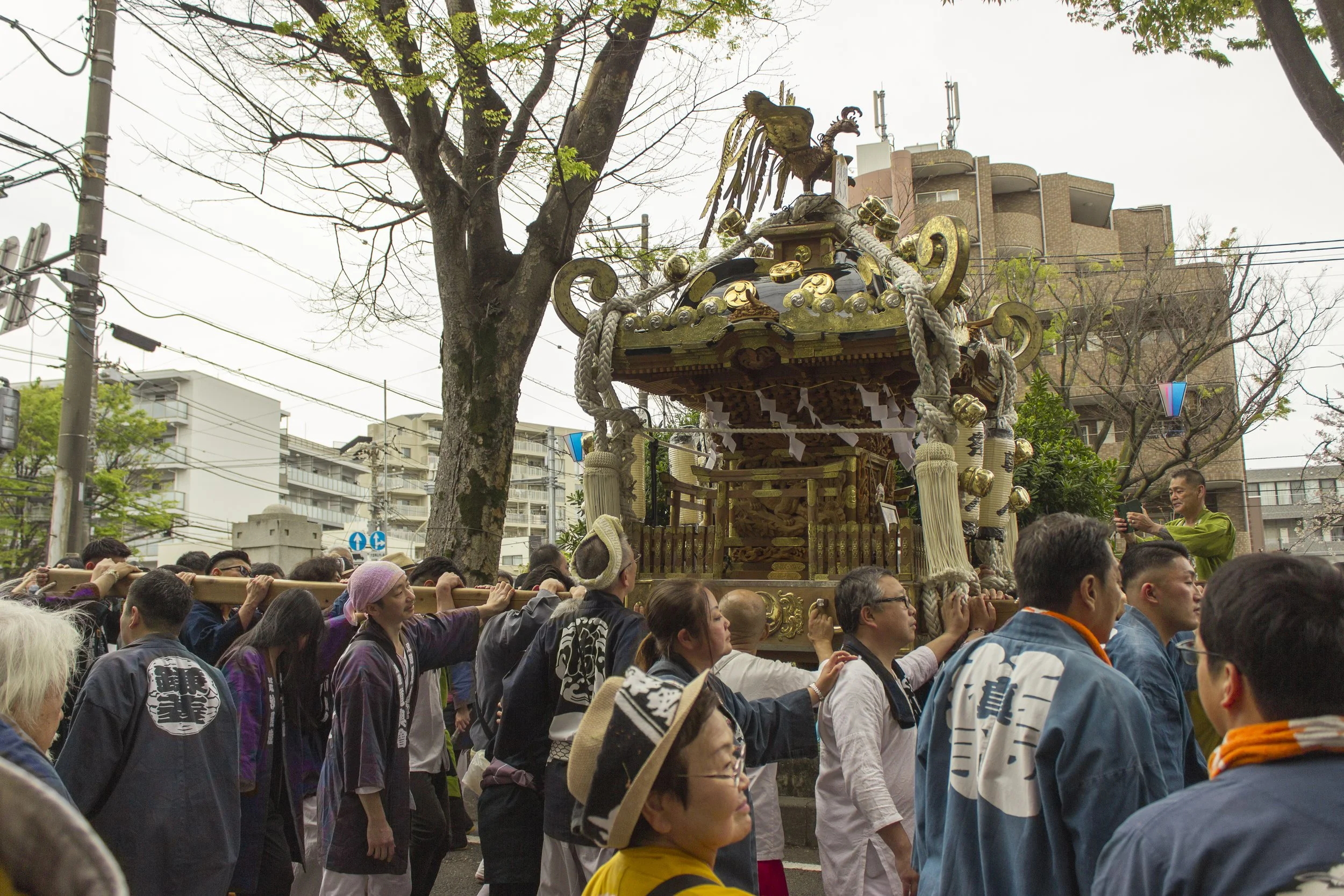
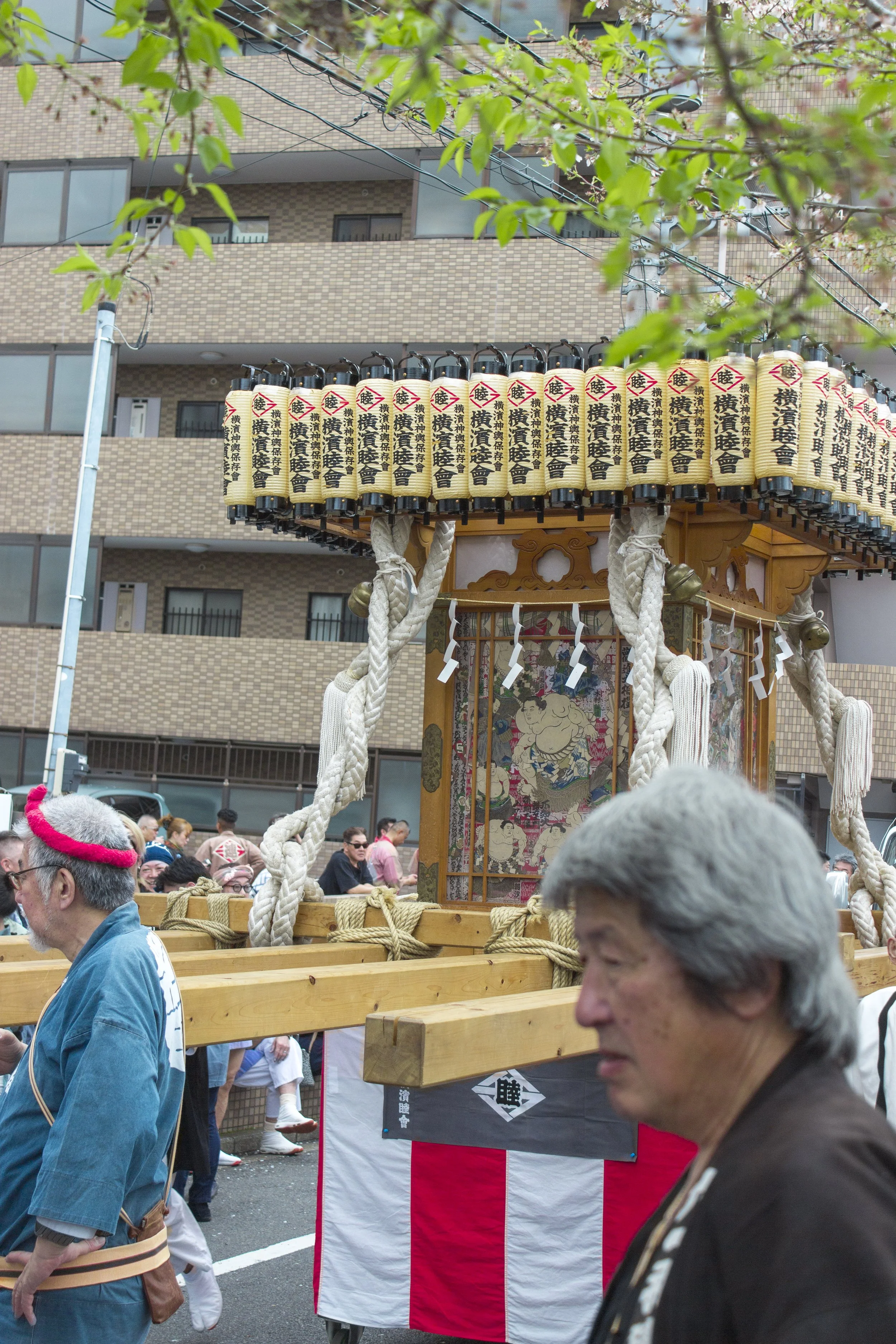
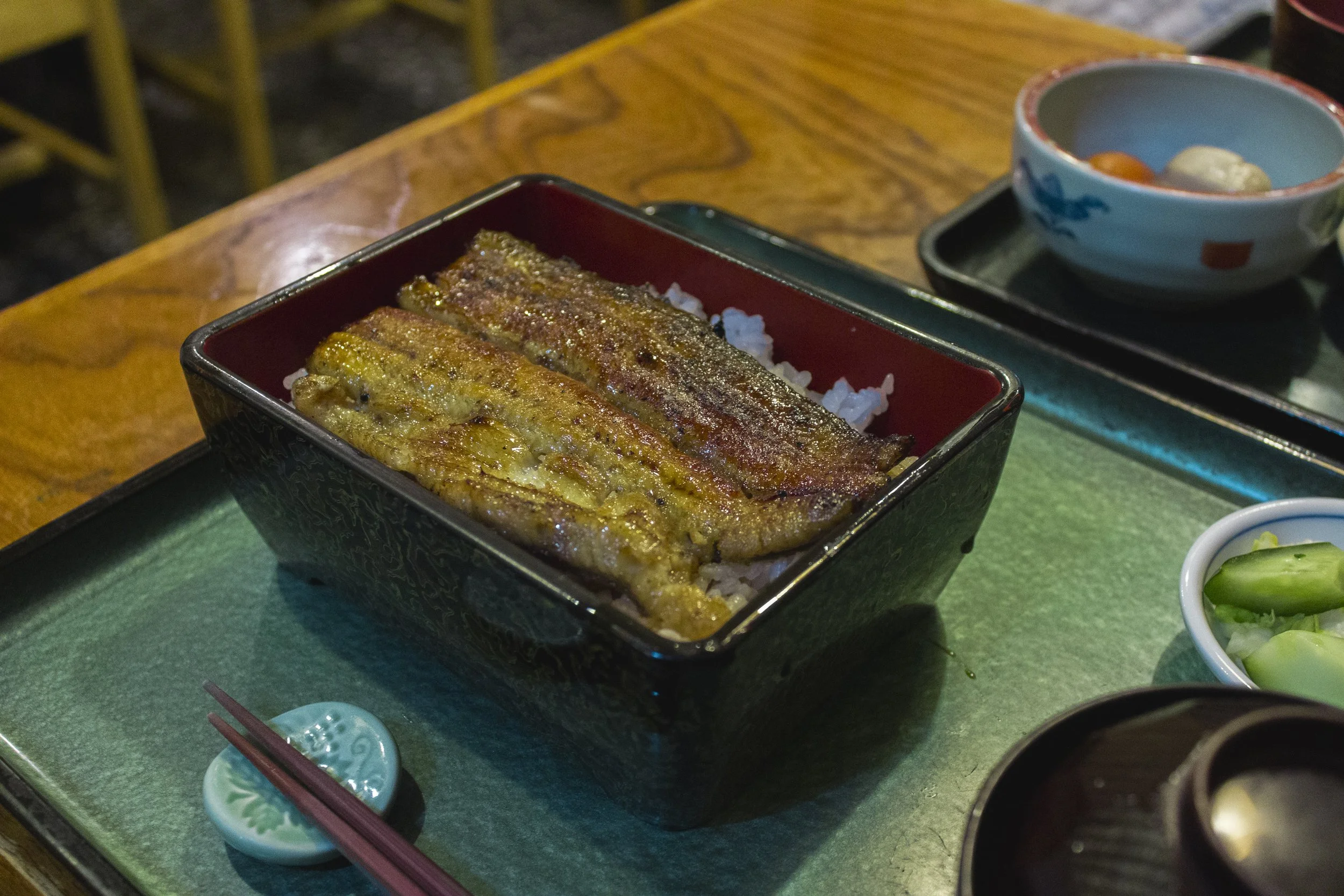
Hana Matsuri, or “Flower Festival,” is a Japanese Buddhist celebration held annually on April 8 to commemorate the birth of Siddhartha Gautama (Buddha). Not only the visit to the temple was memorable, but on the way back we decided to walk all the way to downtown Yokohama! There were so many stands of snacks and children games, and maybe for the first time ever we finally witnessed an incredible parade with many mikoshi that were ‘danced’ back and forth. We were invited to carry the mikoshi too! We finally visited Chinatown, had a fantastic ramen bowl, and made our way back to Shinjuku.