Symbols in Gyumri
Momik would welcome us at Studio20 in Yerevan, capital HQ of the residency but also venue of a newly opened exhibition of a local artist. Momik is one half of the residency association that we were in contact with, the other half being Mary, currently residing in Cologne. After a first coffee / beer encounter on the balcony, we headed to the shared taxi location in direction of Gyumri, the city where we would spend the upcoming weeks. Gyumri is Armenia’s second city, located 122 km to the north of the capital Yerevan, on the border with neighboring Turkey.
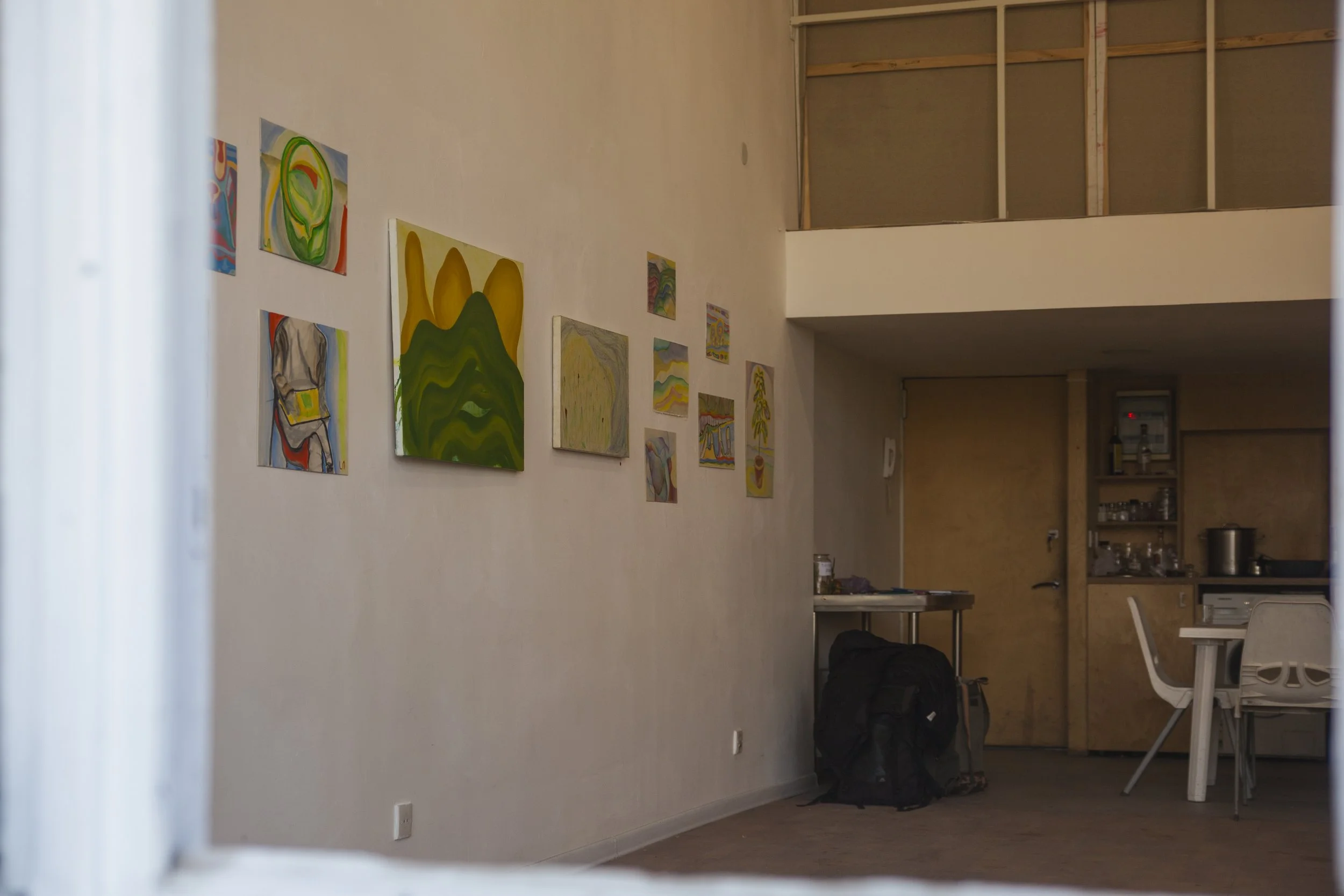
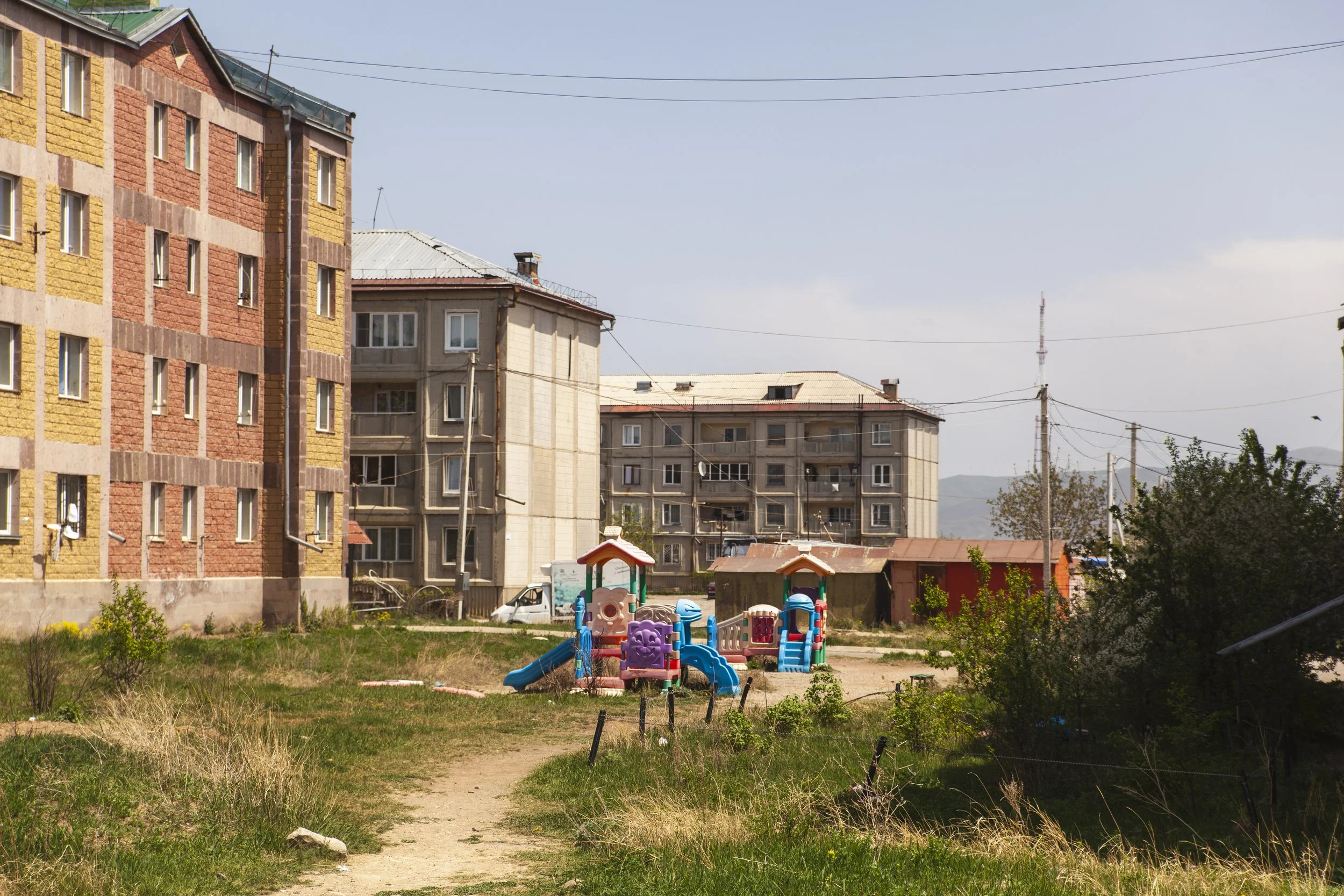
ArtBasis is housed in one of the apartments recently built in the outskirts of the Mush II district, supported by the Hayastan All Armenian Fund and signed by a very interesting architecture studio called SP2. The studio was also involved in the Armenian Pavilion at the recent Venice Biennale of Architecture, and was dealing with the curatorial concept of Armenity - read more here.
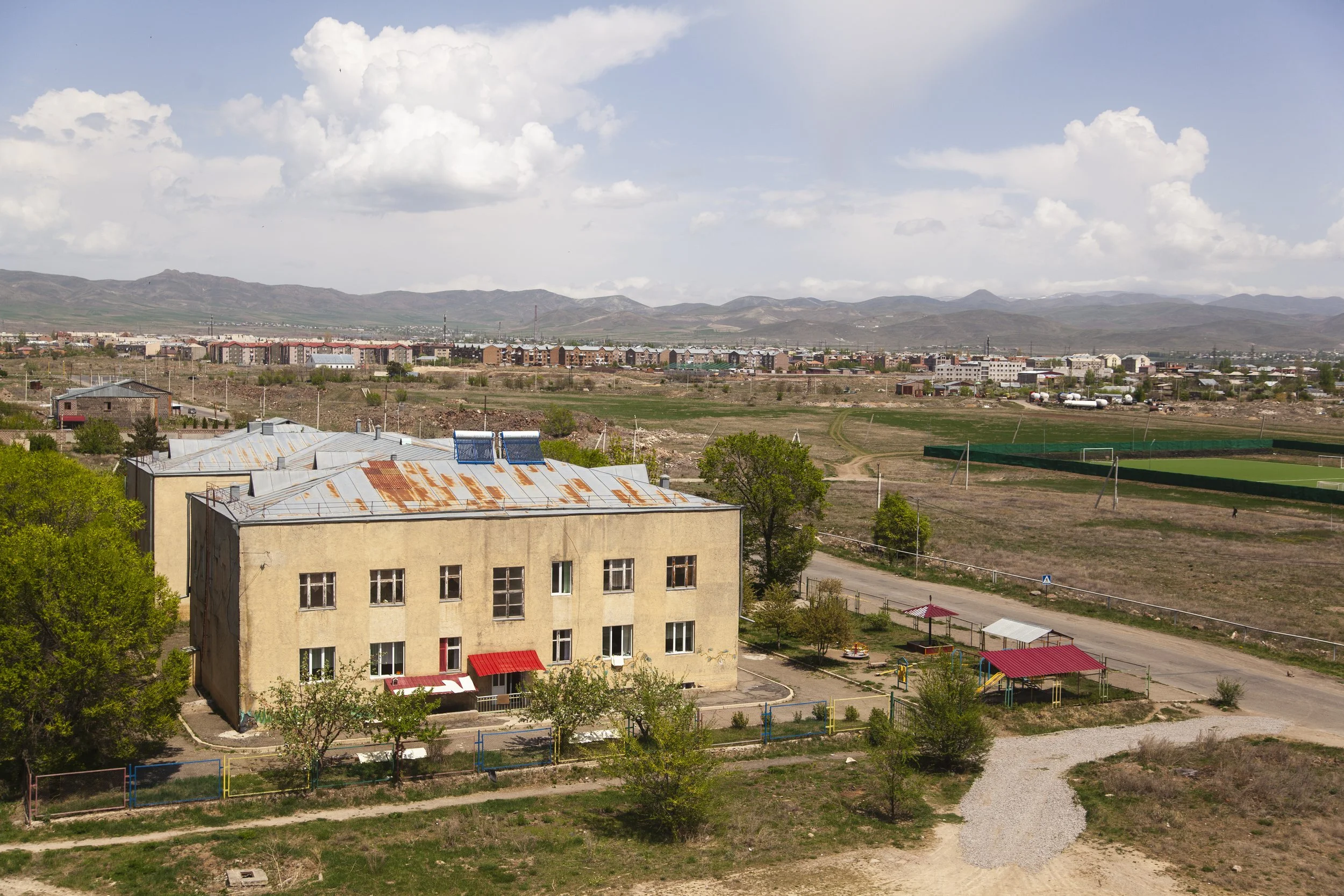
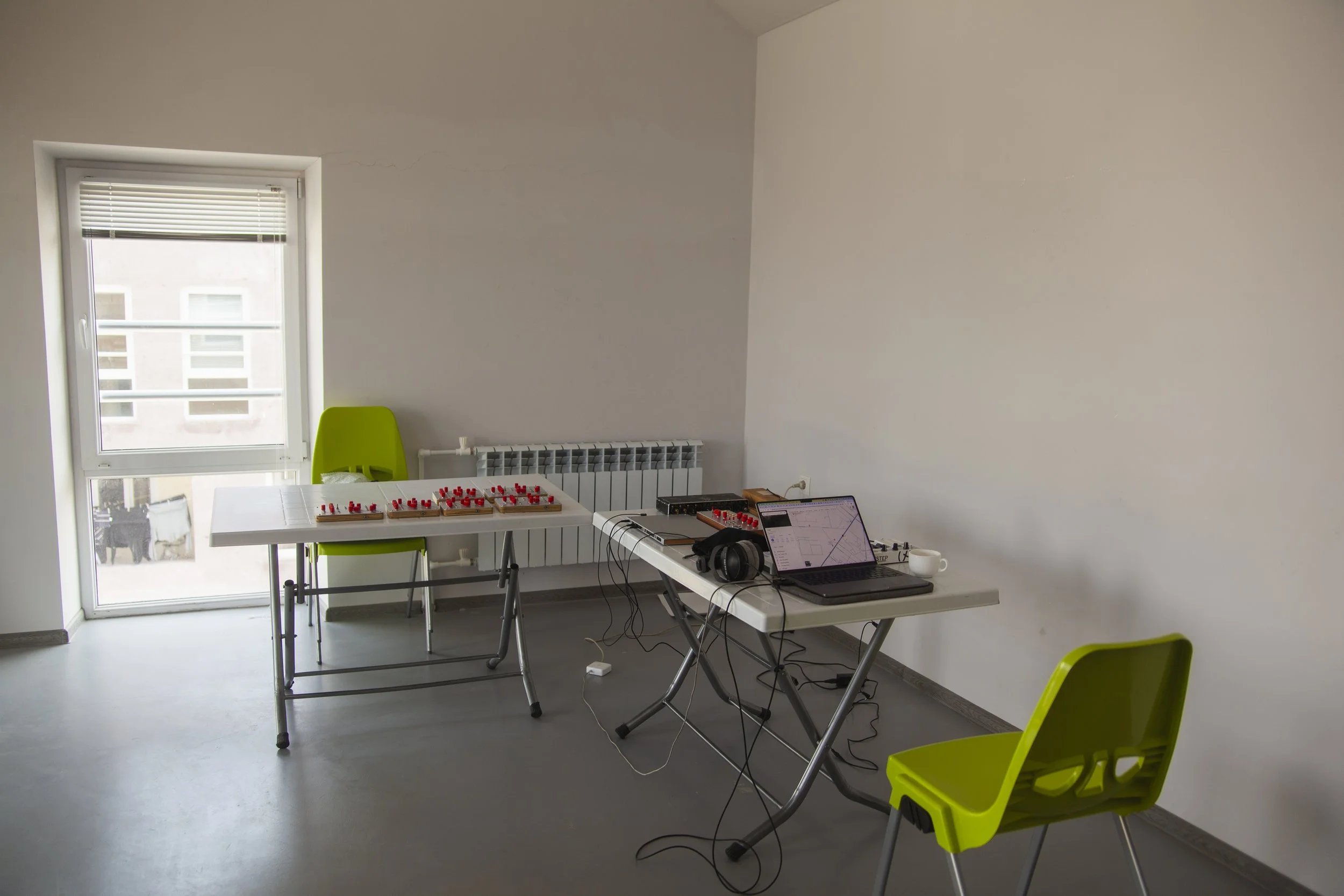
These apartment buildings are meant to relocate around 40 families that had been living in poor conditions since the earthquake of the 7th December 1988, and provide them with services as well, such as cultural spaces and a kindergarten. “Roofs are completely designed for solar panels, therefore the usable areas of the attic space created for the provision of the necessary inclination are intended to be provided with local artists as studios.
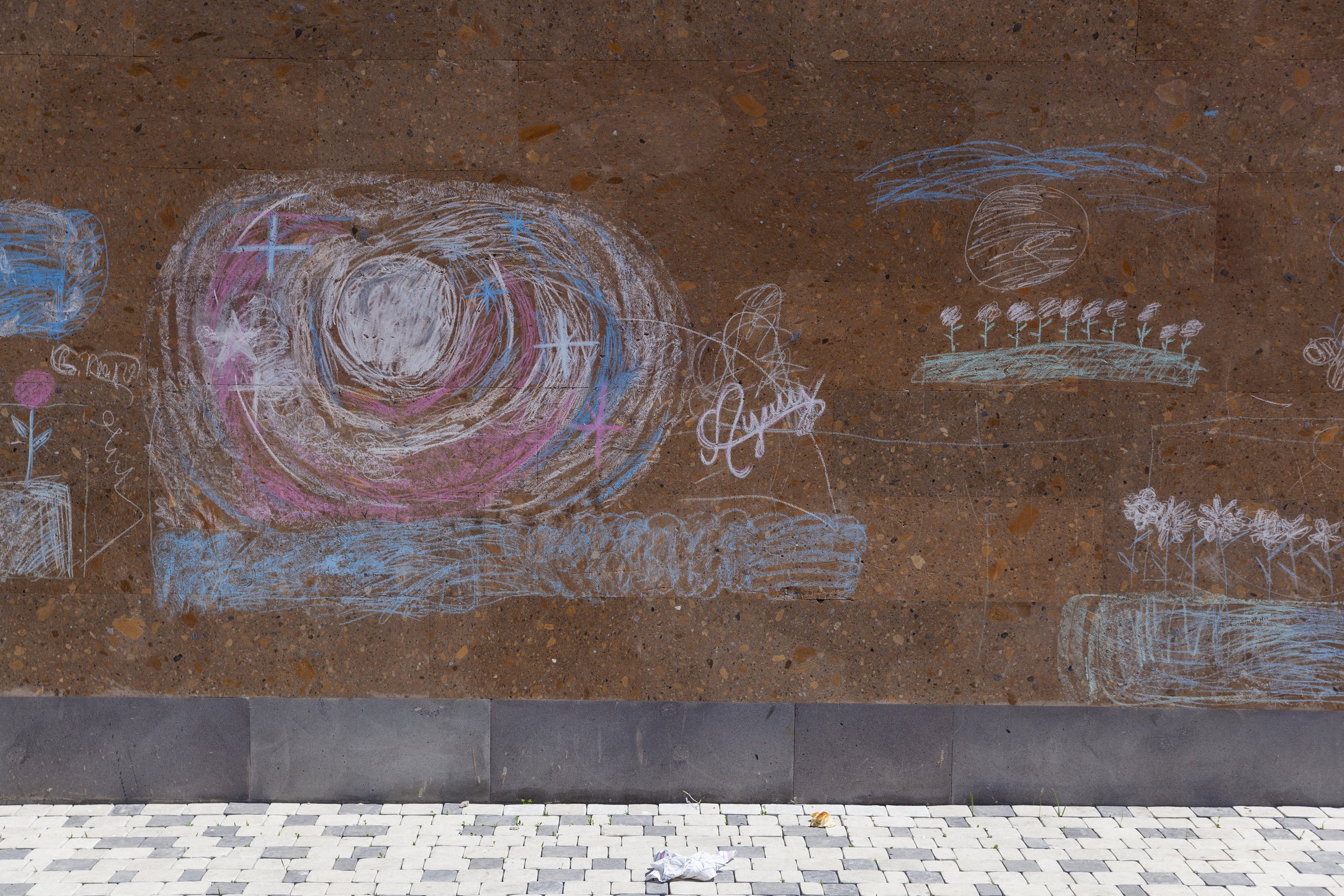
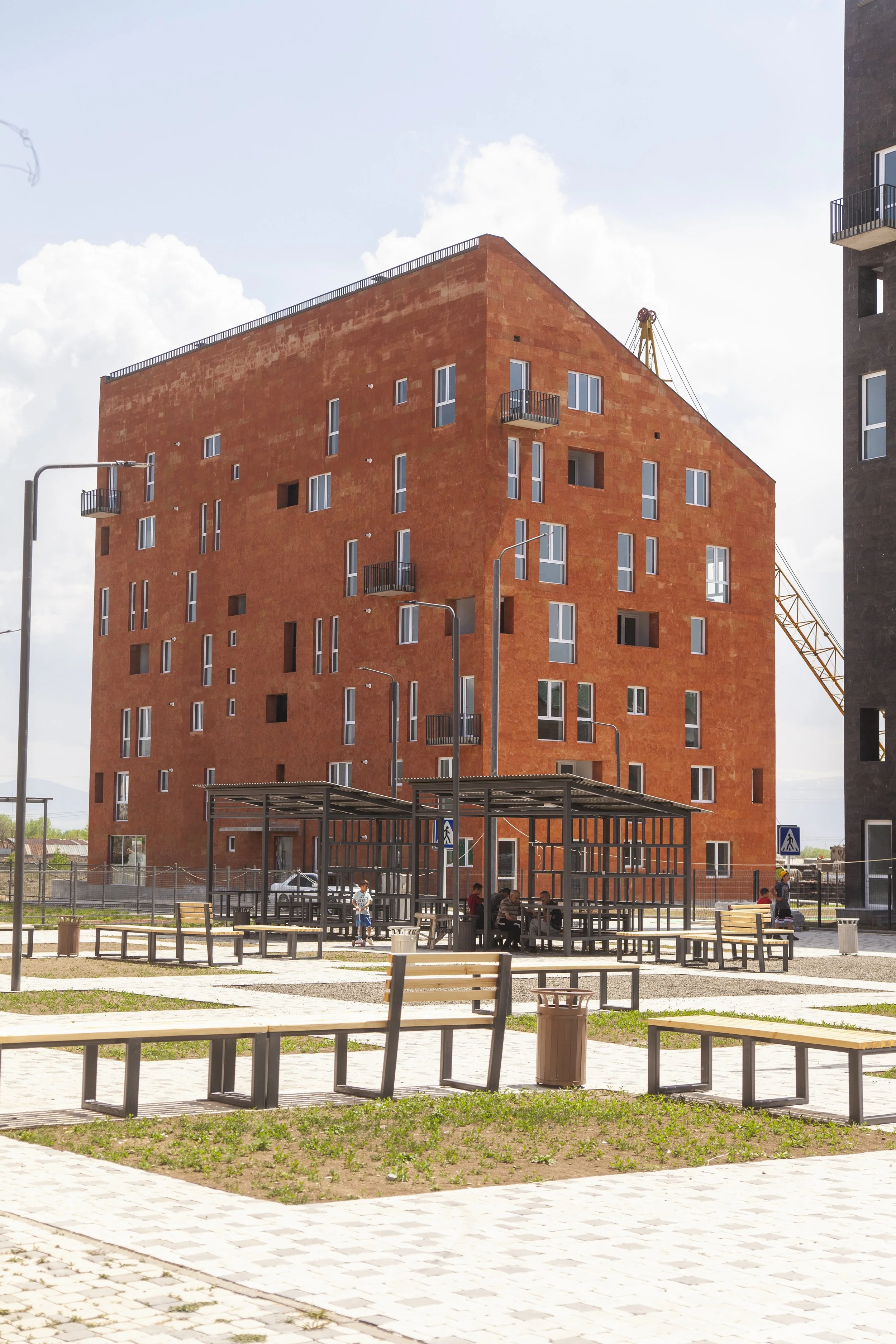
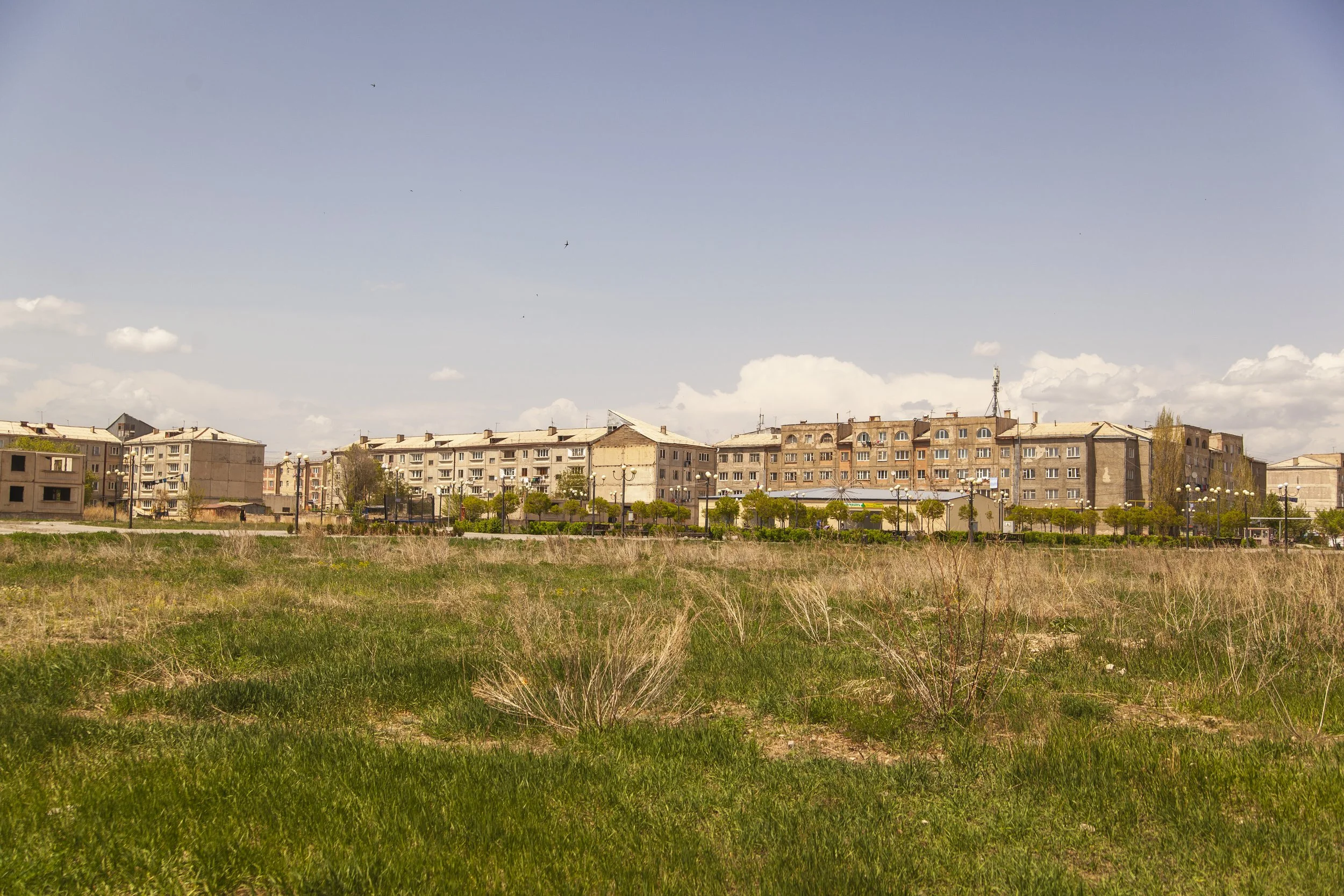
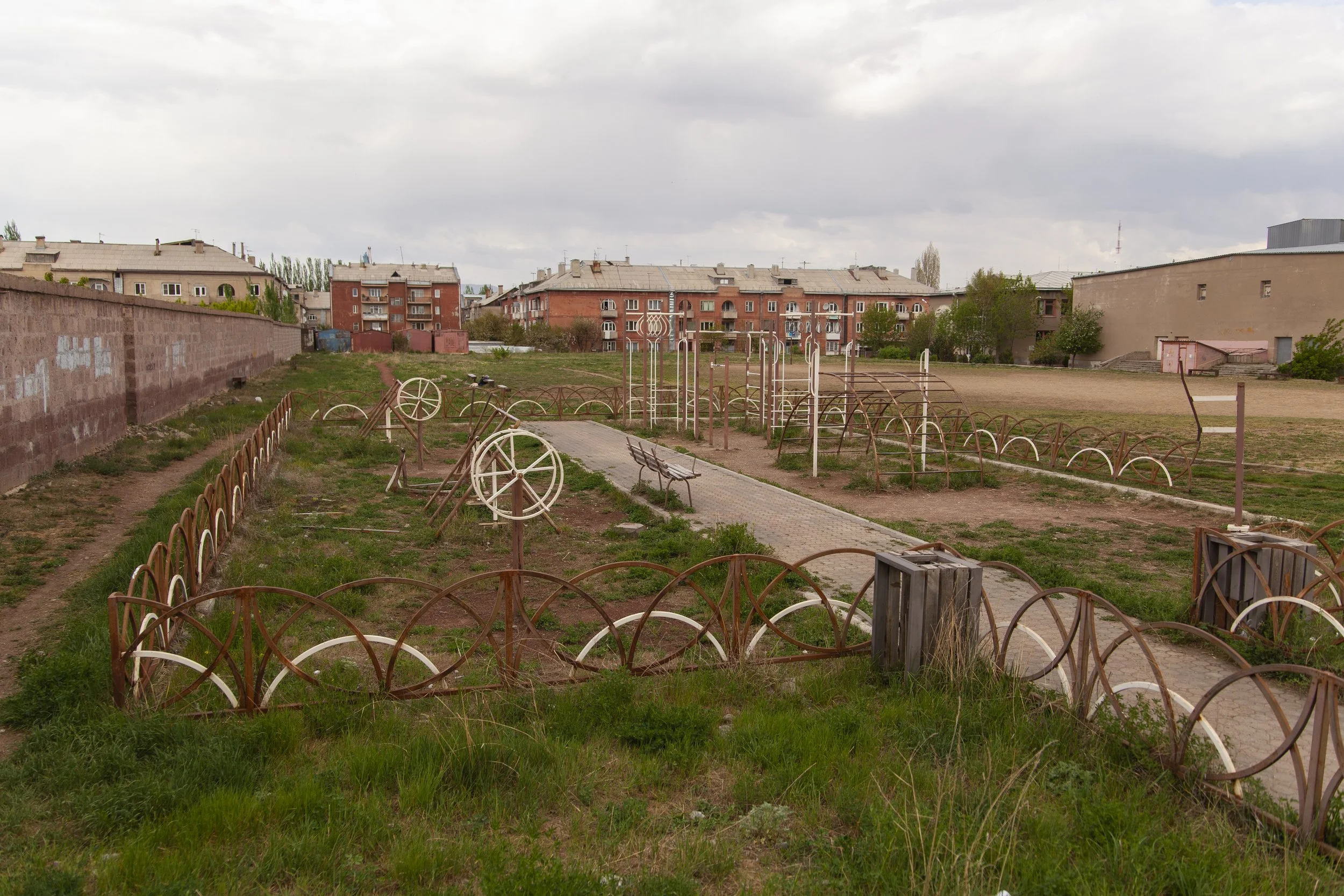
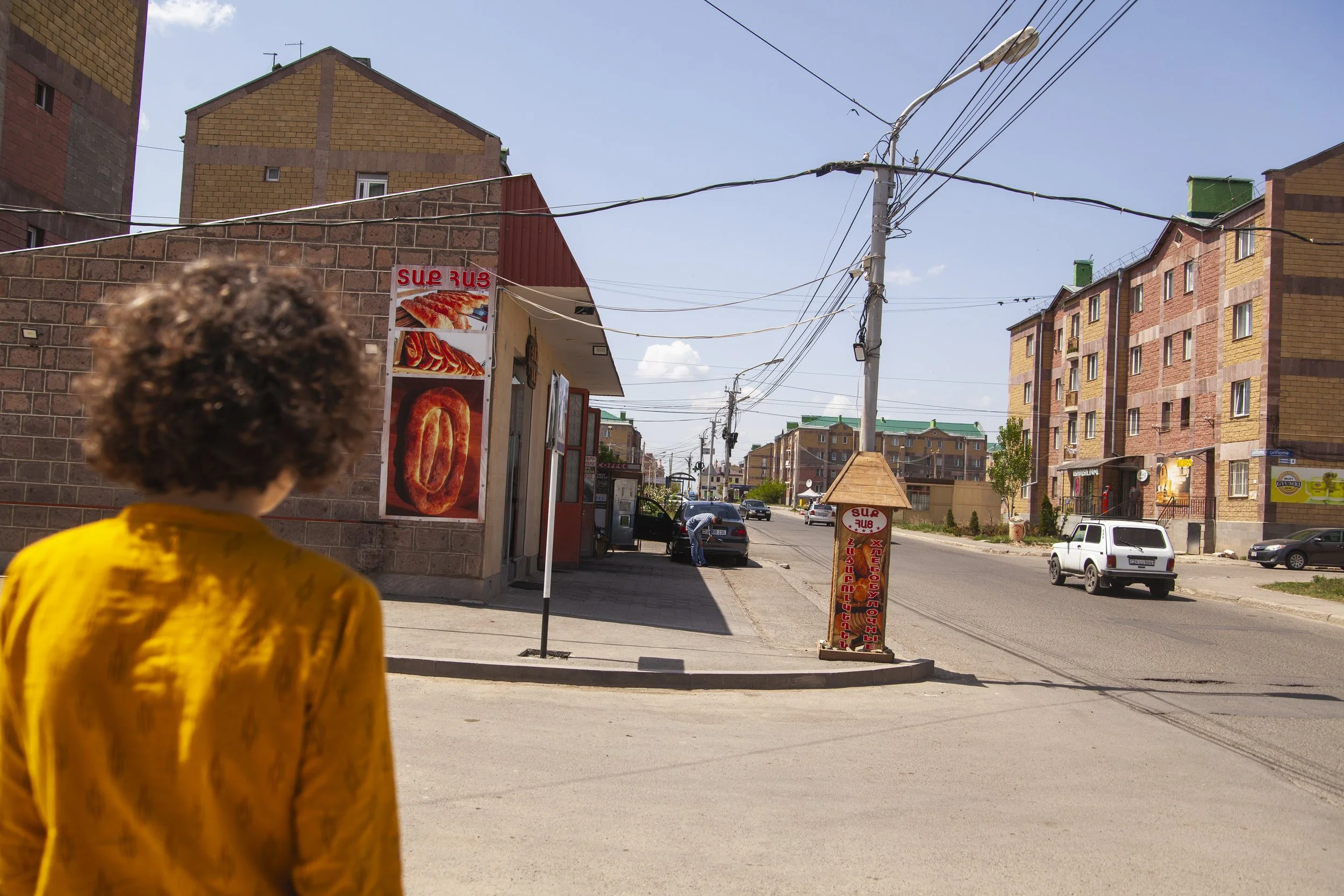
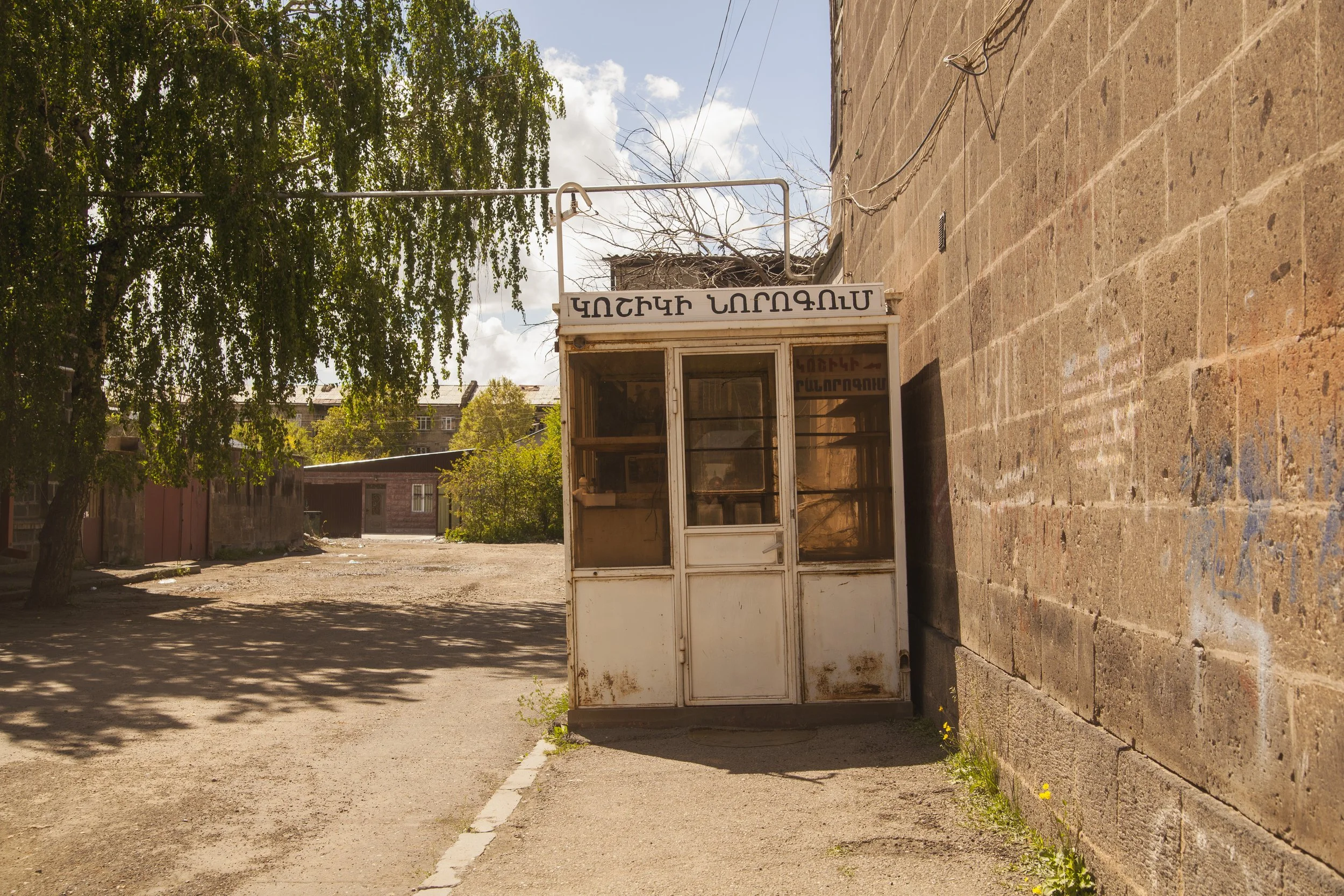
The district still bears the signs of this event, heavily, and on the near horizon you can still see the ruins of the multi-storey buildings built in the 80s. But there are also kids playing all around, little coffee kiosks, a lovely bakery around the corner, some vegetable shops. One time we entered one of these small shops, and the shop owner talked to us in Armenian, showing us a memorial to her dead son outside of the door - we didn’t quite understand what had been the cause of death, but it was clearly a military cause. Even if the areas of the Nagorno-Karabakh seem very far from Gyumri, the topic was very present in the talks and in the streets, you could see everywhere the flag of the Republic of Artsakh (and one day there was actually a car parade about this), even more so due to the recent developments prompted by an offensive from the Baku's forces and the following proposals by the Prime Minister Nikol Pashinyan. On top of all of this, there is also the new conditions of Russian immigrants due to the Ukraine-Russian war.
Overall, our daily routine was very quiet in Gyumri, we could admire from our windows the gorgeous mountains on the horizon, we could hang out with our fellow resident, artist Sargis Hovhannisyan, and we would get ready for upcoming presentations. Sargis introduced us to many artists in town, starting from the fantastic community around the Technology Center run by the fearless Bella Harutyunyan, who was working on a project called the ‘blackbox’ , involving many themes of traditions and innovation, including bread making, carpet weaving, and legends such as the one of the three apples. The three apples have been dropped “to earth from the sky: one apple for the one who saw, another for the one who told the story, and a third for the one who listened and believed in what is good.”
Sargis is also the mind behind the Gyumri Art Week, happening in the summer with exhibition, residencies in remote villages, and many more fascinating events. We even contributed to one of his works with sound, to be exhibited at the Artists Union in Yerevan.
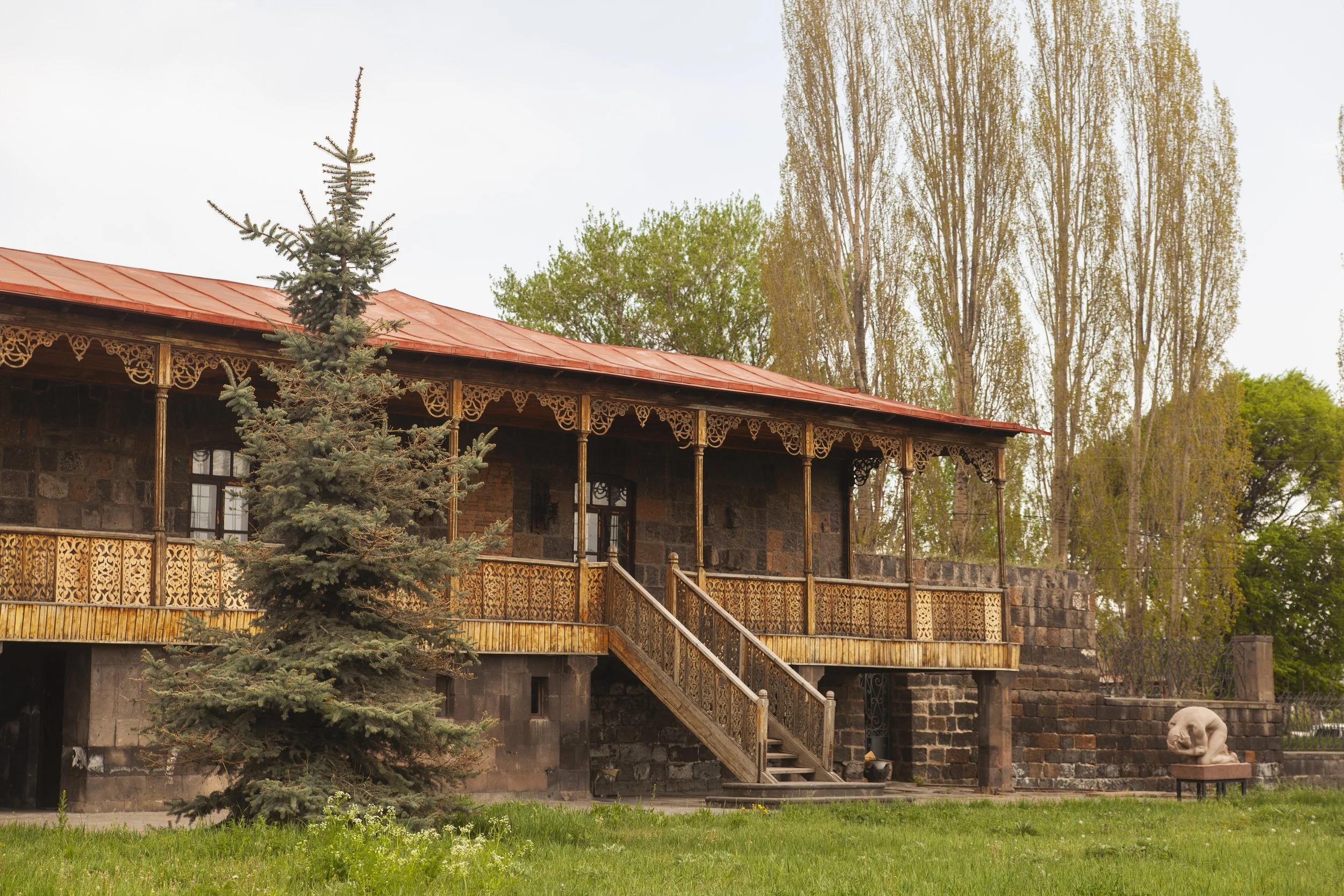
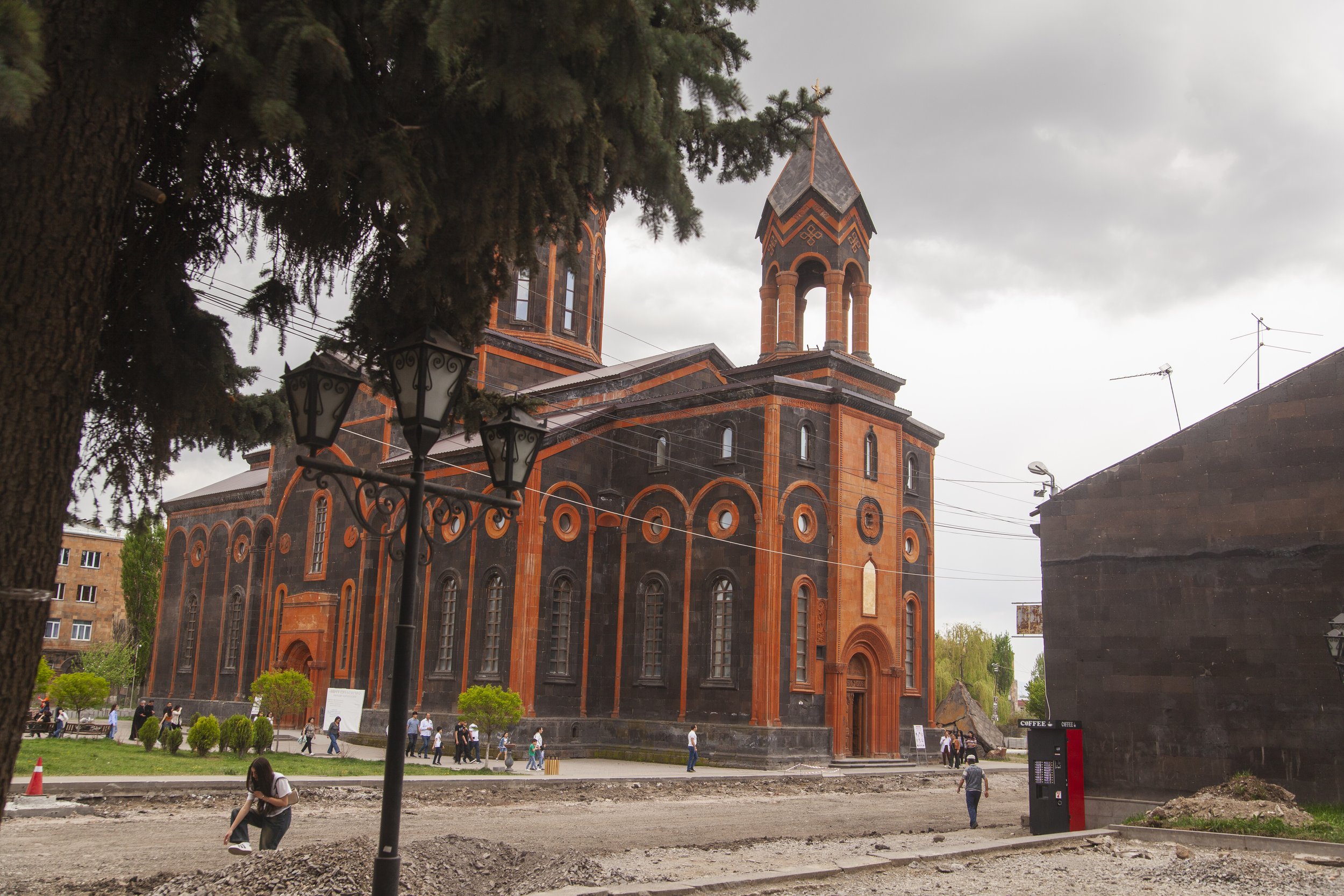
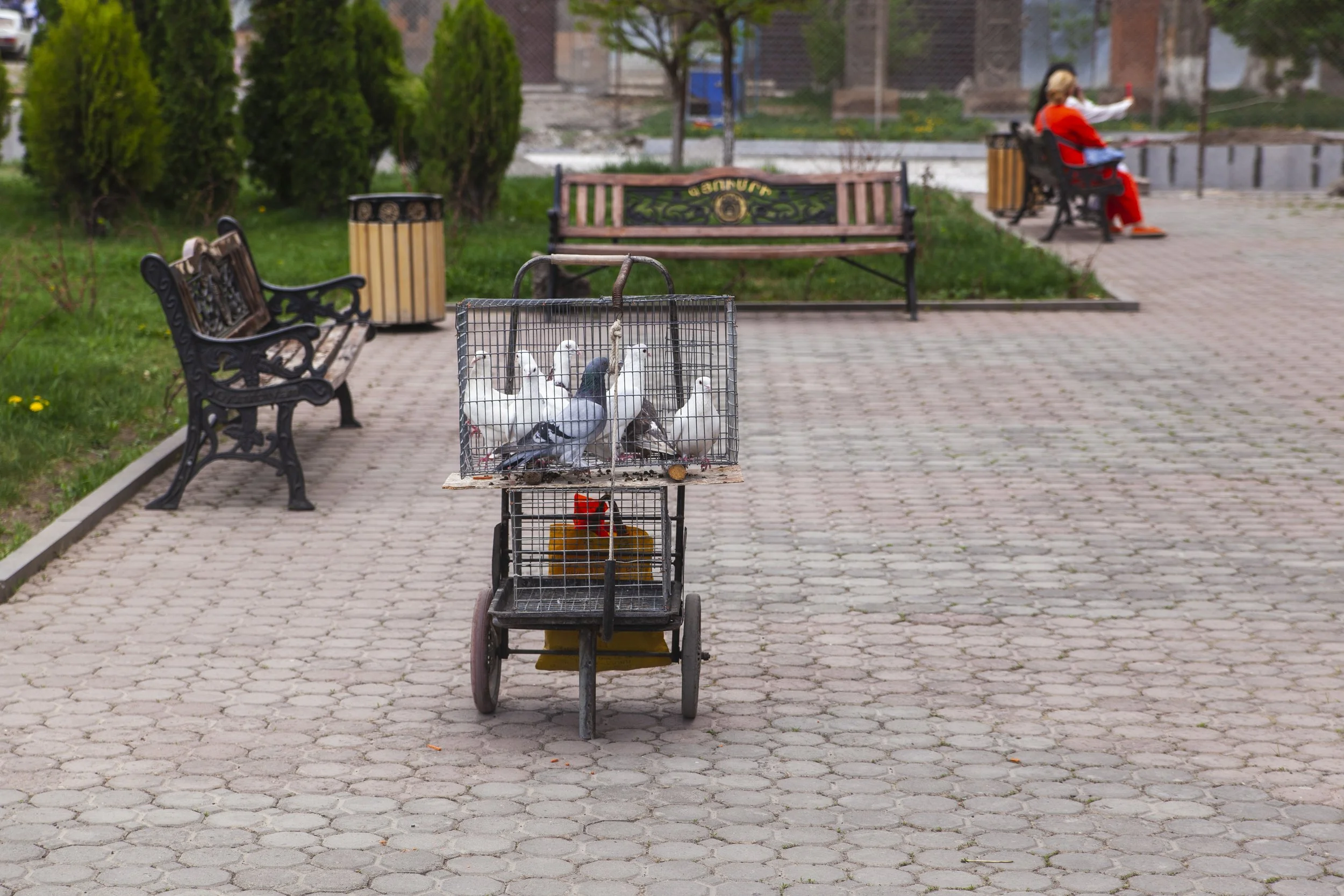
The centre of the city is beautiful, with low houses, courtyards that have been film-locations in the past, tufa stone colors that reminded us of our time in Arequipa. And of course, the town also produced fantastic (blue stringy) cheese, local beer, basturma, wine (check out Tushpa lab) and brandy. Bread is very important traditionally, and there is a bread called Matnakash: “before it is baked in a well-steamed oven, the dough is usually topped with a type of flour mixture consisting of flour and water or black tea, which lends the bread a unique, crispy crust that complements its soft and slightly chewy interior”.
One day at the market we bought lavash bread, and we visited the Museum of National Architecture and Urban Life. But the most remarkable art event for us was definitely the visit of the house and the “Floor 5 studio” of Aleksey Manukyan, including the tasting of some local herb tea. Together with Aleksey we also got to assist at a choir rehearsal of his wife’s young choir at the Conservatory one day, and visited the art academy across the street, where students are still spending many hours practicing life drawing and oil painting.
We had a couple of public events in Gyumri: a concert in Mush that was advertised with posters written in Armenian, and that was documented by the local TV; and an old-style ODA talk organized together with Hrachya Vardanyan.
We also learnt about kef, music based on a system of modes, which are similar to scales. “It was played in small bands of three to five people using instruments such as the oud, violin, clarinet, kanoon (Middle Eastern lap harp), dumbeg (hand drum), tambourine and saz (long-necked Anatolian lute). Anatolian rural wedding musicians who were usually Armenians and sometimes Assyrians contributed the Armenian folk repertoire, which combined with the Istanbul nightclub music gave birth in the United States to what we now know as kef music. But Armenians had their own musical notation system called “khaz,” which became so complex that people forgot how to read it. However, it was later simplified and revived, and is still taught in Armenia as a type of musical notation”.
A musical figure that we are definitely interested in exploring further is that of Georgij Ivanovič Gurdžiev, philosopher, mystic, spiritual teacher, composer originally from Gyumri.
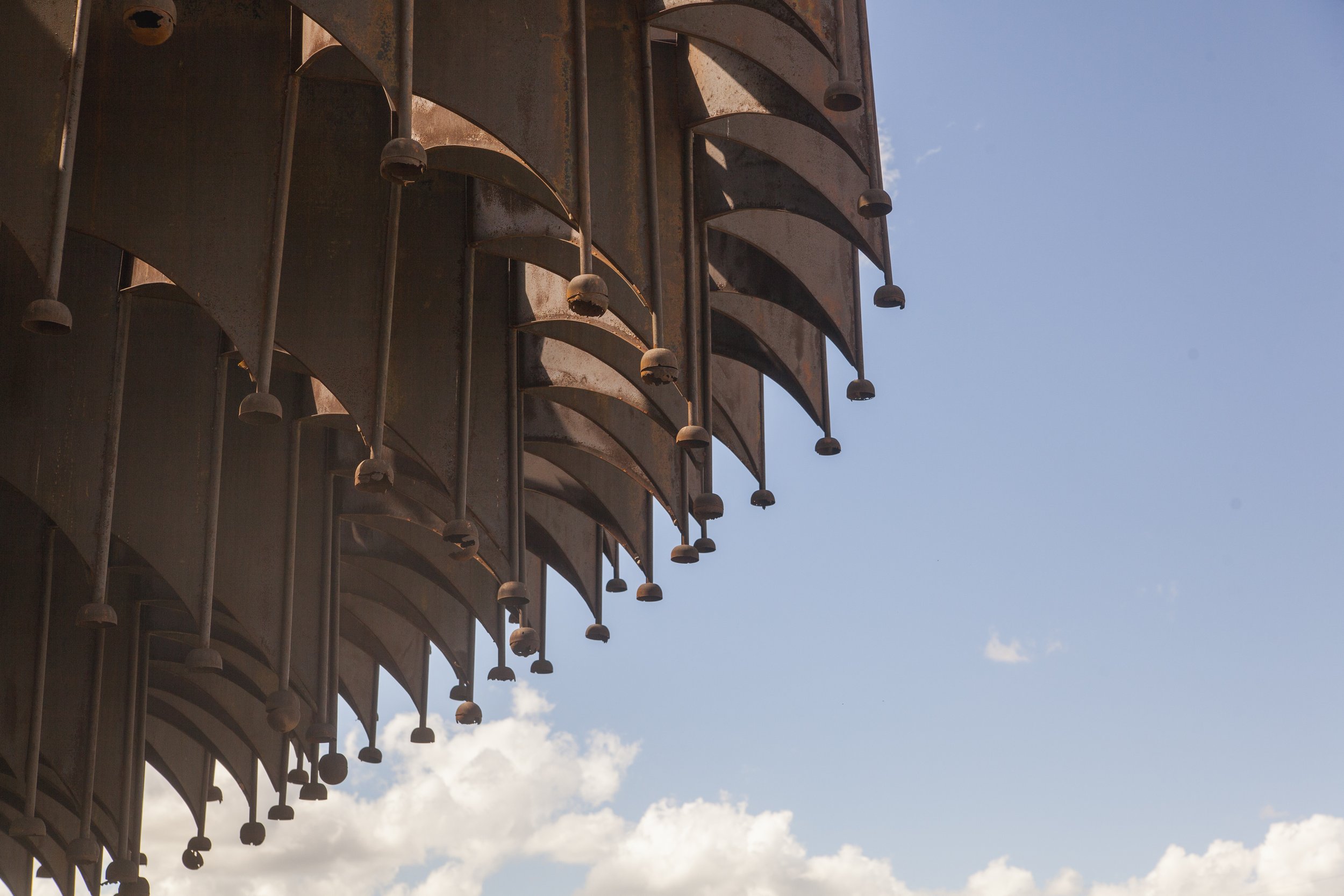
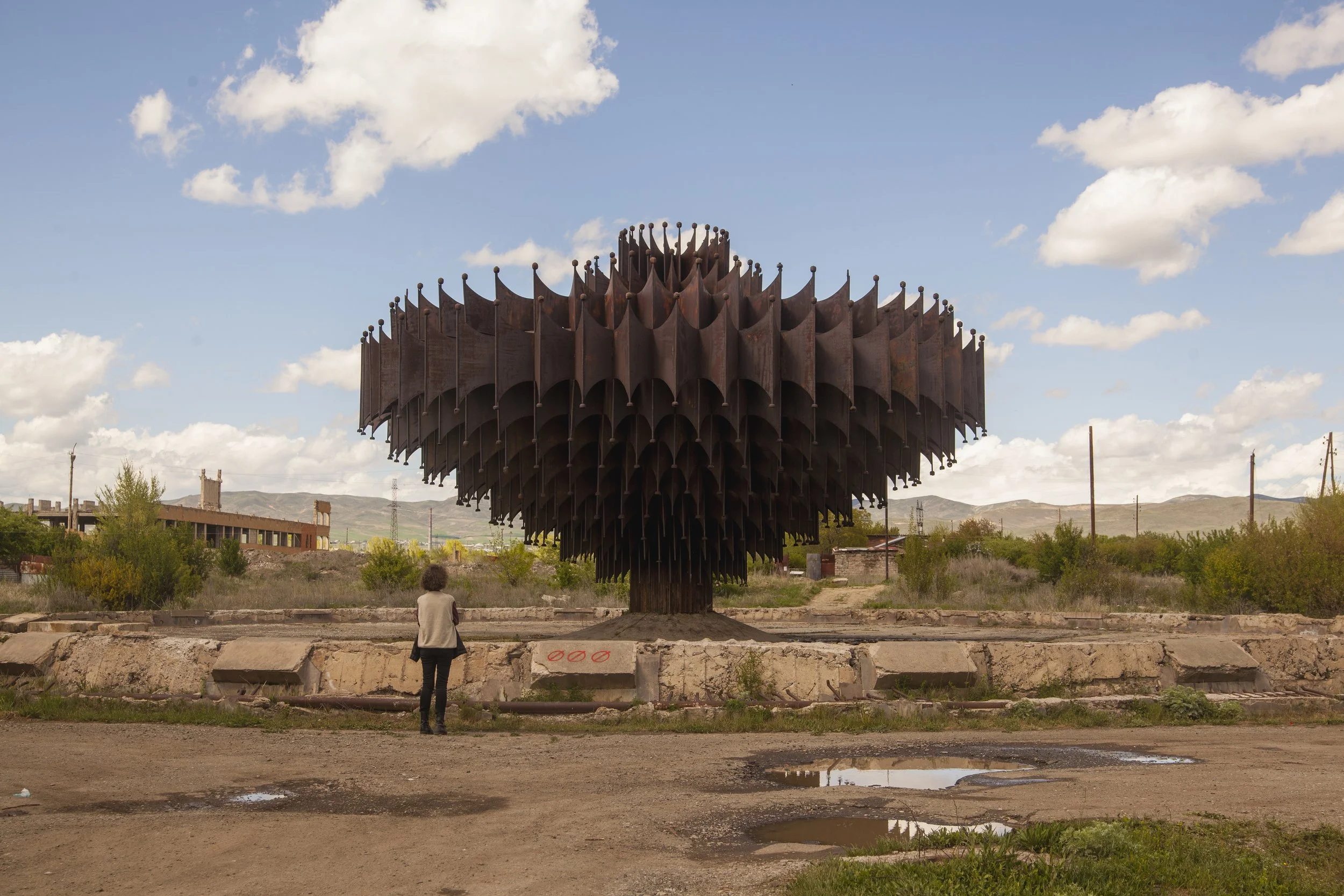
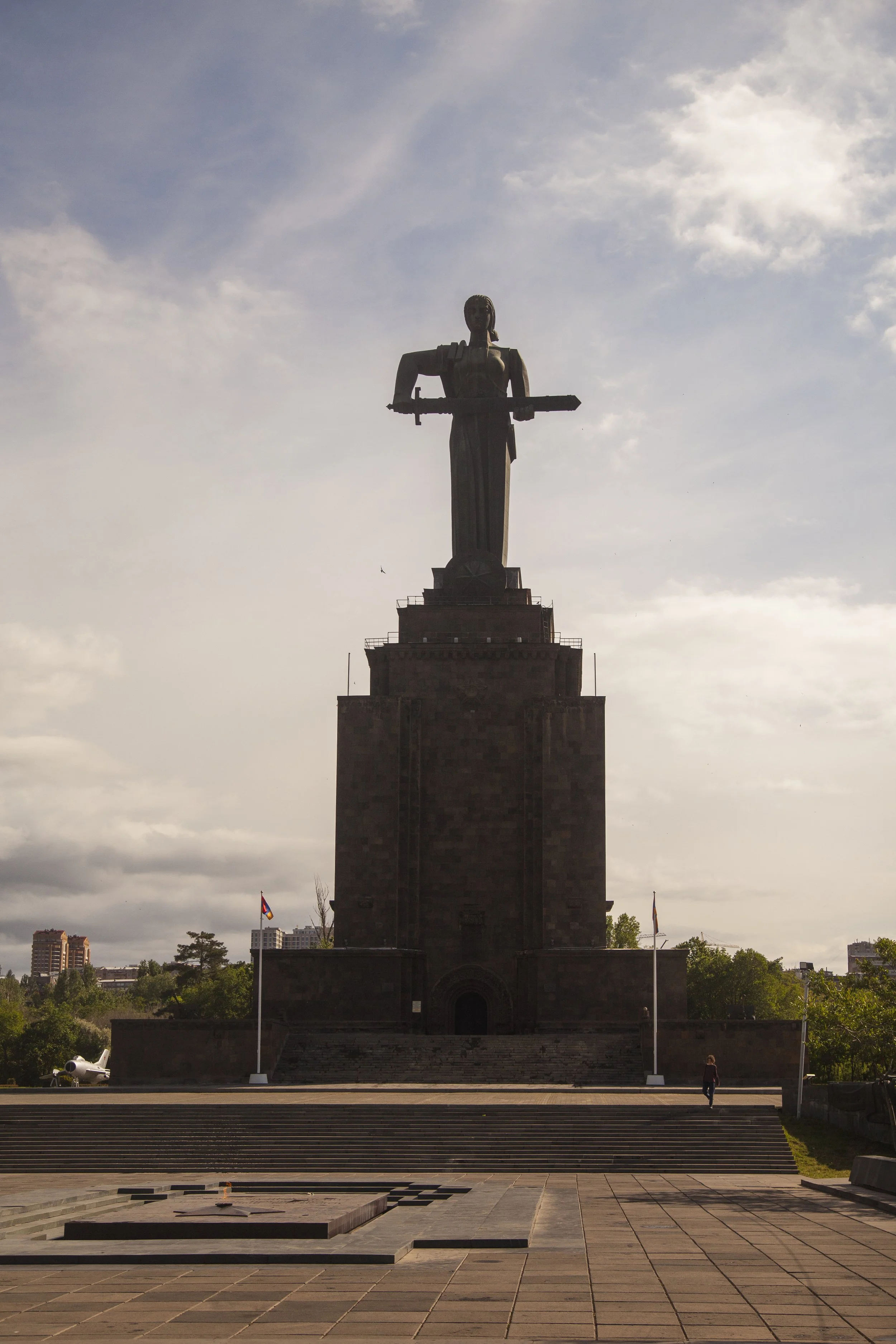
In Gyumri there is also a café called Aregak, that gives work to youth with disabilities or mothers of disabled youngsters. A couple of new Russian artists arrived at ArtBasis toward the end of our stay, and together with explored the city a bit, on the day of May 9th, celebrations of Post Soviet countries. We visited the statue of Mother Armenia, then head toward the famous Iron Fountain of Gyumri, and had lunch at Ponchik Monchik, famous for its extremely light and delicious chocolate and vanilla sweets.
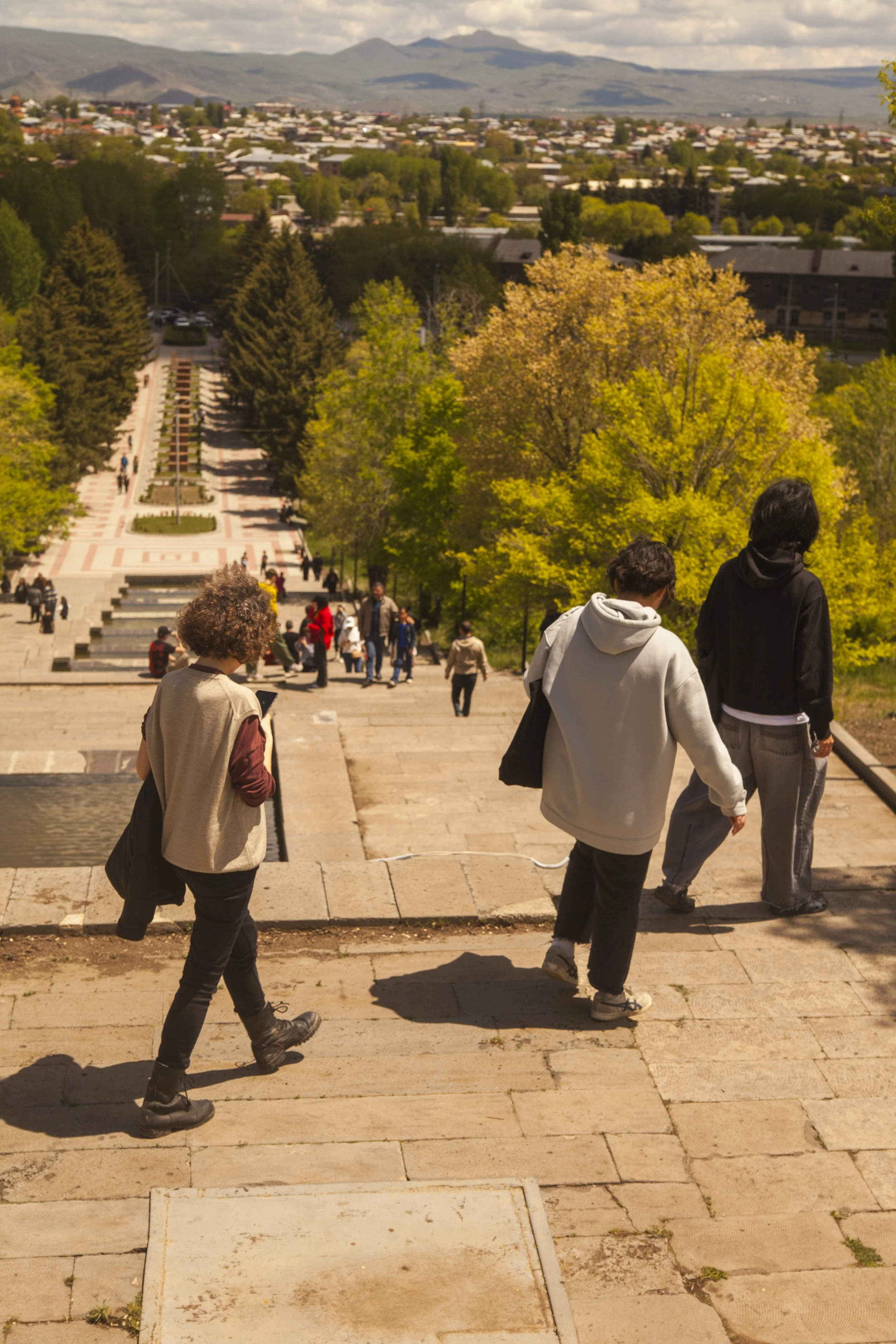
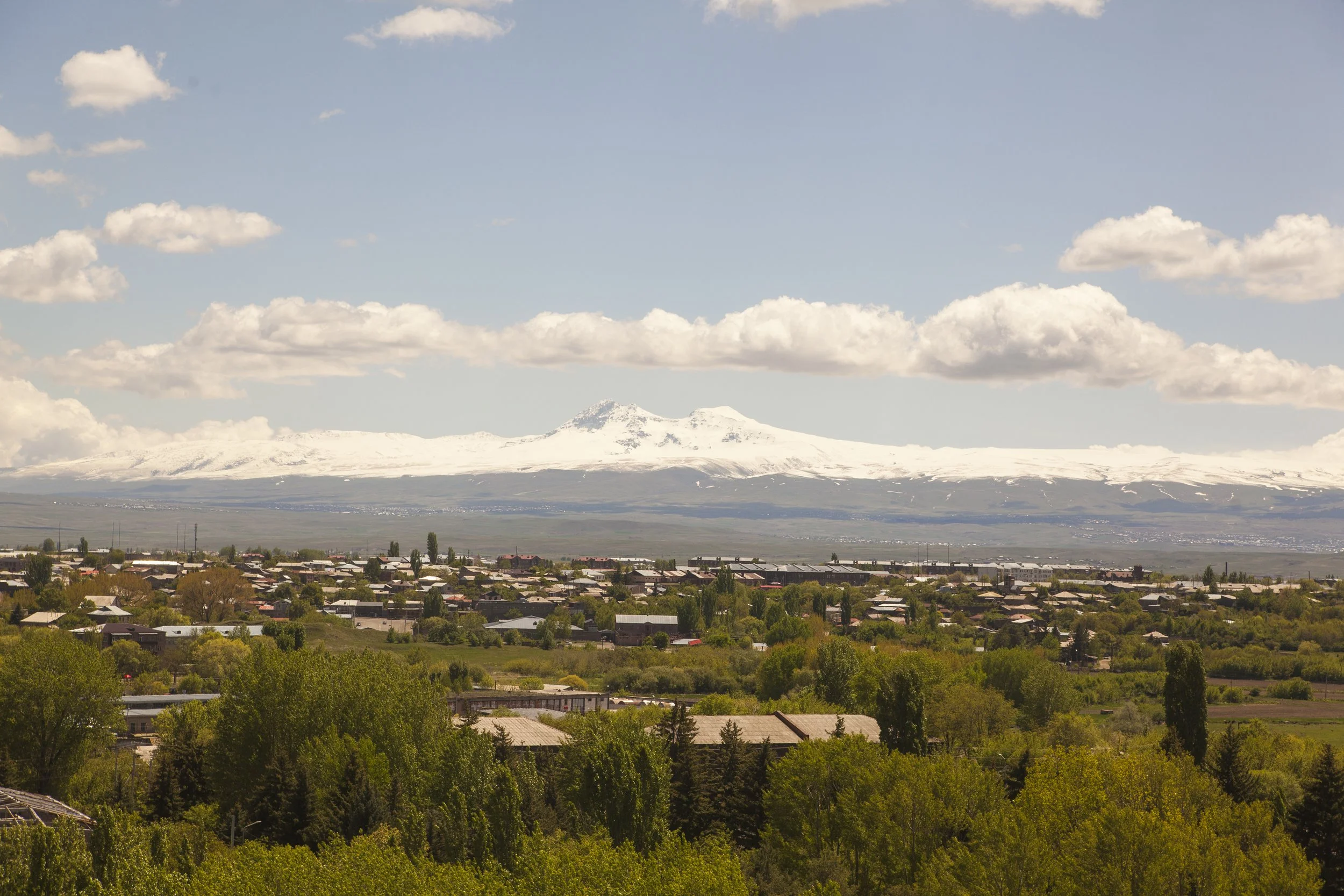
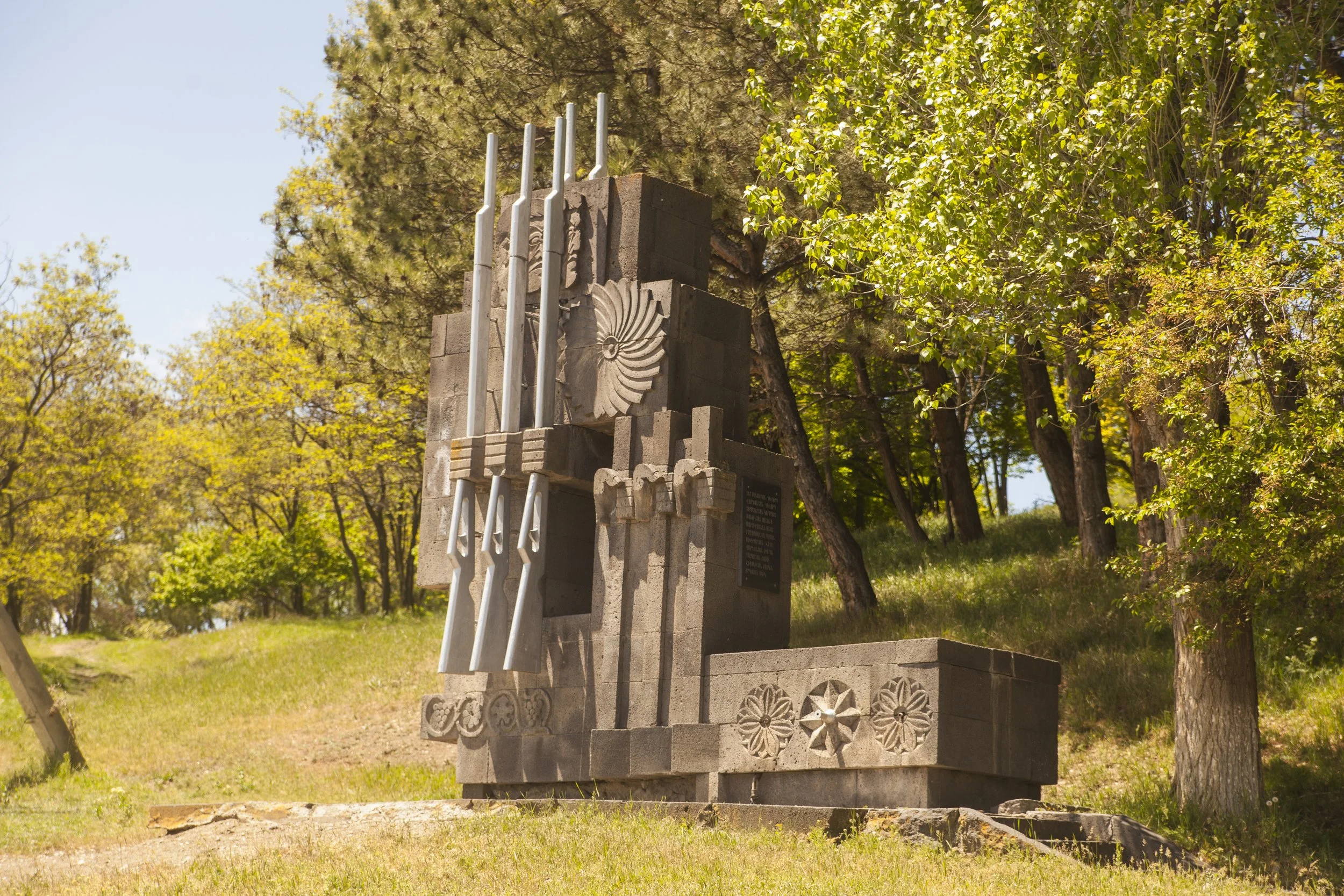
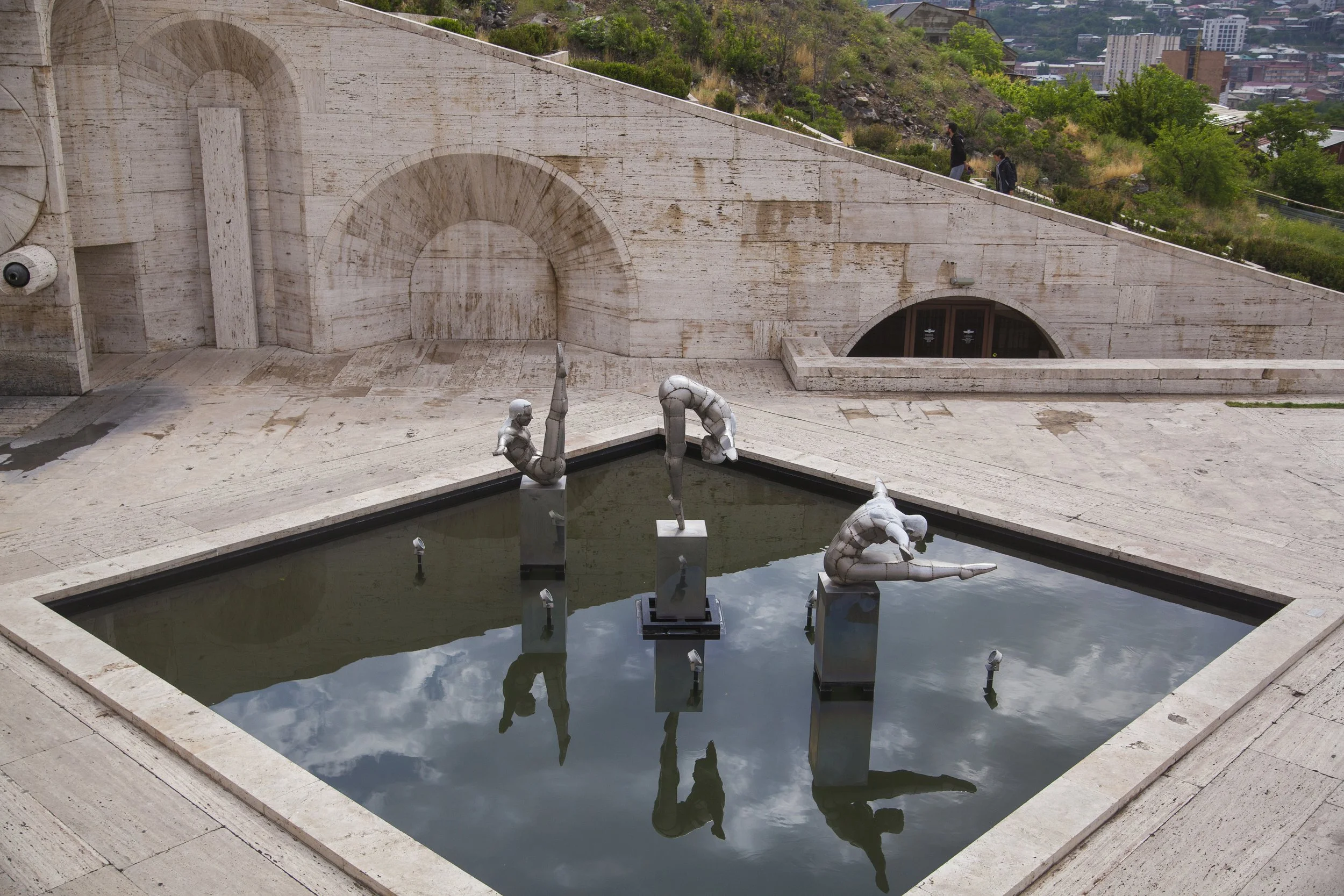
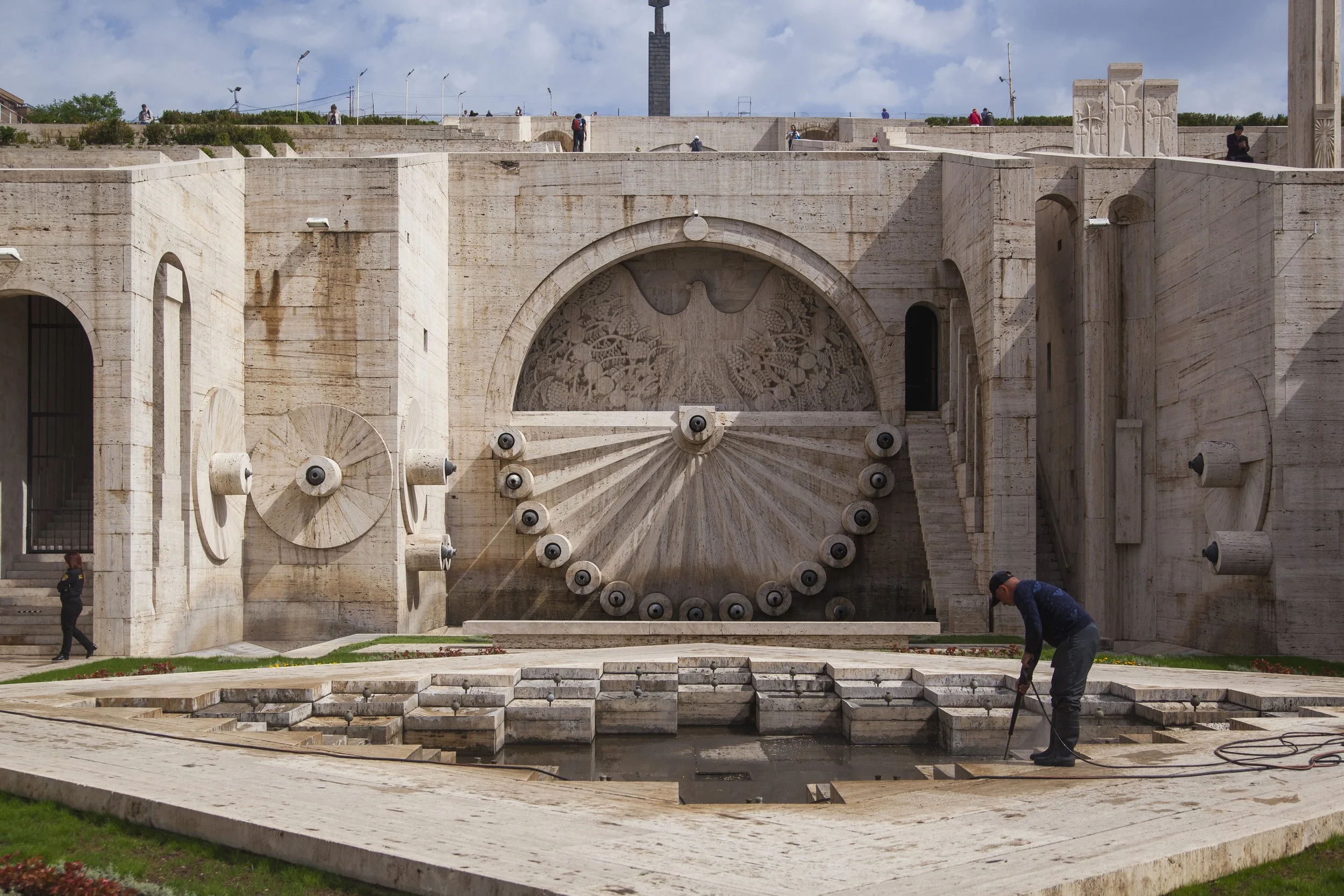
We made our way back to Yerevan with Bella and her private taxi driver, which was really fun and beautiful to see the landscape change, and the magnificent Ararat mountain slowly appear on the horizon. Both Ararat and the ark appear on Armenia’s coat of arms, and the name is synonymous too with Armenia’s celebrated Ararat cognac. Once we said bye, we visited the Morelian Library, a very lovely spot for a coffee and a read. Othe remarkable cultural locations in Yerevan were NPAK ՆՓԱԿ and Dig. In the capital we stayed at a hostel located in a funny circular building and run by some Indian friends, positioned on a raised part of the city toward the Memorial To 50th Anniversary Of October Revolution and the Victory Part.
But the main reason for us to be in Yerevan was an event together with SEC (sound_enthusiastic_community), a new community of mainly Russian expats taking over the back scenes of the HayArt Center with a synth workshop, public events, and more. One of the members also interviewed us for a podcast.
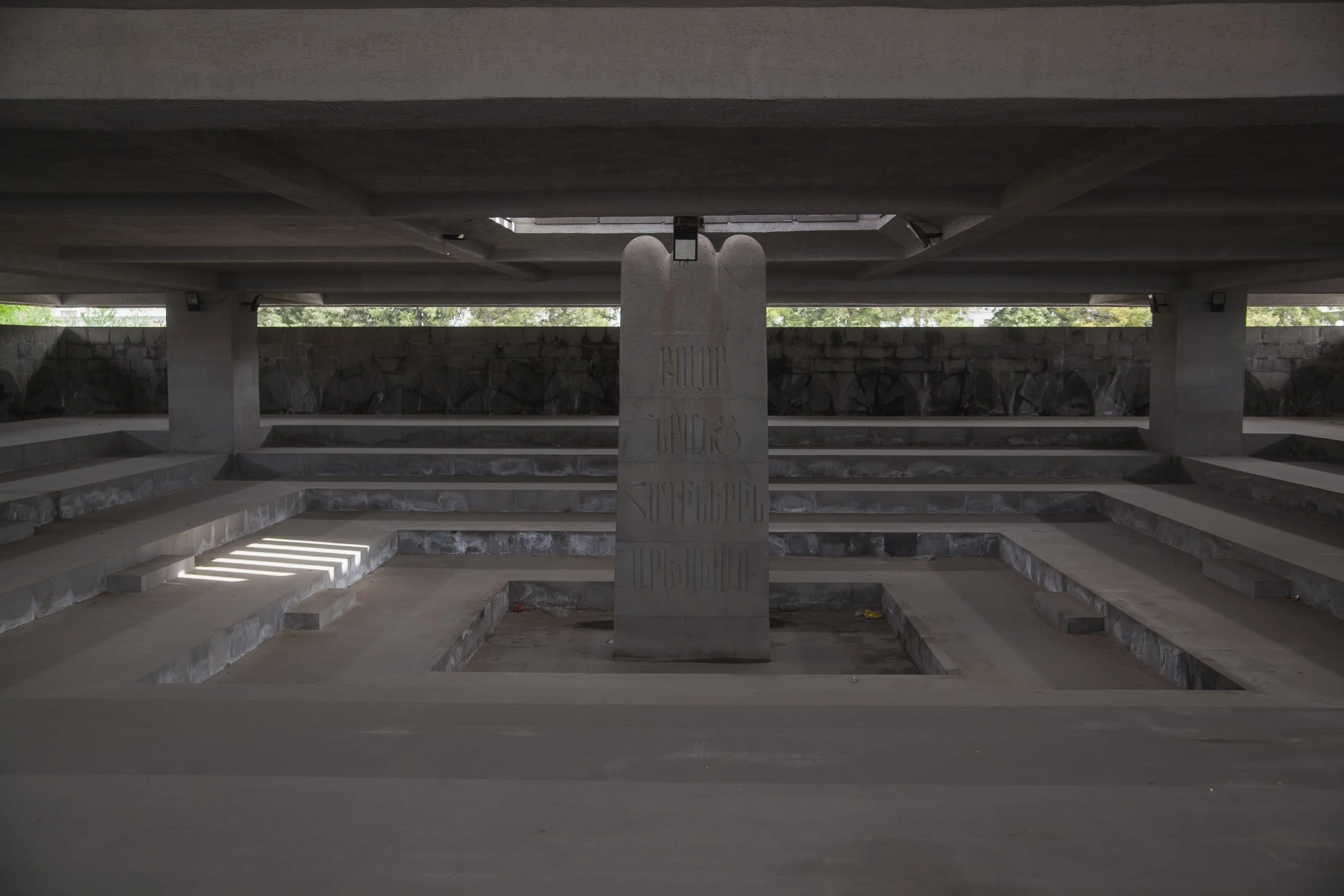
One last event saw us drive outside of the city to the newest location of ArtBasis, a house of a Jordanian dj where the organization is interested in developing a radio practice instead. A huge soup was cooked for all the participants, and tried out some radio performance in the garden space.
Unfortunately we did not have time to organize a visit at the giant space telescope located at Mount Aragats, which is sowing more and more interest in the music community - you need to ask for permission with certain advance, and then carefully organize the transport, but maybe there will be a chance next time around.